
Hearty British cooking is all about comfort food that warms you from the inside out. From classic Sunday roasts to cozy pub favorites, these recipes bring the best of British comfort to your kitchen. Whether you’re craving something rich, savory, or simply satisfying, you’ll find plenty of inspiration here. So grab your apron and get ready to cook up some seriously comforting meals!
Classic British Fish and Chips with Tartar Sauce
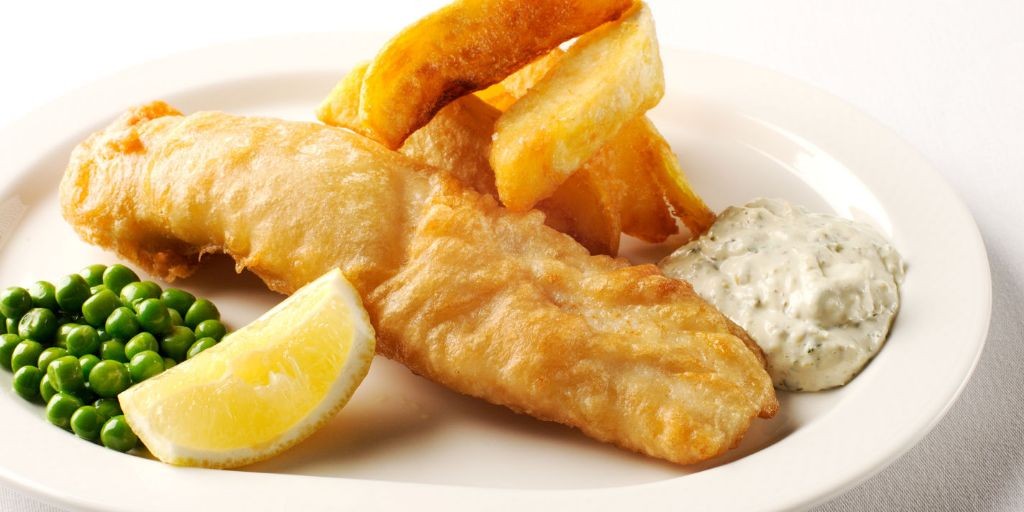
Gently, as autumn leaves begin their slow descent outside my window, I find myself craving the simple comfort of fried food—the kind that warms both hands and heart on a crisp November afternoon. There’s something deeply satisfying about the ritual of preparing fish and chips, each step measured and mindful, transforming humble ingredients into golden perfection. Today, I’m sharing my version of this British classic, made with care and plenty of quiet reflection.
Ingredients
– 1 ½ pounds thick cod fillets, chilled and firm
– 4 large russet potatoes, starchy and earthy
– 2 cups all-purpose flour, finely sifted
– 1 cup cold sparkling water, effervescent and crisp
– 1 cup mayonnaise, rich and creamy
– 2 tablespoons fresh dill, finely chopped and fragrant
– 1 tablespoon capers, briny and bright
– 1 teaspoon lemon juice, freshly squeezed and zesty
– 2 quarts vegetable oil, neutral and clean
– 1 teaspoon baking powder, light and airy
– 1 teaspoon kosher salt, coarse and pure
Instructions
1. Peel 4 large russet potatoes completely, removing all skin.
2. Cut peeled potatoes into ½-inch thick batons using a sharp knife.
3. Submerge potato batons in cold water for 30 minutes to remove excess starch.
4. Drain potato batons thoroughly and pat completely dry with paper towels.
5. Heat 2 quarts vegetable oil in a heavy-bottomed pot to 325°F, verified by a deep-fry thermometer.
6. Fry potato batons in batches for 4 minutes until pale golden but still soft.
7. Remove first-fry chips with a slotted spoon and drain on a wire rack.
8. Increase oil temperature to 375°F, waiting precisely for the thermometer reading.
9. Combine 2 cups all-purpose flour, 1 teaspoon baking powder, and 1 teaspoon kosher salt in a large bowl.
10. Whisk 1 cup cold sparkling water into the flour mixture until just combined, leaving small lumps.
11. Pat 1 ½ pounds thick cod fillets completely dry with paper towels.
12. Dip each cod fillet into the batter, coating evenly on all surfaces.
13. Carefully lower battered cod into 375°F oil and fry for 6 minutes until golden brown and crisp.
14. Remove fried fish to the wire rack, allowing excess oil to drip away.
15. Return partially cooked chips to the 375°F oil and fry for 3 minutes until deeply golden and crisp.
16. Combine 1 cup mayonnaise, 2 tablespoons fresh dill, 1 tablespoon capers, and 1 teaspoon lemon juice in a small bowl.
17. Stir tartar sauce ingredients until fully incorporated and refrigerate until serving.
18. Season hot chips immediately with additional kosher salt while still glistening with oil.
Zest from the lemon brightens each component, while the double-fried chips achieve that perfect contrast of fluffy interior and glass-like exterior. The beer-battered cod shatters audibly under gentle pressure, revealing pearlescent flakes that melt against the tartar sauce’s creamy tang. For a truly memorable experience, serve wrapped in newspaper with malt vinegar for dipping, letting the steam carry memories of seaside pubs and simpler times.
Beef and Guinness Stew with Crusty Bread

Wandering through the crisp autumn afternoons, I find myself craving something that simmers slowly, filling the kitchen with warmth and nostalgia. This beef and Guinness stew, with its deep flavors and tender chunks, feels like a gentle embrace after a long day, especially when paired with thick slices of crusty bread for dipping into the rich broth.
Ingredients
– 2 pounds chuck roast, cut into 1-inch cubes
– 3 tablespoons rich extra virgin olive oil
– 2 large yellow onions, thinly sliced into half-moons
– 4 cloves garlic, minced until fragrant
– 3 carrots, peeled and chopped into rustic coins
– 2 celery stalks, finely diced
– 1 tablespoon tomato paste, deeply concentrated
– 1 bottle (14.9 ounces) Guinness beer, dark and malty
– 4 cups beef broth, deeply savory
– 2 bay leaves, earthy and aromatic
– 1 teaspoon fresh thyme leaves, lightly crushed
– Salt and coarsely ground black pepper, to season generously
– 1 loaf crusty artisan bread, for serving
Instructions
1. Pat the chuck roast cubes completely dry with paper towels to ensure a golden sear.
2. Heat the rich extra virgin olive oil in a large Dutch oven over medium-high heat until it shimmers.
3. Sear the beef cubes in a single layer for 4–5 minutes per side until deeply browned, working in batches to avoid steaming.
4. Transfer the seared beef to a clean plate, leaving the drippings in the pot.
5. Add the thinly sliced yellow onions to the pot and sauté for 8–10 minutes until softened and lightly caramelized.
6. Stir in the minced garlic and cook for 1 minute until fragrant but not browned.
7. Add the carrot coins and finely diced celery, cooking for 5 minutes until slightly tender.
8. Mix in the concentrated tomato paste and cook for 2 minutes to deepen its flavor.
9. Pour in the dark Guinness beer, scraping the bottom of the pot to lift any browned bits.
10. Simmer the beer for 5 minutes to reduce slightly and mellow its bitterness.
11. Return the seared beef and any accumulated juices to the pot.
12. Pour in the savory beef broth until the ingredients are just submerged.
13. Add the earthy bay leaves and crushed fresh thyme, then season generously with salt and coarsely ground black pepper.
14. Bring the stew to a gentle boil, then reduce the heat to low, cover, and simmer for 2–2.5 hours until the beef is fork-tender.
15. Remove the bay leaves before serving.
16. Slice the crusty artisan bread into thick pieces for dipping.
Velvety chunks of beef melt away at the slightest pressure, while the broth, enriched by Guinness and vegetables, carries a deep, malty sweetness. I love ladling it into wide bowls and tearing off pieces of bread to soak up every last drop, letting the steam warm my face as I eat.
Traditional Shepherd’s Pie with Lamb and Root Vegetables
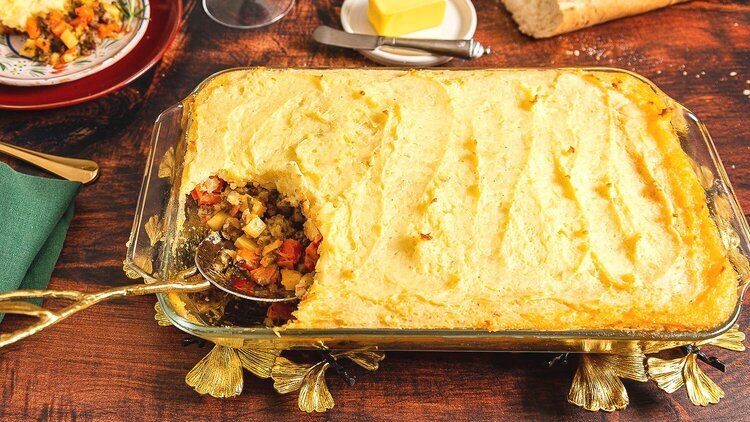
Kindling memories of autumn evenings, this shepherd’s pie wraps the kitchen in warmth, with savory lamb and earthy roots melding beneath a golden potato blanket. It’s the sort of meal that asks you to slow down, to notice the steam rising and the flavors deepening with each patient minute. Making it feels less like cooking and more like tending to something precious, something meant to be shared.
Ingredients
– 1.5 pounds of ground lamb, rich and finely textured
– 2 tablespoons of rich extra virgin olive oil
– 1 large yellow onion, finely diced with care
– 2 cloves of aromatic garlic, minced until fragrant
– 2 large carrots, peeled and diced into small, even cubes
– 1 parsnip, peeled and cut into tender, bite-sized pieces
– 1 cup of frozen sweet peas, bright and vibrant
– 2 tablespoons of sun-dried tomato paste, deeply concentrated
– 1 cup of robust beef broth, warmed and savory
– 1 tablespoon of Worcestershire sauce, tangy and complex
– 2 pounds of russet potatoes, peeled and quartered
– 1/2 cup of heavy cream, luxuriously smooth
– 4 tablespoons of unsalted butter, rich and creamy
– 1/2 teaspoon of finely ground black pepper, freshly cracked
Instructions
1. Place the peeled and quartered russet potatoes into a large pot and cover them completely with cold water.
2. Bring the pot to a rolling boil over high heat, then reduce the heat to medium and simmer the potatoes for 20 minutes, or until they are fork-tender.
3. While the potatoes cook, heat the rich extra virgin olive oil in a large, heavy-bottomed skillet over medium heat until it shimmers.
4. Add the finely diced yellow onion and sauté for 5 minutes, stirring occasionally, until the onion turns translucent and soft.
5. Stir in the minced aromatic garlic and cook for 1 minute, just until its fragrance blooms—be careful not to let it brown.
6. Crumble the rich, finely textured ground lamb into the skillet, breaking it apart with a wooden spoon as it cooks for 8 minutes, until it’s fully browned and no pink remains.
7. Tip: For the most flavorful base, let the lamb develop a slight crust on the bottom of the pan before stirring.
8. Add the diced carrots and tender, bite-sized parsnip pieces to the skillet, stirring to combine them with the lamb and aromatics.
9. Cook the vegetables with the lamb for 7 minutes, until they begin to soften but still retain a slight bite.
10. Stir in the deeply concentrated sun-dried tomato paste, coating the meat and vegetables evenly, and cook for 2 minutes to deepen its flavor.
11. Pour in the warm, robust beef broth and the tangy, complex Worcestershire sauce, scraping any browned bits from the bottom of the pan with your spoon.
12. Simmer the mixture uncovered for 10 minutes, allowing the liquid to reduce slightly and the flavors to meld together.
13. Gently fold in the bright, vibrant frozen sweet peas and the freshly cracked, finely ground black pepper, then remove the skillet from the heat.
14. Drain the cooked potatoes thoroughly and return them to the warm pot to steam off any excess moisture for 1 minute.
15. Mash the potatoes smoothly with a potato masher or ricer, then stir in the luxuriously smooth heavy cream and the rich, creamy unsalted butter until the mixture is velvety and well-combined.
16. Tip: For the fluffiest mash, avoid overworking the potatoes—stop once they’re smooth and free of lumps.
17. Spread the lamb and vegetable filling evenly into a 9×13-inch baking dish, pressing it down gently with the back of a spoon.
18. Carefully spoon the mashed potatoes over the filling, using a fork to create decorative peaks that will crisp and brown in the oven.
19. Tip: Those peaks aren’t just pretty—they add texture and help the top cook evenly, so take your time here.
20. Bake the shepherd’s pie in a preheated 400°F oven for 25 minutes, or until the filling is bubbly at the edges and the potato topping is golden brown in spots.
21. Let the pie rest on a wire rack for 10 minutes before serving to allow the layers to set and the flavors to settle. Zestfully rustic and deeply comforting, this pie offers a tender, savory filling that gives way to a cloud-like potato crown. Each spoonful balances the richness of lamb with the gentle sweetness of root vegetables, making it ideal for scooping onto thick, crusty bread or pairing with a simple green salad to cut through the warmth.
Creamy Chicken and Mushroom Pie with Puff Pastry
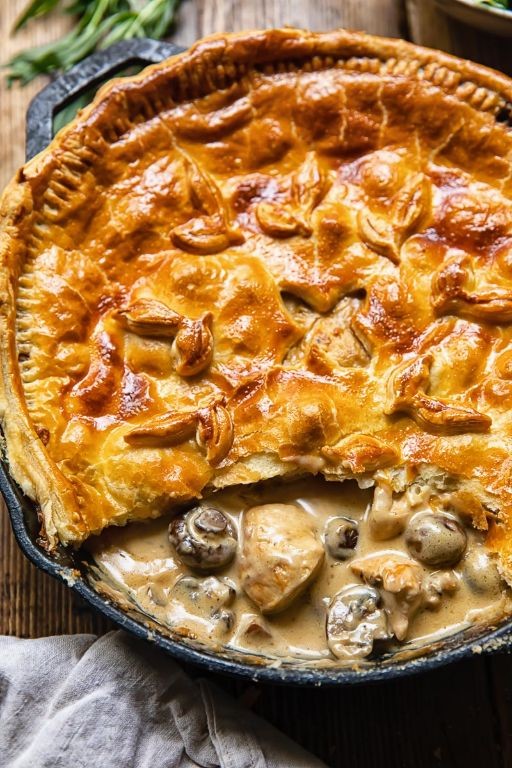
Remembering how the chill of late autumn settles deep in the bones, I find myself drawn to the kitchen, to the quiet ritual of preparing something that feels like a warm embrace. There is a particular comfort in the slow simmer of a creamy filling, in the way golden pastry promises both crispness and tenderness.
Ingredients
– 1 ½ pounds boneless, skinless chicken thighs, cut into hearty 1-inch chunks
– 8 ounces cremini mushrooms, sliced into earthy, thick pieces
– 1 large yellow onion, finely diced to melt into the sauce
– 2 cloves garlic, minced until fragrant and pungent
– 3 tablespoons unsalted butter, rich and creamy
– ¼ cup all-purpose flour, for a velvety roux
– 1 ½ cups whole milk, warmed slightly to prevent curdling
– ½ cup heavy cream, for luxurious richness
– 1 teaspoon fresh thyme leaves, stripped from their woody stems
– 1 sheet frozen puff pastry, thawed until pliable
– 1 large egg, beaten until smooth for a glossy finish
– ½ teaspoon fine sea salt, to enhance the natural flavors
– ¼ teaspoon freshly ground black pepper, with its warm, aromatic bite
Instructions
1. Preheat your oven to 400°F to ensure it’s perfectly heated for the pastry.
2. In a large, heavy-bottomed skillet, melt the unsalted butter over medium heat until it foams gently.
3. Add the finely diced yellow onion and cook for 5-7 minutes, stirring occasionally, until it turns translucent and sweet.
4. Stir in the minced garlic and cook for 1 minute, just until its raw edge softens and becomes fragrant.
5. Add the hearty chicken thigh chunks and cook for 6-8 minutes, turning occasionally, until they are opaque and lightly browned on all sides.
6. Sprinkle the all-purpose flour evenly over the chicken and onions, stirring constantly for 2 minutes to cook out the raw flour taste and form a pale golden roux.
7. Gradually pour in the warmed whole milk while stirring continuously to prevent lumps from forming.
8. Add the heavy cream, fresh thyme leaves, fine sea salt, and freshly ground black pepper, then bring the mixture to a gentle simmer.
9. Reduce the heat to low and let the filling simmer for 10 minutes, stirring occasionally, until it thickens enough to coat the back of a spoon.
10. Gently fold in the earthy cremini mushroom slices and cook for 3-4 minutes, just until they begin to soften and release their juices.
11. Transfer the creamy chicken and mushroom filling into a 9-inch pie dish, spreading it into an even layer.
12. Lay the thawed puff pastry sheet over the filling, trimming any excess dough and pressing the edges firmly against the dish to seal.
13. Brush the pastry evenly with the beaten egg to encourage a deep, golden-brown color as it bakes.
14. Cut three small slits in the center of the pastry to allow steam to escape during baking.
15. Bake for 25-30 minutes, or until the pastry is puffed, flaky, and richly golden brown.
16. Let the pie rest for 10 minutes before serving to allow the filling to set slightly.
During these cooler evenings, the contrast of the flaky, buttery crust against the velvety chicken and earthy mushrooms feels like a quiet celebration. Each forkful releases a steam that carries the scent of thyme and comfort, perfect alongside a simple green salad or roasted root vegetables for a meal that lingers warmly in memory.
Bangers and Mash with Onion Gravy

Just now, as the afternoon light slants through my kitchen window, I find myself drawn to the simple comfort of sausages simmering in their own juices, the earthy scent of potatoes boiling, the way this dish feels like a quiet conversation with autumn itself. There’s something deeply grounding about preparing a meal that asks for little more than patience and attention, where each step unfolds slowly, like turning the pages of a well-loved book.
Ingredients
– 1 pound high-quality pork sausages, with natural casings that snap when cooked
– 2 pounds russet potatoes, starchy and firm for creamy mash
– 4 tablespoons rich unsalted butter, cold and cubed
– ½ cup heavy cream, warmed gently to avoid curdling
– 2 large yellow onions, thinly sliced into sweet, translucent ribbons
– 2 cups rich beef stock, deeply flavored and savory
– 1 tablespoon Worcestershire sauce, for a tangy, umami kick
– 2 tablespoons all-purpose flour, for thickening the gravy
– 2 tablespoons vegetable oil, for searing the sausages
– 1 teaspoon fine sea salt, to season the potatoes and gravy
– ½ teaspoon freshly cracked black pepper, aromatic and bold
Instructions
1. Peel the russet potatoes and cut them into 1-inch cubes for even cooking.
2. Place the potato cubes in a large pot and cover with cold water by 1 inch, then add ½ teaspoon of fine sea salt.
3. Bring the pot to a boil over high heat, then reduce to a steady simmer and cook for 15–18 minutes, until the potatoes are fork-tender but not falling apart.
4. While the potatoes cook, heat 2 tablespoons of vegetable oil in a large skillet over medium-high heat until it shimmers.
5. Add the pork sausages to the hot skillet and sear for 3–4 minutes per side, until golden brown and slightly crisp on the exterior.
6. Reduce the heat to medium-low, cover the skillet, and let the sausages cook for 12–15 minutes, turning occasionally, until fully cooked through and no longer pink inside.
7. Tip: Use a meat thermometer to check that the sausages reach an internal temperature of 160°F for perfect doneness without overcooking.
8. Remove the sausages from the skillet and set them aside on a plate, tented loosely with foil to keep warm.
9. In the same skillet, add the thinly sliced yellow onions and cook over medium heat for 8–10 minutes, stirring often, until they soften and turn a deep golden brown.
10. Sprinkle 2 tablespoons of all-purpose flour over the onions and cook for 1 minute, stirring constantly, to form a roux that will thicken the gravy.
11. Gradually whisk in the rich beef stock and 1 tablespoon of Worcestershire sauce, scraping up any browned bits from the bottom of the skillet.
12. Bring the gravy to a gentle boil, then reduce the heat and simmer for 5–7 minutes, until it thickens to a velvety consistency that coats the back of a spoon.
13. Tip: For a smoother gravy, strain it through a fine-mesh sieve to remove any onion pieces, though leaving them in adds rustic texture.
14. Drain the cooked potatoes thoroughly and return them to the warm pot to steam dry for 1 minute over low heat.
15. Mash the potatoes with a potato masher or ricer until no large lumps remain.
16. Fold in the cold, cubed unsalted butter and warmed heavy cream until the mash is smooth and creamy, then season with ½ teaspoon of fine sea salt and ¼ teaspoon of freshly cracked black pepper.
17. Tip: For extra fluffy mash, avoid overmixing once the cream and butter are incorporated to prevent a gluey texture.
18. Season the onion gravy with the remaining ¼ teaspoon of freshly cracked black pepper and adjust salt if needed.Maybe you’ll serve this in shallow bowls, the gravy pooling around the mash like a savory moat, the sausages resting atop like sentinels of comfort. The creamy potatoes melt into the rich, onion-laced gravy, while each bite of sausage offers a satisfying snap and juicy interior, a harmony of textures that feels both rustic and refined.
Ploughman’s Lunch with Cheddar, Pickles, and Crusty Bread

Vaguely remembering the simple meals of countryside inns, I find myself drawn to assembling this humble plate—a quiet meditation on textures and contrasts that feels both rustic and deeply comforting.
Ingredients
– 6 ounces sharp white cheddar cheese, cold from the refrigerator
– 4 large dill pickle spears, crisp and briny
– 1 loaf crusty artisan bread, with a crackly exterior
– 2 tablespoons whole grain mustard, with visible mustard seeds
– 2 tablespoons unsalted butter, softened at room temperature
– 4 leaves crisp butter lettuce, washed and dried
– 1 small red apple, firm and sweet-tart
Instructions
1. Place the loaf of crusty artisan bread on a cutting board.
2. Using a serrated bread knife, slice the bread into 1-inch thick pieces.
3. Spread the softened unsalted butter evenly onto one side of each bread slice.
4. Arrange the buttered bread slices on a serving platter.
5. Cut the cold sharp white cheddar cheese into 1/4-inch thick slices.
6. Place the cheddar slices alongside the bread on the platter.
7. Pat the crisp briny dill pickle spears dry with a paper towel to prevent sogginess.
8. Arrange the pickle spears in a separate section of the platter.
9. Core the firm sweet-tart red apple and slice it into 1/4-inch wedges.
10. Immediately arrange the apple wedges on the platter to prevent browning.
11. Place the crisp butter lettuce leaves in a small pile on the platter.
12. Spoon the whole grain mustard with visible seeds into a small ramekin.
13. Position the mustard ramekin in the center of the platter for easy dipping.
14. Let the assembled platter rest at room temperature for 10 minutes to allow flavors to meld.
Remarkably, the cool crispness of lettuce and apple plays against the creamy sharpness of cheddar, while the bread’s craggy surface catches every bit of grainy mustard. Serve this arranged casually on a wooden board with a chilled cider, letting guests build each perfect bite according to their whims.
Toad in the Hole with Mustard Gravy

Unexpectedly, this gray afternoon finds me craving the kind of comfort only a golden, puffy Yorkshire pudding can provide, cradling plump sausages in its embrace. There’s something deeply reassuring about the ritual of preparing toad in the hole, a quiet alchemy of batter and heat that fills the kitchen with the scent of home. It’s a dish that asks for patience, for watching and waiting as simple ingredients transform into something greater than their parts.
Ingredients
- 1 cup all-purpose flour
- 4 large farm-fresh eggs
- 1 cup whole milk
- 1/2 teaspoon fine sea salt
- 1/4 teaspoon freshly ground black pepper
- 1/4 cup rich beef drippings or vegetable oil
- 8 high-quality pork sausages
- 1 small yellow onion, thinly sliced
- 2 cups rich beef stock
- 2 tablespoons smooth Dijon mustard
- 1 tablespoon cold unsalted butter
- 1 tablespoon chopped fresh parsley
Instructions
- Preheat your oven to 425°F.
- Place 1/4 cup rich beef drippings or vegetable oil in a 9×13-inch baking dish.
- Heat the baking dish in the preheated oven for exactly 10 minutes, until the fat shimmers and is very hot.
- Arrange 8 high-quality pork sausages evenly in the hot baking dish.
- Return the dish to the oven and bake for 12 minutes, until the sausages begin to brown.
- While the sausages bake, whisk together 1 cup all-purpose flour, 1/2 teaspoon fine sea salt, and 1/4 teaspoon freshly ground black pepper in a large bowl.
- Make a well in the center of the flour mixture and crack in 4 large farm-fresh eggs.
- Gradually pour in 1 cup whole milk while whisking continuously, creating a smooth, lump-free batter.
- Let the batter rest at room temperature for 5 minutes to allow the flour to fully hydrate.
- Carefully remove the hot baking dish from the oven and immediately pour the rested batter around the partially cooked sausages.
- Quickly return the dish to the oven and bake for 25-30 minutes, until the Yorkshire pudding is puffed and deep golden brown.
- While the toad in the hole bakes, heat a medium skillet over medium heat.
- Add 1 small thinly sliced yellow onion to the dry skillet and cook for 8-10 minutes, stirring occasionally, until softened and lightly caramelized.
- Pour 2 cups rich beef stock into the skillet with the onions, scraping up any browned bits from the bottom.
- Simmer the gravy for 10 minutes, until reduced by about one-third.
- Whisk in 2 tablespoons smooth Dijon mustard until fully incorporated.
- Remove the gravy from heat and swirl in 1 tablespoon cold unsalted butter until the sauce becomes glossy.
- Stir in 1 tablespoon chopped fresh parsley just before serving.
- Remove the toad in the hole from the oven when the Yorkshire pudding no longer appears wet in the center.
Perfectly puffed and golden, the Yorkshire pudding cradles juicy sausages with crisp edges giving way to tender centers. The mustard gravy adds a sharp, savory counterpoint that cuts through the richness beautifully. For a lovely presentation, serve it family-style right in the baking dish, letting everyone tear off portions of the airy pudding to mop up the glossy gravy.
Cornish Pasty with Beef, Potato, and Swede
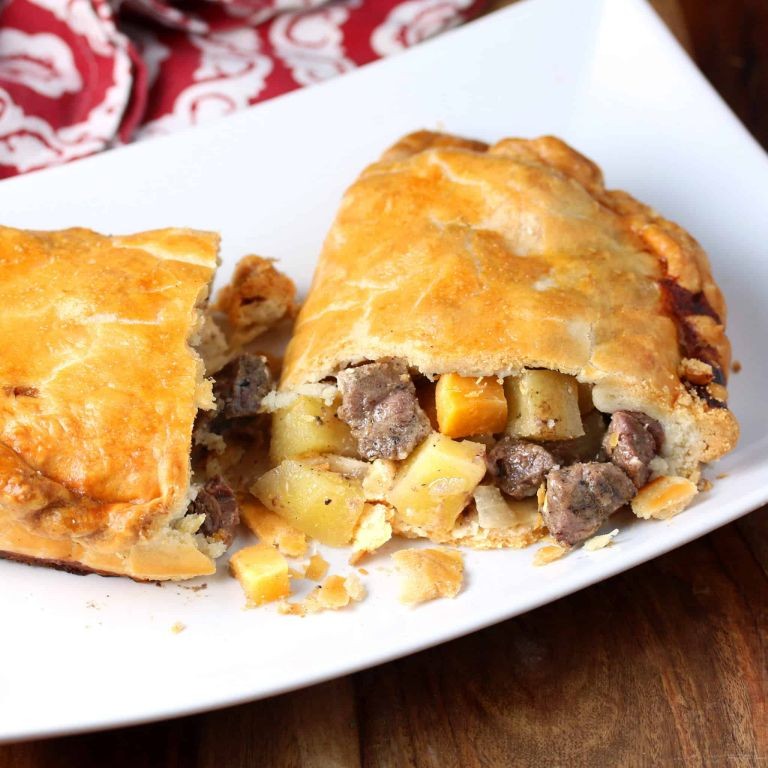
Lately, I’ve been thinking about how some foods feel like edible memories, how the simple act of folding dough around humble ingredients can become something deeply comforting. There’s a quiet satisfaction in making a Cornish pasty, in taking time to create something that nourishes both body and soul with its sturdy, handmade presence.
Ingredients
– 2 cups all-purpose flour, plus extra for dusting
– 1/2 cup cold unsalted butter, cut into small cubes
– 1/4 cup ice water
– 8 ounces beef chuck, cut into 1/2-inch cubes
– 1 medium russet potato, peeled and diced into 1/4-inch pieces
– 1 cup swede (rutabaga), peeled and finely diced
– 1 small yellow onion, finely chopped
– 1 teaspoon kosher salt
– 1/2 teaspoon freshly ground black pepper
– 1 large egg, lightly beaten for glazing
Instructions
1. Combine 2 cups all-purpose flour and 1/2 teaspoon salt in a large mixing bowl.
2. Add 1/2 cup cold cubed butter and use your fingertips to rub it into the flour until the mixture resembles coarse breadcrumbs.
3. Gradually add 1/4 cup ice water, mixing with a fork until the dough just comes together.
4. Turn the dough onto a lightly floured surface and gently knead for 30 seconds until smooth.
5. Wrap the dough in plastic wrap and refrigerate for 30 minutes to allow the gluten to relax.
6. While the dough chills, combine 8 ounces cubed beef, diced potato, diced swede, chopped onion, 1 teaspoon kosher salt, and 1/2 teaspoon black pepper in a medium bowl.
7. Preheat your oven to 400°F and line a baking sheet with parchment paper.
8. Divide the chilled dough into 4 equal portions on a floured surface.
9. Roll each portion into a 7-inch circle about 1/8-inch thick.
10. Place one-quarter of the filling mixture on one half of each dough circle, leaving a 1-inch border around the edge.
11. Brush the edges with beaten egg and fold the empty half over the filling to create a half-moon shape.
12. Crimp the edges firmly by folding and pinching to create a tight seal that will prevent leaking during baking.
13. Cut 2 small slits in the top of each pasty to allow steam to escape.
14. Brush the entire surface with remaining beaten egg for a golden finish.
15. Bake at 400°F for 45-50 minutes until the crust is deep golden brown and the filling is bubbling.
16. Transfer to a wire rack and let rest for 15 minutes before serving to allow the juices to redistribute.
The flaky, buttery crust gives way to tender beef and vegetables that have melded together during baking, creating a harmony of earthy swede, creamy potato, and rich beef. Serve warm with a simple green salad or pack for a picnic where the sturdy pastry holds up beautifully, each bite carrying the weight of tradition and the comfort of homemade goodness.
Sticky Toffee Pudding with Vanilla Custard
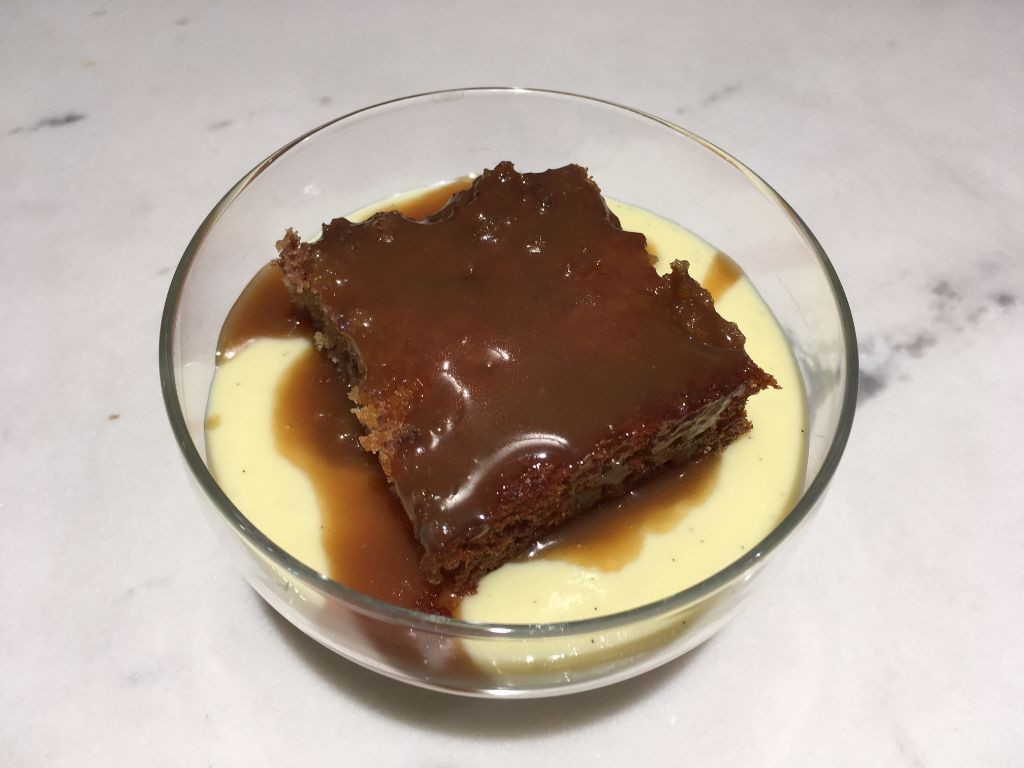
Cradling a warm mug while the afternoon light fades, I find myself drawn back to this recipe, a soft embrace of sweetness that feels like a quiet conversation with comfort itself.
Ingredients
– 1 cup pitted Medjool dates, sticky and deeply sweet
– 1 cup boiling water, steaming hot
– 1 teaspoon baking soda, finely sifted
– 1 ¼ cups all-purpose flour, soft as winter snow
– 1 teaspoon baking powder, freshly opened
– ¼ teaspoon sea salt, with delicate crystals
– ½ cup unsalted butter, rich and creamy at room temperature
– ¾ cup dark brown sugar, packed with molasses warmth
– 2 large eggs, farm-fresh and golden-yolked
– 1 teaspoon pure vanilla extract, fragrant and floral
– 1 cup heavy whipping cream, cold and lush
– 2 tablespoons granulated sugar, fine and sparkling
– ½ teaspoon vanilla bean paste, speckled with real seeds
Instructions
1. Preheat your oven to 350°F and lightly grease an 8-inch square baking pan with butter.
2. Roughly chop the sticky Medjool dates and place them in a small heatproof bowl.
3. Pour the boiling water over the dates, sprinkle with baking soda, and let them soak for 10 minutes until softened and fragrant.
4. In a medium bowl, whisk together the soft all-purpose flour, baking powder, and sea salt until fully combined.
5. In a separate large bowl, use an electric mixer to cream the room-temperature butter and dark brown sugar on medium speed for 3 minutes until pale and fluffy.
6. Beat in the farm-fresh eggs one at a time, mixing for 30 seconds after each addition until fully incorporated.
7. Stir in the pure vanilla extract with a spatula until the mixture is smooth and aromatic.
8. Gently fold the flour mixture into the wet ingredients in two additions, mixing just until no dry streaks remain.
9. Pour the soaked date mixture, including any liquid, into the batter and fold gently to distribute evenly.
10. Tip: Avoid overmixing to keep the pudding tender and light.
11. Spread the batter evenly into the prepared pan and bake for 35–40 minutes, or until a toothpick inserted into the center comes out clean.
12. While the pudding bakes, make the vanilla custard: In a chilled bowl, whip the cold heavy cream, granulated sugar, and vanilla bean paste on high speed for 4–5 minutes until soft peaks form.
13. Tip: Chill your bowl and beaters beforehand for the fluffiest custard.
14. Remove the pudding from the oven and let it cool in the pan for 15 minutes before serving warm.
15. Tip: For extra stickiness, drizzle the pudding with a simple syrup made from equal parts brown sugar and water simmered for 5 minutes.
Here, the pudding yields under the spoon with a moist, date-speckled crumb, while the custard melts into each bite like a whispered secret. Serve it with a dusting of cinnamon or alongside a sharp espresso to balance the caramel depth, letting the warmth linger long after the last bite.
Victoria Sponge Cake with Jam and Cream
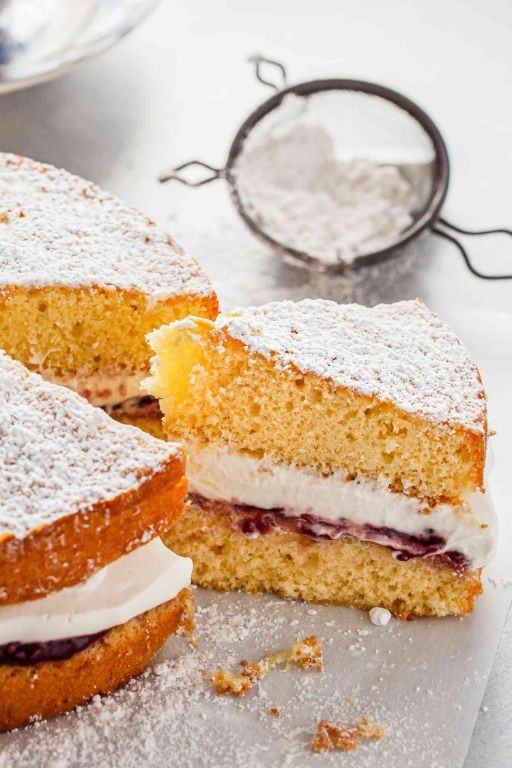
Wandering through my grandmother’s recipe box this morning, I found her faded card for Victoria sponge, the paper soft at the edges and smelling faintly of sugar and memory. There’s something deeply comforting about this cake—its simplicity, its tender crumb, the way it holds both jam and cream without complaint. It feels like a quiet afternoon, a cup of tea, and a moment to breathe.
Ingredients
– 1 cup (2 sticks) unsalted European-style butter, softened at cool room temperature
– 1 cup granulated sugar, fine and sparkling
– 4 large farm-fresh eggs, at room temperature
– 1 cup all-purpose flour, sifted twice for airiness
– 1 teaspoon baking powder, aluminum-free for pure flavor
– ½ cup high-quality raspberry jam, seedless and glossy
– 1 cup heavy whipping cream, cold from the refrigerator
– 2 tablespoons confectioners’ sugar, for dusting
Instructions
1. Preheat your oven to 350°F and lightly grease two 8-inch round cake pans, then line the bottoms with parchment paper.
2. In a large mixing bowl, beat the softened butter and granulated sugar together on medium speed for 5 minutes, until pale and fluffy—this creates tiny air pockets for a light cake.
3. Crack in one room-temperature egg at a time, beating for 30 seconds after each addition until fully incorporated to prevent curdling.
4. Sift the flour and baking powder together into the bowl, then fold gently with a spatula until just combined, being careful not to overmix.
5. Divide the batter evenly between the prepared pans and smooth the tops with a spatula.
6. Bake for 22–25 minutes, until the cakes are golden, spring back when touched, and a toothpick inserted into the center comes out clean.
7. Cool the cakes in their pans on a wire rack for 10 minutes, then turn them out to cool completely—this prevents steaming and sogginess.
8. While the cakes cool, whip the cold heavy cream in a chilled bowl until soft peaks form.
9. Place one cake layer on a serving plate and spread the raspberry jam evenly over the top, leaving a ½-inch border to avoid seepage.
10. Spoon the whipped cream over the jam and gently place the second cake layer on top.
11. Dust the top generously with confectioners’ sugar through a fine-mesh sieve.
Unbelievably tender, this cake yields to the fork with a soft sigh, the jam’s bright tartness cutting through the rich cream. For a twist, layer fresh berries between the sponges or serve slices with a drizzle of lavender honey—each bite feels like a gentle embrace, simple and sweet.
Scotch Eggs with Mustard Dipping Sauce

Under the soft morning light, I find myself drawn to the comforting rhythm of preparing something substantial yet simple, a dish that carries the weight of tradition in each carefully layered bite. There’s something deeply satisfying about transforming humble ingredients into this portable feast, a perfect balance of textures and flavors that feels both rustic and refined.
Ingredients
– 6 large pasture-raised eggs
– 1 pound high-quality pork sausage
– 1 cup all-purpose flour
– 2 large farm-fresh eggs for coating
– 2 cups panko breadcrumbs
– 4 cups vegetable oil for frying
– 1/2 cup Dijon mustard
– 1/4 cup heavy cream
– 1 tablespoon honey
– 1 teaspoon apple cider vinegar
– 1/4 teaspoon smoked paprika
Instructions
1. Place 6 large eggs in a single layer in a saucepan and cover with cold water by 1 inch.
2. Bring water to a rolling boil over high heat, then immediately remove from heat and cover for exactly 9 minutes.
3. Transfer boiled eggs to an ice water bath and let cool completely for 15 minutes to stop the cooking process.
4. Gently tap each egg on the counter and carefully peel under running cool water to remove shells cleanly.
5. Divide 1 pound pork sausage into 6 equal portions and flatten each into thin patties between your palms.
6. Completely wrap each peeled egg with a sausage patty, sealing all edges smoothly without any gaps.
7. Dredge each sausage-wrapped egg in 1 cup all-purpose flour, shaking off excess thoroughly.
8. Whisk 2 large eggs in a shallow bowl until fully combined and frothy.
9. Dip floured eggs in the beaten egg mixture, coating entirely and letting excess drip off.
10. Roll each egg in 2 cups panko breadcrumbs, pressing gently to ensure even adherence.
11. Heat 4 cups vegetable oil in a heavy Dutch oven to 350°F, using a deep-fry thermometer for accuracy.
12. Carefully lower 3 eggs at a time into the hot oil and fry for 6-8 minutes until golden brown and crisp.
13. Remove fried eggs with a slotted spoon and drain on a wire rack over paper towels.
14. Whisk together 1/2 cup Dijon mustard, 1/4 cup heavy cream, 1 tablespoon honey, 1 teaspoon apple cider vinegar, and 1/4 teaspoon smoked paprika until smooth.
Delightfully crisp on the outside, these Scotch eggs reveal a tender sausage layer that gives way to the perfectly set yolk within. The creamy mustard dipping sauce provides a tangy counterpoint that cuts through the richness beautifully. Consider serving them sliced in half to showcase the concentric layers, perhaps alongside a simple green salad for a complete meal that feels both hearty and elegant.
Welsh Rarebit with Ale and Mustard

Beneath the quiet hum of the kitchen, there’s something deeply comforting about melting cheese into a savory sauce, a small ritual that feels both ancient and immediate. This Welsh rarebit, with its malty ale and sharp mustard, is like a warm blanket on a chilly evening, simple yet profoundly satisfying. It’s the kind of dish that asks for little but gives so much in return, a humble toast transformed into a cozy masterpiece.
Ingredients
– 4 thick slices of rustic sourdough bread
– 2 tablespoons of unsalted European-style butter
– 1 cup of freshly grated sharp cheddar cheese
– 1/2 cup of malty brown ale
– 1 tablespoon of smooth Dijon mustard
– 1 teaspoon of Worcestershire sauce
– 1/4 teaspoon of smoked paprika
– 1 large farm-fresh egg yolk
– Pinch of finely ground black pepper
Instructions
1. Preheat your oven broiler to 450°F and position the rack 6 inches from the heat source.
2. Place the thick slices of rustic sourdough bread on a baking sheet in a single layer.
3. Toast the bread under the broiler for 2-3 minutes until the edges are lightly golden and crisp.
4. Flip the bread slices and toast the other side for another 2 minutes until firm but not fully browned.
5. Melt the unsalted European-style butter in a small saucepan over medium-low heat.
6. Whisk in the smooth Dijon mustard and Worcestershire sauce until fully combined and bubbly.
7. Pour in the malty brown ale and bring the mixture to a gentle simmer for 1 minute to cook off the alcohol.
8. Gradually add the freshly grated sharp cheddar cheese, stirring constantly until it melts into a smooth, creamy sauce.
9. Remove the saucepan from the heat and let it cool for 1 minute to avoid curdling the egg.
10. Vigorously whisk in the large farm-fresh egg yolk until the sauce thickens and becomes glossy.
11. Stir in the smoked paprika and a pinch of finely ground black pepper until evenly distributed.
12. Spoon the cheese sauce generously over each slice of toasted sourdough bread, covering it completely to the edges.
13. Broil the topped bread for 3-4 minutes until the sauce is bubbling and develops deep golden spots.
14. Remove from the oven and let it rest for 1 minute before serving to allow the flavors to meld. Zesty and rich, the Welsh rarebit emerges with a crisp, chewy base giving way to a velvety, umami-laden topping that clings to every bite. For a playful twist, top it with a fried egg or serve alongside a simple arugula salad dressed in lemon to cut through the richness, making each slice a balanced, soul-warming treat.
Lancashire Hotpot with Slow-Cooked Lamb
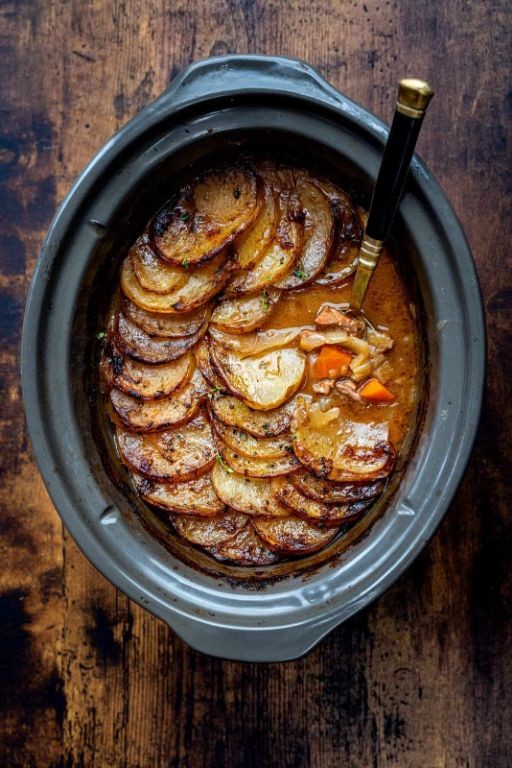
Just thinking about how some dishes feel like coming home, even if you’ve never been there before. Lancashire hotpot has that quality—a humble, slow-simmered comfort that warms from the inside out, especially as the days grow shorter and the air turns crisp. Perfect for when you need something steadying and deeply nourishing, this version with slow-cooked lamb is a gentle embrace in a bowl.
Ingredients
– 2 pounds bone-in lamb shoulder chops, cut into 1-inch pieces
– 2 tablespoons rich extra virgin olive oil
– 2 large yellow onions, thinly sliced into half-moons
– 3 cloves fresh garlic, minced
– 4 medium russet potatoes, peeled and sliced into ¼-inch rounds
– 2 large carrots, peeled and cut into ½-inch coins
– 2 cups rich beef stock
– 1 tablespoon Worcestershire sauce
– 1 teaspoon finely chopped fresh rosemary
– 1 teaspoon kosher salt
– ½ teaspoon freshly ground black pepper
Instructions
1. Preheat your oven to 325°F.
2. Pat the lamb shoulder pieces completely dry with paper towels to ensure a good sear.
3. Heat the extra virgin olive oil in a large, oven-safe Dutch oven over medium-high heat until it shimmers.
4. Add the lamb pieces in a single layer, working in batches if needed to avoid crowding.
5. Sear the lamb for 3–4 minutes per side until deeply browned, then transfer to a plate.
6. Reduce the heat to medium and add the sliced onions to the pot.
7. Sauté the onions for 8–10 minutes, stirring occasionally, until they are soft and translucent.
8. Add the minced garlic and cook for 1 minute until fragrant.
9. Return the seared lamb and any accumulated juices to the pot.
10. Arrange the potato slices and carrot coins evenly over the lamb and onions.
11. Pour the beef stock and Worcestershire sauce over the vegetables.
12. Sprinkle the chopped rosemary, kosher salt, and black pepper evenly over the top.
13. Cover the pot tightly with its lid and transfer it to the preheated oven.
14. Bake for 2 hours and 30 minutes until the lamb is fork-tender and the potatoes are soft.
15. Remove the lid and bake for an additional 20–30 minutes until the potato topping is lightly golden.
16. Let the hotpot rest for 10 minutes before serving to allow the flavors to settle.
Perhaps what I love most is how the potatoes soak up the rich, savory juices while keeping their structure, and the lamb falls apart at the slightest touch of a fork. Serve it straight from the pot at the table with a simple green salad to cut through the richness, or pack the leftovers for a lunch that tastes even better the next day.
Eton Mess with Fresh Strawberries and Meringue

Lately, I’ve been craving something that feels like a gentle exhale at the end of a long day, a dessert that requires no precision, just patience and the simple joy of sweet, crumbling textures coming together in a beautiful mess. It’s the kind of treat that feels like a quiet reward, a soft punctuation to an ordinary afternoon. This version, with its fresh strawberries and airy meringue, is my current favorite little escape.
Ingredients
– 2 cups of fresh, ripe strawberries, hulled and sliced
– 1 cup of heavy whipping cream, cold from the refrigerator
– 2 tablespoons of granulated sugar, fine and sparkling
– 1 teaspoon of pure vanilla extract, fragrant and warm
– 2 cups of store-bought meringue cookies, lightly crushed into rustic pieces
Instructions
1. Place the cold heavy whipping cream in a large, chilled mixing bowl.
2. Use an electric mixer on medium-high speed to whip the cream until soft peaks form, which should take about 3–4 minutes and look billowy and light.
3. Add the fine granulated sugar and fragrant vanilla extract to the whipped cream.
4. Continue whipping on medium speed for 1–2 minutes until the cream holds stiff peaks and appears glossy. Tip: Chill your bowl and beaters beforehand for faster, fluffier results.
5. Gently fold the lightly crushed meringue pieces into the whipped cream using a spatula, being careful not to overmix to maintain some texture.
6. Add the sliced fresh strawberries to the mixture, reserving a handful for garnish.
7. Fold everything together just until combined, with streaks of pink from the berries visible. Tip: If your strawberries are very juicy, pat them dry lightly to prevent the dessert from becoming too wet.
8. Divide the mixture evenly among 4 serving glasses or bowls.
9. Top each serving with the reserved strawberry slices for a bright, fresh finish. Tip: For the best texture, assemble just before serving to keep the meringue crisp.
Once spooned into a bowl, it collapses into a delightful tangle of creamy softness, crunchy meringue bits, and the bright, juicy burst of strawberries. Offering it in individual glasses makes it feel special, almost like a secret you’re sharing with a friend over a slow, unhurried conversation.
Bubble and Squeak with Fried Eggs

Folding yesterday’s roasted potatoes and sautéed cabbage into today’s breakfast feels like giving new life to forgotten flavors, transforming humble leftovers into something quietly beautiful. There’s a gentle satisfaction in pressing these ingredients together, creating crispy golden patties that sizzle softly in the pan while morning light filters through the kitchen window. This simple alchemy turns ordinary vegetables into a comforting canvas for fried eggs with runny yolks that pool like liquid gold.
Ingredients
– 2 cups cold mashed roasted potatoes
– 1 cup finely shredded savoy cabbage
– ¼ cup finely chopped sweet onion
– 2 tablespoons rich unsalted butter
– 4 large farm-fresh eggs
– ½ teaspoon coarse kosher salt
– ¼ teaspoon freshly cracked black pepper
– 1 tablespoon vibrant olive oil
Instructions
1. Combine 2 cups cold mashed roasted potatoes, 1 cup finely shredded savoy cabbage, and ¼ cup finely chopped sweet onion in a large mixing bowl.
2. Season the mixture with ½ teaspoon coarse kosher salt and ¼ teaspoon freshly cracked black pepper.
3. Use your hands to gently mix until all ingredients are evenly distributed, being careful not to overwork the potatoes.
4. Heat a large cast-iron skillet over medium heat for 2 minutes until evenly warm.
5. Add 1 tablespoon vibrant olive oil and 1 tablespoon rich unsalted butter to the heated skillet.
6. Swirl the skillet to coat the bottom completely with the melting fats.
7. Divide the potato mixture into 4 equal portions and shape each into a ½-inch thick patty.
8. Place the patties in the hot skillet, leaving 1 inch between them for even cooking.
9. Cook the patties for 4-5 minutes until the bottoms develop a deep golden-brown crust.
10. Carefully flip each patty using a thin spatula, being gentle to maintain their shape.
11. Cook for another 4-5 minutes until the second side is equally golden and crispy.
12. Transfer the cooked patties to a wire rack to maintain their crisp texture.
13. Reduce the skillet heat to medium-low and add the remaining 1 tablespoon rich unsalted butter.
14. Crack 4 large farm-fresh eggs directly into the skillet, spacing them evenly.
15. Cook the eggs for 2-3 minutes until the whites are fully set but yolks remain runny.
16. Season the eggs lightly with a pinch of coarse kosher salt and freshly cracked black pepper.
Draping the sunny-side-up eggs over the crispy potato cakes creates a beautiful contrast of textures and temperatures. The rich yolk rivers cascade through the crunchy exterior into the soft potato interior, while the cabbage provides occasional bright crunch. Serve immediately with thick slices of toasted sourdough to catch every last bit of golden yolk, creating a complete breakfast that feels both rustic and refined.
Full English Breakfast with Sausages, Eggs, and Beans

Kind of like a quiet morning memory, this breakfast unfolds slowly, each component telling its own savory story while coming together in harmonious comfort. There’s something deeply satisfying about the ritual of preparing a full plate, where every bite feels like a warm embrace.
Ingredients
– 4 pork breakfast sausages with natural casings
– 4 large farm-fresh eggs
– 1 (15 oz) can of rich tomato baked beans
– 4 slices of thick-cut artisanal bread
– 2 tablespoons of creamy unsalted butter
– 1 tablespoon of golden extra virgin olive oil
– ½ teaspoon of coarsely ground black pepper
– ¼ teaspoon of fine sea salt
Instructions
1. Heat a large cast-iron skillet over medium heat for 3 minutes until evenly warm.
2. Add 1 tablespoon of golden extra virgin olive oil to the skillet, swirling to coat the surface.
3. Place 4 pork breakfast sausages in the skillet, arranging them with space between each.
4. Cook sausages for 12–14 minutes, turning every 3–4 minutes until all sides are deeply browned and internal temperature reaches 160°F.
5. While sausages cook, open 1 can of rich tomato baked beans and pour them into a small saucepan.
6. Heat beans over low heat for 8–10 minutes, stirring occasionally until gently simmering.
7. Toast 4 slices of thick-cut artisanal bread in a toaster until golden-brown and crisp.
8. Spread 2 tablespoons of creamy unsalted butter evenly over the hot toast.
9. Push sausages to one side of the skillet, tilting it to pool the rendered fat.
10. Crack 4 large farm-fresh eggs directly into the pooled fat, spacing them apart.
11. Sprinkle eggs with ¼ teaspoon of fine sea salt and ½ teaspoon of coarsely ground black pepper.
12. Cook eggs undisturbed for 3–4 minutes until whites are fully set but yolks remain runny.
13. Arrange sausages, buttery toast, and saucy beans on warm plates, topping with the sunny-side-up eggs.
You’ll notice the creamy yolk mingling with the tangy beans, while the crisp toast soaks up every flavor. Try serving it with a drizzle of hot sauce or alongside sautéed mushrooms for an extra layer of earthy depth.
Apple Crumble with Cinnamon and Custard
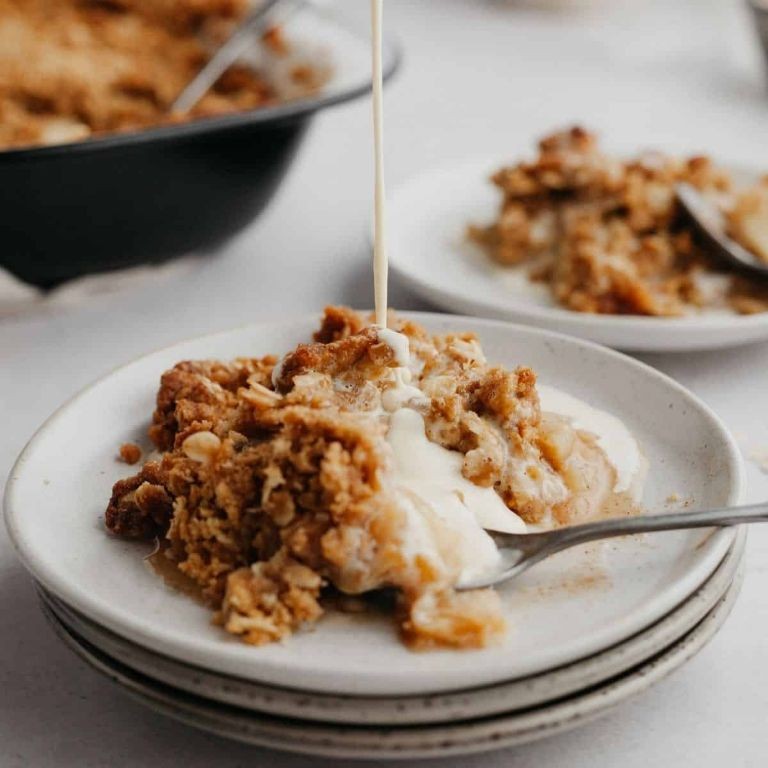
Evenings like this call for something warm and comforting, something that fills the kitchen with the scent of baking fruit and spice. It’s a quiet ritual, this making of an apple crumble, a slow unfolding of sweetness and crunch that feels like a gentle embrace after a long day. I find myself drawn to the simplicity of it, the way humble ingredients transform into a dessert that feels like home.
Ingredients
– 6 cups of thinly sliced, crisp Honeycrisp apples
– 1/2 cup of granulated white sugar
– 1 tablespoon of freshly squeezed lemon juice
– 2 teaspoons of fragrant ground cinnamon
– 1 cup of old-fashioned rolled oats
– 3/4 cup of all-purpose flour
– 1/2 cup of packed light brown sugar
– 1/2 cup of cold, cubed unsalted butter
– 1/4 teaspoon of fine sea salt
– 2 cups of rich, creamy vanilla custard
Instructions
1. Preheat your oven to 375°F and lightly grease a 9-inch pie dish with butter.
2. In a large mixing bowl, combine the thinly sliced, crisp Honeycrisp apples, granulated white sugar, freshly squeezed lemon juice, and 1 teaspoon of fragrant ground cinnamon, tossing gently until the apples are evenly coated.
3. Transfer the apple mixture to the prepared pie dish, spreading it into an even layer.
4. In the same mixing bowl, combine the old-fashioned rolled oats, all-purpose flour, packed light brown sugar, the remaining 1 teaspoon of fragrant ground cinnamon, and fine sea salt, stirring with a fork to blend the dry ingredients thoroughly.
5. Add the cold, cubed unsalted butter to the oat mixture, using your fingertips or a pastry cutter to work the butter into the dry ingredients until the mixture resembles coarse crumbs with some pea-sized butter pieces remaining.
6. Sprinkle the crumble topping evenly over the apple mixture in the pie dish, covering the apples completely.
7. Place the dish in the preheated oven and bake for 35–40 minutes, or until the topping is golden brown and the apple filling is bubbling around the edges.
8. While the crumble bakes, gently warm the rich, creamy vanilla custard in a small saucepan over low heat, stirring occasionally until it is just heated through, about 5–7 minutes; do not let it boil.
9. Remove the baked apple crumble from the oven and let it rest on a wire rack for 10–15 minutes to allow the filling to set slightly.
10. Spoon the warm apple crumble into serving bowls and drizzle generously with the warmed vanilla custard.
Keeping the crumble warm allows the custard to melt into the nooks of the oat topping, creating a delightful contrast between the crisp, buttery crust and the soft, spiced apples beneath. The warmth of the cinnamon seems to deepen as it sits, mingling with the cool creaminess of the custard in a way that feels both rustic and deeply comforting.
Black Pudding and Apple Salad with Mustard Dressing

Sometimes the most comforting meals emerge from unexpected pairings, like this quiet afternoon when I found myself craving something that balanced earthy richness with bright, crisp notes. Slowly slicing through the dark, savory black pudding while the sweet-tart apples waited nearby felt like composing a quiet melody of flavors that would dance together in perfect harmony.
Ingredients
- 8 ounces of richly spiced black pudding, sliced into 1/2-inch rounds
- 2 crisp, sweet-tart Honeycrisp apples, cored and thinly sliced
- 4 cups of tender mixed baby greens
- 1/4 cup of smooth Dijon mustard
- 2 tablespoons of golden, rich extra virgin olive oil
- 1 tablespoon of raw, unfiltered apple cider vinegar
- 1 teaspoon of wildflower honey
- 1/4 teaspoon of finely ground sea salt
- 1/8 teaspoon of freshly cracked black pepper
Instructions
- Heat a large skillet over medium heat until a drop of water sizzles immediately upon contact.
- Arrange the black pudding slices in a single layer in the hot skillet, being careful not to overcrowd the pan.
- Cook the black pudding for 3-4 minutes per side until the edges are crisp and the surface develops a deep golden-brown crust.
- Transfer the cooked black pudding to a paper towel-lined plate to drain excess grease, which helps maintain the ideal texture.
- While the black pudding cools slightly, whisk together the Dijon mustard, extra virgin olive oil, apple cider vinegar, wildflower honey, sea salt, and black pepper in a small bowl until the dressing becomes smooth and emulsified.
- Toss the mixed baby greens and thinly sliced apples in a large salad bowl until evenly distributed.
- Drizzle three-quarters of the mustard dressing over the greens and apples, then gently toss to coat every leaf without bruising the delicate greens.
- Arrange the warm black pudding slices over the dressed salad, creating an attractive pattern across the surface.
- Drizzle the remaining dressing directly over the black pudding slices to enhance their savory quality.
- Serve immediately while the black pudding retains its warmth against the cool salad components.
Just as the warm, crisped black pudding settles against the cool crispness of apples and greens, the mustard dressing bridges them with its sharp, creamy embrace. This salad sings with contrasting textures—the firm bite of sausage giving way to juicy apple slices and tender greens—making it perfect for serving alongside crusty bread to soak up every last drop of that vibrant dressing.
Treacle Tart with Clotted Cream
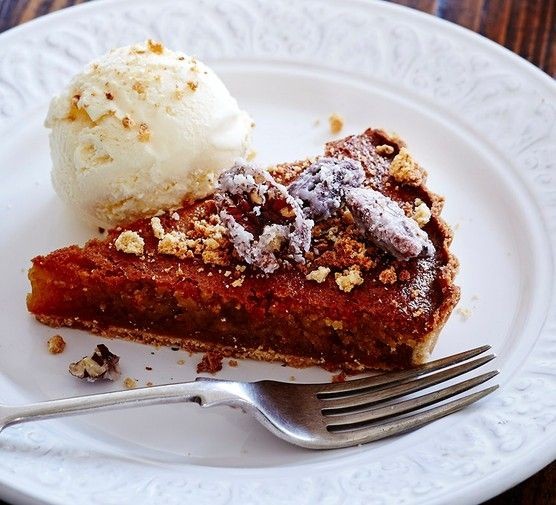
Zestful memories of English tea rooms drift through my kitchen today, the golden light of this November afternoon settling like dust motes on worn wooden counters. There’s something quietly comforting about preparing a treacle tart, its sweet, dark heart promising warmth against the chill creeping at the windowpane.
Ingredients
– 1 ½ cups all-purpose flour, finely sifted
– ½ cup unsalted butter, cold and cubed
– 3 tablespoons ice-cold water
– 1 cup golden syrup, thick and amber-hued
– 1 ½ cups fresh white breadcrumbs, finely textured
– Zest of 1 large lemon, brightly fragrant
– 2 tablespoons fresh lemon juice, sharply tangy
– 1 large egg, lightly beaten for glazing
– Clotted cream, richly thick and ivory-colored, for serving
Instructions
1. Place the finely sifted all-purpose flour and cold, cubed unsalted butter into a large mixing bowl.
2. Use your fingertips to rub the butter into the flour until the mixture resembles coarse, sandy breadcrumbs with no large butter lumps remaining.
3. Gradually sprinkle the ice-cold water over the mixture, one tablespoon at a time, while mixing with a fork until the dough just comes together into a shaggy ball.
4. Gently knead the dough on a lightly floured surface for exactly 30 seconds until smooth, being careful not to overwork it to ensure a tender, flaky crust.
5. Wrap the dough tightly in plastic wrap and refrigerate for 30 minutes until firm to the touch.
6. Preheat your oven to 375°F and position a rack in the center of the oven.
7. Roll out the chilled dough on a floured surface to a ¼-inch thickness, large enough to line a 9-inch tart pan with a removable bottom.
8. Carefully transfer the dough to the tart pan, gently pressing it into the corners and up the sides without stretching it to prevent shrinkage during baking.
9. Trim any excess dough from the edges using a sharp knife, then prick the base all over with a fork to prevent bubbling.
10. Line the pastry shell with parchment paper and fill with pie weights or dried beans, then blind bake for 15 minutes until the edges look pale golden.
11. Carefully remove the parchment and weights, then brush the entire pastry base with the lightly beaten egg to create a moisture barrier.
12. Return the tart shell to the oven and bake for 5 more minutes until the egg wash appears set and glossy.
13. In a medium saucepan, gently warm the thick, amber-hued golden syrup over low heat for 2-3 minutes until it becomes fluid but not hot.
14. Remove the warmed syrup from heat and stir in the finely textured fresh white breadcrumbs, brightly fragrant lemon zest, and sharply tangy fresh lemon juice until fully combined.
15. Pour the treacle filling into the pre-baked tart shell, spreading it evenly with a spatula.
16. Bake at 375°F for 20-25 minutes until the filling appears set around the edges but still has a slight wobble in the center, which will firm up as it cools.
17. Transfer the tart to a wire rack and let it cool completely in the pan, about 2 hours, before attempting to remove the outer ring.
18. Serve each slice with a generous dollop of richly thick, ivory-colored clotted cream.
Oozing with dark, caramelized sweetness that’s perfectly cut by the bright lemon zest, this tart achieves a wonderful contrast between the crisp, buttery pastry and the soft, chewy filling. The clotted cream melts luxuriously into the warm treacle, creating ribbons of cool richness through each bite—try serving it slightly warmed with a pot of strong English breakfast tea for the most authentic experience.
Summary
Delicious comfort awaits in these 19 hearty British recipes! From cozy stews to savory pies, each dish promises warmth and satisfaction. We hope you find new favorites to share around your table. Try them out, then let us know which recipes you loved most in the comments below—and don’t forget to pin this roundup on Pinterest for easy meal planning!