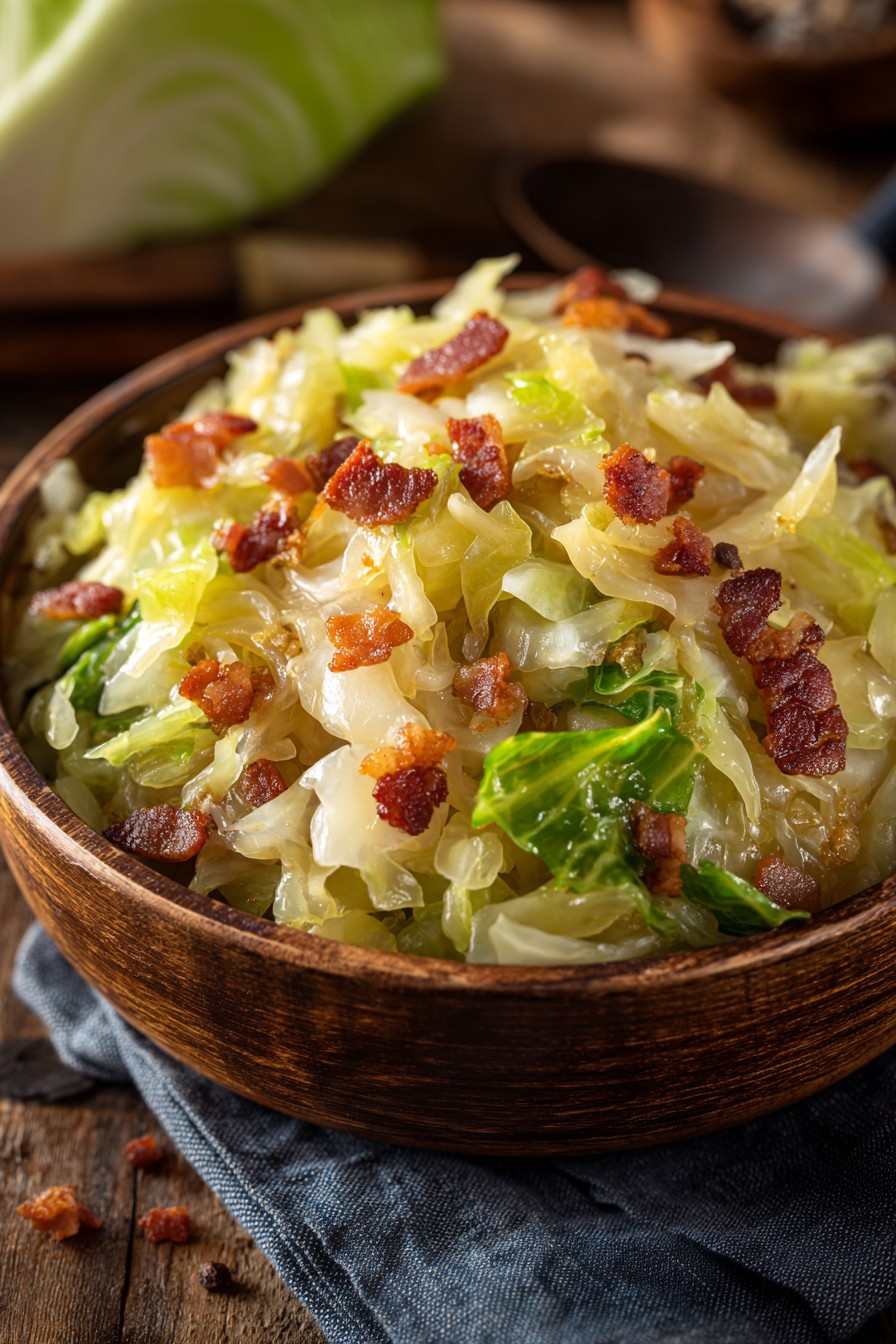
Nurtured by the timeless traditions of Bavarian kitchens, this sauerkraut recipe calls to those who appreciate the symphony of tangy, earthy, and savory flavors. With roots tracing back to ancient fermented foods, each bite is a passage through the lush lands of Bavaria, echoing the laughter of Oktoberfest and the cozy warmth of alpine huts.
Why This Recipe Works
- Fermentation elevates the cabbage’s natural flavors and creates gut-friendly probiotics.
- Onions and juniper berries infuse depth and authenticity into the dish.
- Bacon adds a smoky contrast, balancing tanginess and bringing a savory element.
Ingredients
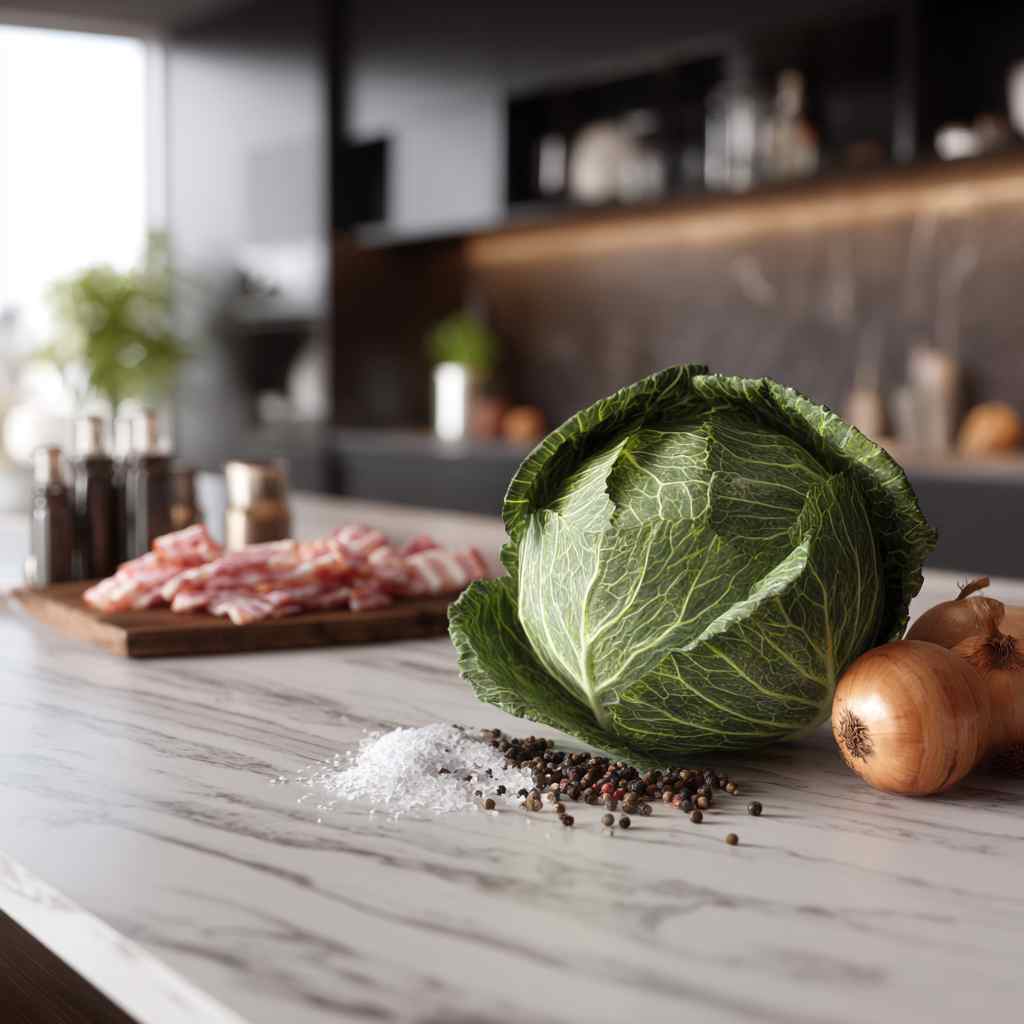
- 2 pounds green cabbage, finely shredded
- 3 tablespoons kosher salt
- 1 tablespoon caraway seeds
- 1 cup chopped onions
- 5 juniper berries
- 4 slices of bacon, cooked and crumbled
- 2 cups water
- 1 tablespoon apple cider vinegar
Equipment Needed
- Large mixing bowl
- Mandoline or sharp knife
- Fermentation crock or glass jar
- Food-safe plastic wrap
- Large skillet
Instructions
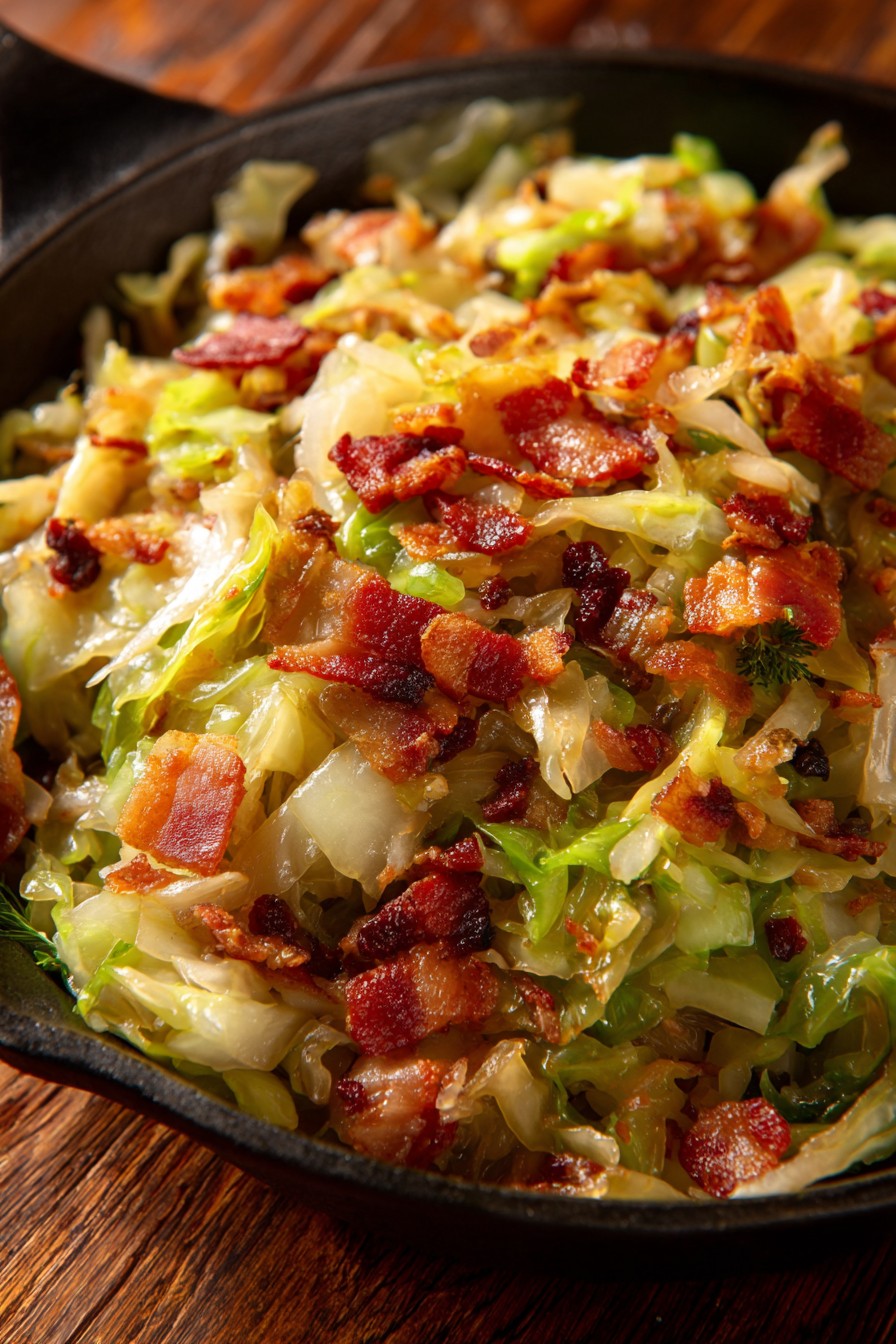
Step 1: Prepare the Cabbage
Begin by shredding the cabbage into thin strips using a mandoline or sharp knife, creating consistent sizes to ensure even fermentation. In a large mixing bowl, combine the shredded cabbage with the kosher salt, tossing to blend thoroughly. Allow this mixture to sit at room temperature for about 20-30 minutes. The salt will draw out the natural juices from the cabbage, crucial for fermentation. A tip: the fresher the cabbage, the more liquid it will release, enhancing the tangy flavor.
Step 2: Ready the Flavorings
Take your prepared chopped onions and mix them into the cabbage, along with the caraway seeds and juniper berries. The juniper berries provide a subtle pine-like note, reminiscent of the Bavarian forests, which pairs beautifully with the earthy undertones of the caraway. A helpful tip is to gently crush the juniper berries before adding, releasing their aromatic oils. This imparts a deeper, more authentic flavor to the sauerkraut.
Step 3: Pack and Ferment
Transfer the seasoned cabbage into a fermentation crock or glass jar, packing it tightly to eliminate any air pockets. Pour the natural juices over the cabbage, ensuring it’s submerged under liquid. Use plastic wrap to cover the mixture directly, pressing it down to keep in the moisture. Weight the cabbage with a heavy object like a small plate, and cover the top loosely. Let it ferment at room temperature, approximately 65-72°F, for 1-4 weeks. Tip: taste after the first week to judge the tanginess level, and ferment longer for a stronger flavor.
Step 4: Cook the Bacon
While your sauerkraut is happily bubbling away, it’s time to prepare the bacon. Heat a large skillet over medium heat and cook your bacon strips until crisp, about 6-8 minutes. Remove from the skillet and allow to cool before crumbling. Bacon not only adds a smoky depth but also a contrasting crunch that enhances the texture of the sauerkraut. Reserve the bacon fat for a step-to-come, infusing your dish with even more richness.
Step 5: Finish the Sauerkraut
Once your sauerkraut has reached your desired sourness, it’s ready to be cooked! In the skillet with reserved bacon fat, add the sauerkraut, stirring occasionally and warming it thoroughly over medium heat. Stir in the crumbled bacon and add the apple cider vinegar to brighten the flavors. Cook for about 10-15 minutes until the onions become translucent and the entire mixture is heated through. Serve warm, allowing the aromas to transport you to a cozy Bavarian inn.
Tips and Tricks
For even fermentation, press the cabbage well to ensure it’s submerged in its juices. Use a dedicated fermentation crock to maintain consistent temperatures. Refrigerating the sauerkraut after it’s reached peak fermentation can halt the process while maintaining its full flavor. Experiment with additional spices such as fennel seed or mustard seed for a flavor twist. Regularly check for off smells, indicating spoilage, although properly fermented kraut shouldn’t.
Recipe Variations
- Add a touch of heat by including red pepper flakes in the fermentation process.
- For a sweeter profile, mix in thinly sliced apples during the cooking stage.
- Swap bacon for smoked sausage slices for a meatier variation.
- Incorporate dill seeds for a distinct, herbal flavor reminiscent of pickles.
- Experiment by mixing in shredded carrots for added color and sweetness.
Frequently Asked Questions
- How long does homemade sauerkraut last? Properly stored in an airtight container in the refrigerator, homemade sauerkraut can last several months. Inspect it regularly—if it remains crisp and smells pleasantly tangy, it should still be good to eat.
- Can sauerkraut be frozen? Yes, sauerkraut can be frozen, but note that freezing will affect its texture, making it softer upon thawing. It’s best for use in cooked dishes rather than as a raw condiment.
- Is sauerkraut healthy? Absolutely! Sauerkraut is an excellent source of dietary fiber, vitamin C, and beneficial probiotics, promoting a healthy gut. Enjoy it in moderation as part of a balanced diet for optimal health benefits.
- Do I have to use juniper berries? While juniper berries provide authenticity, the sauerkraut will still be tasty without them. Consider substituting with a small amount of gin for a similar botanical flavor if berries are not accessible.
Summary
This Bavarian sauerkraut recipe offers a rich and authentic taste of Germany, combining tangy, savory, and earthy flavors. Enjoy crafting this traditional dish at home, and taste the vibrant culinary heritage of Bavaria.
German Bavarian Sauerkraut Recipe
8
servings30
minutes15
minutesIngredients
Instructions
- 1 Shred cabbage and mix with salt. Let sit 20-30 minutes.
- 2 Mix cabbage with onions, caraway, and juniper berries.
- 3 Pack mixture in a crock, weigh it down, ferment 1-4 weeks.
- 4 Cook bacon until crisp, crumble. Reserve bacon fat.
- 5 Cook sauerkraut in bacon fat, add vinegar, and crumbled bacon. Serve warm.