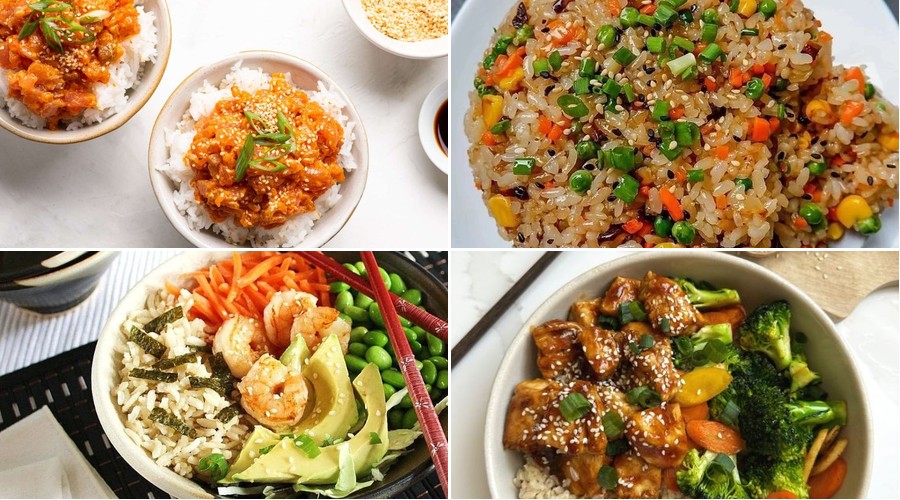
Hey there, home cooks! Have you ever wondered how to transform simple rice into extraordinary Japanese meals? From quick weeknight dinners to comforting classics, Japanese cuisine offers endless possibilities with this humble grain. Get ready to discover 20 mouthwatering recipes that will bring authentic Japanese flavors right to your kitchen. Let’s dive into these delicious creations that will make rice the star of your table!
Classic Japanese Rice Bowl with Teriyaki Chicken
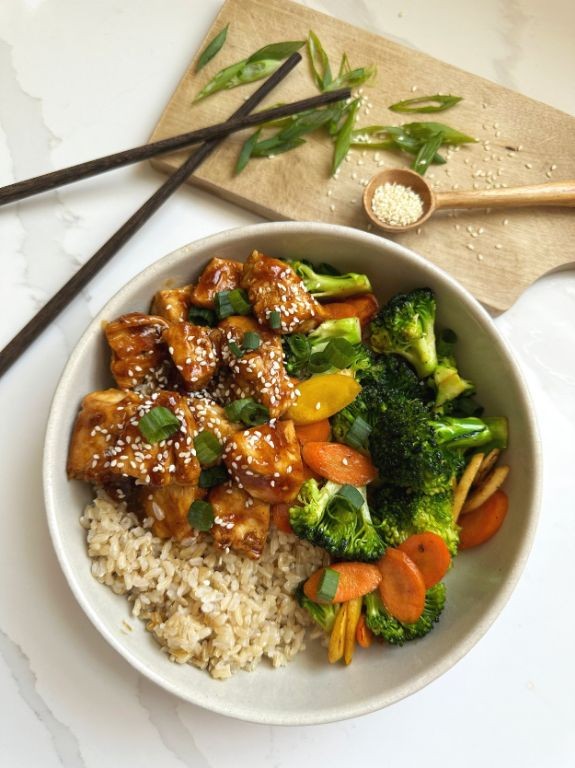
Heralding the perfect harmony of sweet and savory, this Classic Japanese Rice Bowl with Teriyaki Chicken brings restaurant-quality elegance to your home kitchen. Tender chicken glazed in a glossy teriyaki sauce rests atop perfectly steamed short-grain rice, creating a dish that satisfies both the palate and the soul. With its balanced flavors and beautiful presentation, it’s a meal that transforms ordinary ingredients into something truly special.
Ingredients
– 1 ½ cups short-grain white rice
– 2 cups water
– 1 ½ lbs boneless, skinless chicken thighs
– ½ tsp kosher salt
– ¼ tsp black pepper
– 1 tbsp vegetable oil
– ½ cup soy sauce
– ¼ cup mirin
– 2 tbsp sake
– 3 tbsp brown sugar
– 1 tsp grated fresh ginger
– 2 thinly sliced green onions
– 1 tsp toasted sesame seeds
Instructions
1. Rinse 1 ½ cups short-grain white rice under cold running water until the water runs clear to remove excess starch.
2. Combine the rinsed rice with 2 cups water in a medium saucepan and bring to a boil over high heat.
3. Reduce heat to low, cover the saucepan, and simmer for 18 minutes until all water is absorbed.
4. Remove the rice from heat and let it steam, covered, for 10 minutes to achieve perfect texture.
5. While rice cooks, pat 1 ½ lbs boneless, skinless chicken thighs dry with paper towels and season both sides with ½ tsp kosher salt and ¼ tsp black pepper.
6. Heat 1 tbsp vegetable oil in a large skillet over medium-high heat until shimmering.
7. Place chicken thighs in the hot skillet and cook for 6-7 minutes per side until golden brown and internal temperature reaches 165°F.
8. Transfer cooked chicken to a cutting board and let rest for 5 minutes to redistribute juices.
9. In the same skillet, combine ½ cup soy sauce, ¼ cup mirin, 2 tbsp sake, 3 tbsp brown sugar, and 1 tsp grated fresh ginger.
10. Bring the sauce to a simmer over medium heat, stirring constantly until the sugar dissolves completely.
11. Continue simmering the sauce for 4-5 minutes until it thickens enough to coat the back of a spoon.
12. Slice the rested chicken against the grain into ½-inch thick pieces.
13. Return the sliced chicken to the skillet and toss gently to coat evenly with the teriyaki glaze.
14. Fluff the steamed rice with a fork and divide evenly among four bowls.
15. Arrange the glazed chicken over the rice in each bowl.
16. Drizzle any remaining teriyaki sauce from the skillet over the chicken and rice.
17. Garnish each bowl with thinly sliced green onions and a sprinkle of toasted sesame seeds.
Velvety rice provides the perfect canvas for the glossy, caramelized chicken, creating contrasting textures that delight with every bite. The teriyaki sauce delivers a sophisticated balance of sweet and salty notes that lingers pleasantly on the palate. For an elegant presentation, serve in traditional Japanese donburi bowls and accompany with quick-pickled vegetables to cut through the richness.
Savory Gyudon (Beef Bowl) with Steamed Rice
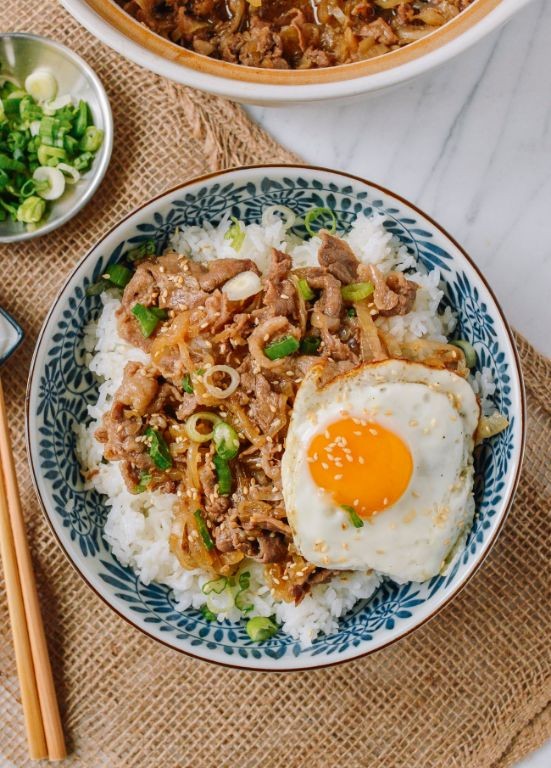
Beneath the steam rising from perfectly cooked rice lies a masterpiece of Japanese comfort cuisine, where thinly sliced beef melds with savory-sweet sauce in a harmonious bowl that satisfies both hunger and soul. This gyudon transforms simple ingredients into an elegant yet approachable meal, with tender beef and onions creating layers of flavor that dance across the palate. Each component works in concert to deliver a dining experience that feels both luxurious and deeply comforting.
Ingredients
– 1.5 cups Japanese short-grain rice
– 2 cups water
– 1 lb thinly sliced beef chuck
– 1 large yellow onion
– 2 tbsp neutral oil
– 1/2 cup dashi stock
– 3 tbsp soy sauce
– 2 tbsp mirin
– 1 tbsp sugar
– 2 tsp grated fresh ginger
– 2 soft-boiled eggs
– 1 tbsp sliced scallions
Instructions
1. Rinse 1.5 cups Japanese short-grain rice under cold running water until the water runs clear to remove excess starch.
2. Combine the rinsed rice with 2 cups water in a rice cooker and cook according to manufacturer’s instructions.
3. While rice cooks, slice 1 large yellow onion into thin, uniform 1/4-inch strips to ensure even cooking.
4. Heat 2 tbsp neutral oil in a large skillet over medium-high heat until shimmering but not smoking.
5. Add the sliced onions and cook for 3-4 minutes until they begin to soften and turn translucent.
6. Arrange 1 lb thinly sliced beef chuck in a single layer over the onions, separating the slices for even browning.
7. Cook the beef for 2 minutes without stirring to develop a golden sear on one side.
8. Flip the beef slices and cook for another minute until no pink remains visible.
9. Pour in 1/2 cup dashi stock, 3 tbsp soy sauce, 2 tbsp mirin, and 1 tbsp sugar, stirring to combine.
10. Add 2 tsp grated fresh ginger to the skillet and stir gently to distribute throughout the mixture.
11. Reduce heat to medium-low and simmer the beef and onion mixture for 8-10 minutes until the sauce thickens slightly and coats the ingredients.
12. Divide the steamed rice evenly between two deep bowls, creating a slight well in the center.
13. Spoon the beef and onion mixture over the rice, ensuring each portion receives equal amounts of meat and sauce.
14. Halve 2 soft-boiled eggs and place one half on each bowl, yolk-side up.
15. Garnish with 1 tbsp sliced scallions scattered evenly over both servings.
Yielding to the spoon, the tender beef practically melts against the firm rice grains, while the rich egg yolk creates a luxurious sauce that enhances the savory-sweet broth. Thin onion strands provide subtle crunch and sweetness that balance the deeply umami flavors, making each bite a study in contrasting textures. For an elegant presentation, serve in traditional lacquer bowls and accompany with pickled ginger to cut through the richness, creating a complete dining experience that transports you straight to a Tokyo eatery.
Spicy Tuna Donburi with Sushi Rice
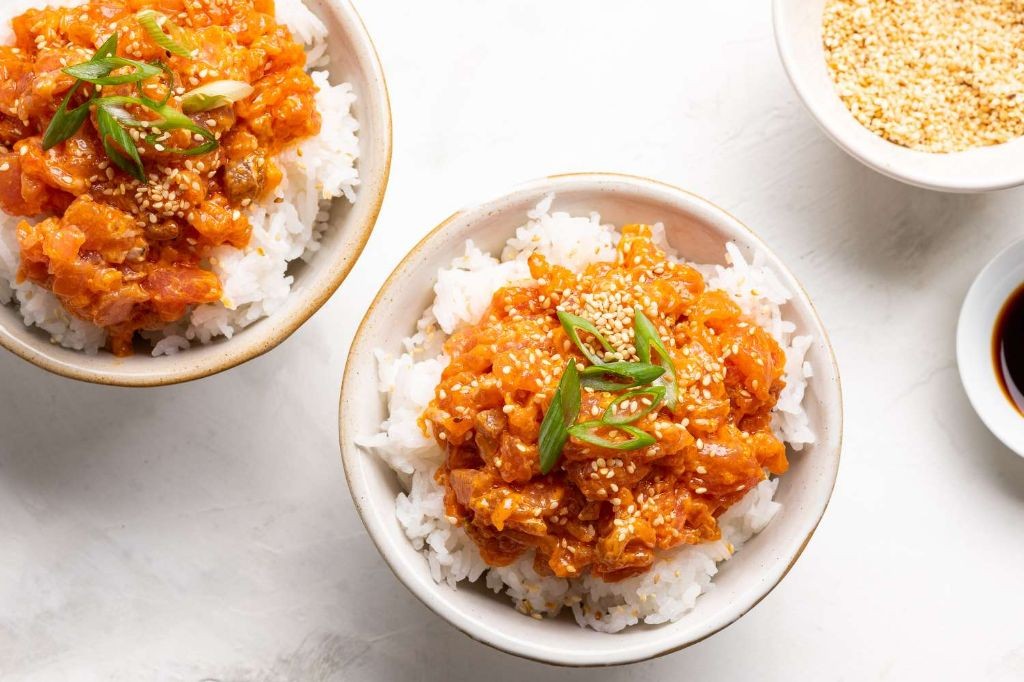
Fusing Japanese culinary tradition with contemporary flair, this Spicy Tuna Donburi presents a harmonious balance of textures and flavors. Fresh tuna meets perfectly seasoned sushi rice in a dish that’s both elegant and deeply satisfying. Each component works in concert to create a dining experience that feels both refined and comforting.
Ingredients
– 1.5 cups sushi rice
– 2 cups water
– 1/4 cup rice vinegar
– 2 tablespoons sugar
– 1 teaspoon salt
– 12 ounces fresh sushi-grade tuna
– 2 tablespoons mayonnaise
– 1 tablespoon sriracha
– 1 teaspoon soy sauce
– 1/2 teaspoon sesame oil
– 1 avocado
– 1 tablespoon toasted sesame seeds
– 2 green onions
– 1 sheet nori
Instructions
1. Rinse 1.5 cups sushi rice under cold running water until the water runs clear, which typically takes 3-4 minutes of gentle agitation.
2. Combine the rinsed rice with 2 cups water in a medium saucepan and bring to a boil over high heat.
3. Reduce heat to low, cover the saucepan, and simmer for 15 minutes without lifting the lid.
4. Remove the saucepan from heat and let the rice stand, covered, for 10 minutes to complete the steaming process.
5. While the rice cooks, combine 1/4 cup rice vinegar, 2 tablespoons sugar, and 1 teaspoon salt in a small saucepan over medium heat, stirring until dissolved.
6. Transfer the cooked rice to a large wooden or glass bowl and gently fold in the vinegar mixture using a cutting motion with a rice paddle.
7. Cool the seasoned rice to room temperature by fanning it while gently turning, which creates the perfect glossy texture.
8. Cut 12 ounces fresh sushi-grade tuna into 1/2-inch cubes using a sharp knife, keeping your cuts clean and uniform.
9. In a medium bowl, whisk together 2 tablespoons mayonnaise, 1 tablespoon sriracha, 1 teaspoon soy sauce, and 1/2 teaspoon sesame oil until fully emulsified.
10. Gently fold the cubed tuna into the spicy mayonnaise mixture until evenly coated, being careful not to break down the tuna pieces.
11. Thinly slice 2 green onions on a sharp diagonal and cut 1 avocado into 1/4-inch slices.
12. Toast 1 sheet nori over a gas flame for 10 seconds per side until crisp, then cut into thin strips using kitchen shears.
13. Divide the seasoned sushi rice evenly between two bowls, creating a slight mound in the center of each.
14. Arrange the spicy tuna mixture over the rice, leaving a border of rice visible around the edges.
15. Artfully arrange the avocado slices around the tuna and sprinkle with sliced green onions.
16. Garnish with 1 tablespoon toasted sesame seeds and the nori strips just before serving.
Buttery avocado slices provide a cooling contrast to the spicy tuna, while the crisp nori adds essential texture. For an elegant presentation, serve in handmade ceramic bowls and garnish with edible flowers. The combination of warm rice against cool, spicy tuna creates a temperature contrast that elevates the entire experience.
Japanese Curry Rice with Tender Pork Cutlet
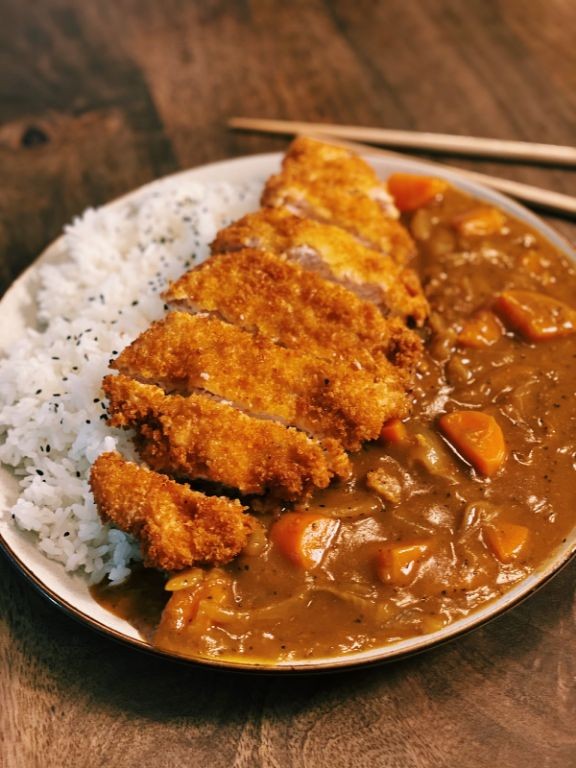
Unveiling the ultimate comfort food fusion, Japanese Curry Rice with Tender Pork Cutlet combines the deep, aromatic spices of traditional curry with the satisfying crunch of perfectly fried pork. This harmonious dish balances rich, velvety sauce against crisp, juicy cutlets for a textural experience that delights with every bite. Whether you’re new to Japanese cuisine or a seasoned enthusiast, this recipe delivers restaurant-quality results in your own kitchen.
Ingredients
– 1.5 lbs pork loin cutlets
– 1 cup all-purpose flour
– 2 large eggs
– 2 cups panko breadcrumbs
– 4 cups vegetable oil
– 1 large yellow onion
– 2 medium carrots
– 2 medium potatoes
– 3 cups water
– 1 package Japanese curry roux
– 4 cups cooked Japanese short-grain rice
Instructions
1. Season 1.5 lbs pork loin cutlets evenly with salt on both sides.
2. Dredge each pork cutlet thoroughly in 1 cup all-purpose flour, shaking off excess.
3. Dip floured cutlets into 2 beaten large eggs, ensuring complete coating.
4. Press egg-coated cutlets firmly into 2 cups panko breadcrumbs until fully covered.
5. Heat 4 cups vegetable oil in a heavy-bottomed pot to 350°F using a deep-fry thermometer.
6. Carefully lower one breaded pork cutlet into the hot oil and fry for 4 minutes.
7. Flip the pork cutlet and continue frying for another 4 minutes until golden brown.
8. Remove the fried pork cutlet and drain on a wire rack for 3 minutes to maintain crispness.
9. Repeat steps 6-8 with remaining pork cutlets, maintaining oil temperature at 350°F.
10. Dice 1 large yellow onion into ½-inch pieces.
11. Peel and chop 2 medium carrots into ½-inch thick rounds.
12. Peel and cube 2 medium potatoes into 1-inch pieces.
13. Sauté diced onion in a separate large pot over medium heat for 5 minutes until translucent.
14. Add chopped carrots and cubed potatoes to the pot, stirring for 2 minutes.
15. Pour 3 cups water into the pot and bring to a boil over high heat.
16. Reduce heat to medium-low, cover the pot, and simmer for 15 minutes until vegetables are tender.
17. Break 1 package Japanese curry roux into pieces and whisk into the simmering liquid until completely dissolved.
18. Continue simmering the curry sauce for 5 minutes, stirring occasionally until thickened.
19. Place 1 cup cooked Japanese short-grain rice in each of 4 serving bowls.
20. Slice the fried pork cutlets into 1-inch wide strips against the grain.
21. Arrange sliced pork cutlets over the rice in each bowl.
22. Ladle hot curry sauce over the pork and rice, covering completely.
Velvety curry sauce clings to each grain of rice while the pork cutlet maintains its satisfying crunch beneath the surface. The complex spice blend unfolds gradually on the palate, with subtle sweetness from slow-cooked vegetables balancing the savory depth. For an elegant presentation, serve with pickled ginger and a sprinkle of toasted sesame seeds to accentuate the dish’s sophisticated flavor profile.
Tamago Kake Gohan (Raw Egg over Rice)
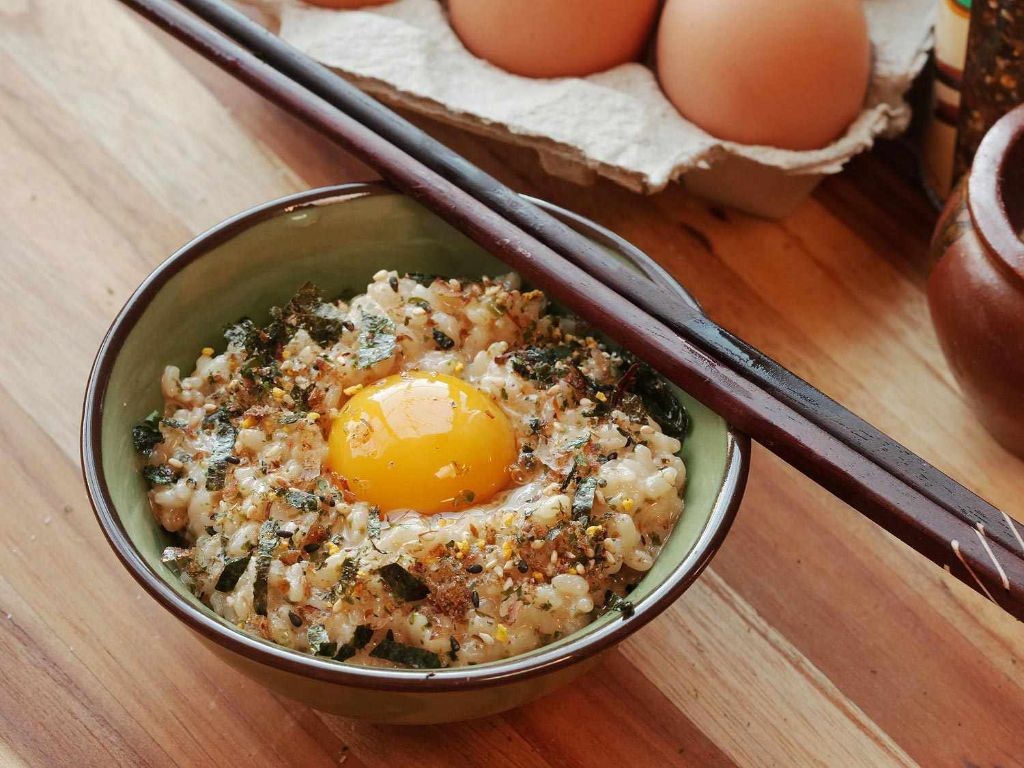
Kindly consider the Japanese breakfast staple that transforms humble ingredients into sublime comfort: Tamago Kake Gohan, where a raw egg cascades over steaming rice to create a velvety, custard-like dish that nourishes both body and soul with its elegant simplicity.
Ingredients
– 1 cup short-grain white rice
– 1 1/4 cups water
– 1 large pasteurized egg
– 1 tsp soy sauce
– 1/2 tsp toasted sesame oil
– 1 tbsp chopped green onion
Instructions
1. Rinse 1 cup short-grain white rice under cold running water in a fine-mesh strainer until the water runs clear, gently agitating the grains with your fingers to remove excess starch.
2. Combine the rinsed rice and 1 1/4 cups water in a medium saucepan, letting it soak for 20 minutes to ensure even cooking and optimal texture.
3. Place the saucepan over high heat and bring to a rolling boil, then immediately reduce the heat to low and cover tightly with a lid.
4. Simmer the rice for 18 minutes without lifting the lid, which allows steam to properly circulate and cook the grains evenly.
5. Remove the saucepan from heat and let it stand covered for 10 minutes to complete the steaming process and achieve perfectly separate grains.
6. Crack 1 large pasteurized egg into a small bowl, using pasteurized eggs for food safety when consuming raw or lightly cooked eggs.
7. Whisk the egg vigorously with 1 tsp soy sauce and 1/2 tsp toasted sesame oil until the mixture becomes pale and frothy, about 30 seconds.
8. Transfer the hot cooked rice to a serving bowl, creating a well in the center with the back of a spoon to cradle the egg mixture.
9. Pour the whisked egg mixture into the well while the rice is still hot, as the residual heat will gently cook the egg to a silky consistency.
10. Garnish with 1 tbsp chopped green onion just before serving to maintain their fresh, crisp texture against the warm rice.
Let this comforting bowl embrace you with its contrasting textures: the warm, sticky rice melds with the rich, velvety egg to create a luxurious mouthfeel, while the sesame oil adds nutty depth and the green onion provides bright freshness. For a creative twist, top with nori strips or a sprinkle of furikake to introduce umami complexity and visual appeal to this timeless dish.
Unagi Don (Grilled Eel Rice Bowl)
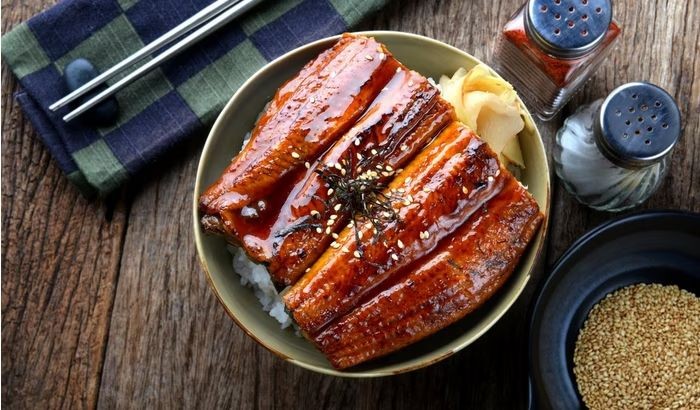
Zesty yet sophisticated, unagi don presents grilled freshwater eel glazed with a sweet-savory sauce over steaming Japanese rice. This traditional Japanese comfort dish balances rich umami flavors with delicate textures in a beautifully composed bowl. Perfect for both weeknight dinners and special occasions, it brings restaurant-quality elegance to your home kitchen.
Ingredients
– 2 cups Japanese short-grain rice
– 2 cups water
– 2 unagi fillets (8 oz each)
– 3 tbsp unagi sauce
– 1 tsp vegetable oil
– 1 tbsp toasted sesame seeds
– 2 green onions
– 1 sheet nori
Instructions
1. Rinse 2 cups Japanese short-grain rice under cold running water until water runs clear, about 3 minutes of gentle agitation.
2. Combine rinsed rice and 2 cups water in a rice cooker and cook according to manufacturer’s instructions, approximately 20 minutes.
3. While rice cooks, thinly slice 2 green onions on a diagonal and cut 1 sheet nori into thin strips using kitchen scissors.
4. Preheat oven to 400°F and line a baking sheet with aluminum foil for easy cleanup.
5. Brush both sides of 2 unagi fillets with 1 tsp vegetable oil using a pastry brush to prevent sticking.
6. Place unagi fillets skin-side down on the prepared baking sheet and bake for 8 minutes until heated through.
7. Remove unagi from oven and brush the top surface generously with 3 tbsp unagi sauce using a new brush to avoid cross-contamination.
8. Return sauced unagi to oven and broil on high for 2-3 minutes until sauce bubbles and caramelizes, watching carefully to prevent burning.
9. Divide cooked rice between two bowls, creating a slight mound in the center for visual appeal.
10. Carefully place one grilled unagi fillet over the rice in each bowl using a spatula to maintain its shape.
11. Drizzle remaining unagi sauce over the eel and rice in a circular motion for even distribution.
12. Sprinkle 1 tbsp toasted sesame seeds over the unagi for nutty flavor and crunch.
13. Garnish with sliced green onions and nori strips arranged artfully around the edges.
The glazed eel develops a lacquered sheen while maintaining its tender, flaky texture that contrasts beautifully with the sticky rice. For an elevated presentation, serve with pickled ginger and wasabi on the side to cut through the richness, creating a harmonious balance of sweet, savory, and spicy notes.
Takikomi Gohan (Mixed Rice with Seasonal Vegetables)
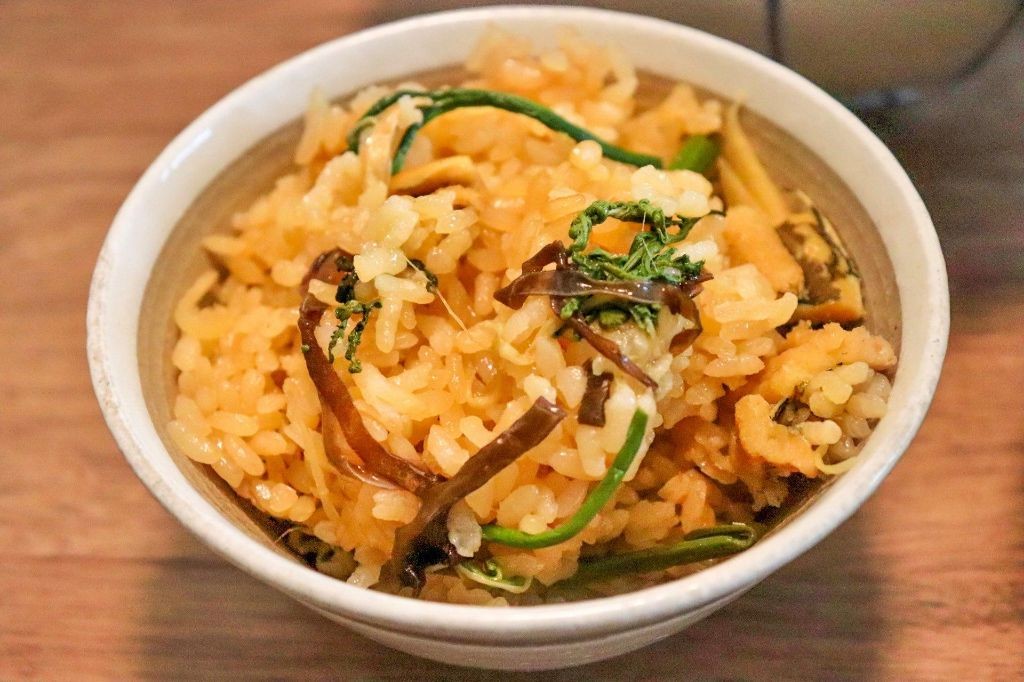
Fragrant and comforting, Takikomi Gohan transforms humble rice into an elegant one-pot meal where seasonal vegetables and savory seasonings steam together to create layers of complex flavor. This traditional Japanese mixed rice dish celebrates the simplicity of quality ingredients while delivering extraordinary depth in every spoonful. Perfect for autumn evenings, it brings warmth and sophistication to any table with minimal effort.
Ingredients
– 2 cups short-grain white rice
– 2 ¼ cups water
– 1 tbsp vegetable oil
– 1 carrot, diced into ¼-inch cubes
– 4 shiitake mushrooms, sliced ⅛-inch thick
– ½ cup fresh or frozen edamame
– 2 tbsp soy sauce
– 1 tbsp mirin
– 1 tsp dashi powder
– ¼ tsp salt
Instructions
1. Rinse 2 cups short-grain white rice under cold running water until the water runs clear, gently swirling the grains with your fingers to prevent breakage.
2. Transfer the rinsed rice to a fine-mesh strainer and let it drain for 15 minutes to remove excess moisture for optimal texture.
3. Heat 1 tbsp vegetable oil in a medium saucepan over medium heat until it shimmers, about 30 seconds.
4. Add 1 diced carrot and 4 sliced shiitake mushrooms to the pan, sautéing for 3 minutes until the vegetables begin to soften but retain slight crispness.
5. Stir in the drained rice and cook for 1 minute, coating each grain with oil to enhance its nutty flavor and prevent clumping.
6. Pour 2 ¼ cups water into the saucepan, followed by 2 tbsp soy sauce, 1 tbsp mirin, 1 tsp dashi powder, and ¼ tsp salt.
7. Add ½ cup edamame to the mixture, distributing them evenly without stirring to maintain distinct vegetable layers.
8. Bring the liquid to a boil over high heat, then immediately reduce to the lowest possible setting and cover with a tight-fitting lid.
9. Simmer for 18 minutes without lifting the lid to ensure proper steam buildup and even cooking.
10. Remove the pan from heat and let it rest, covered, for 10 minutes to allow the rice to absorb any remaining moisture and achieve perfect fluffiness.
11. Gently fluff the rice with a rice paddle or fork, folding the ingredients together from the bottom upward to preserve the delicate grain structure.
Hearty and aromatic, this Takikomi Gohan offers a delightful contrast of textures—tender rice grains, crisp-tender vegetables, and plump edamame—all unified by the umami-rich seasoning. The subtle sweetness from the mirin balances the savory depth of soy and dashi, creating a harmonious flavor profile that deepens as it rests. For an elegant presentation, serve it in individual lacquer bowls garnished with toasted sesame seeds and accompany with pickled ginger to brighten each bite.
Chirashi Sushi (Scattered Sushi Bowl)
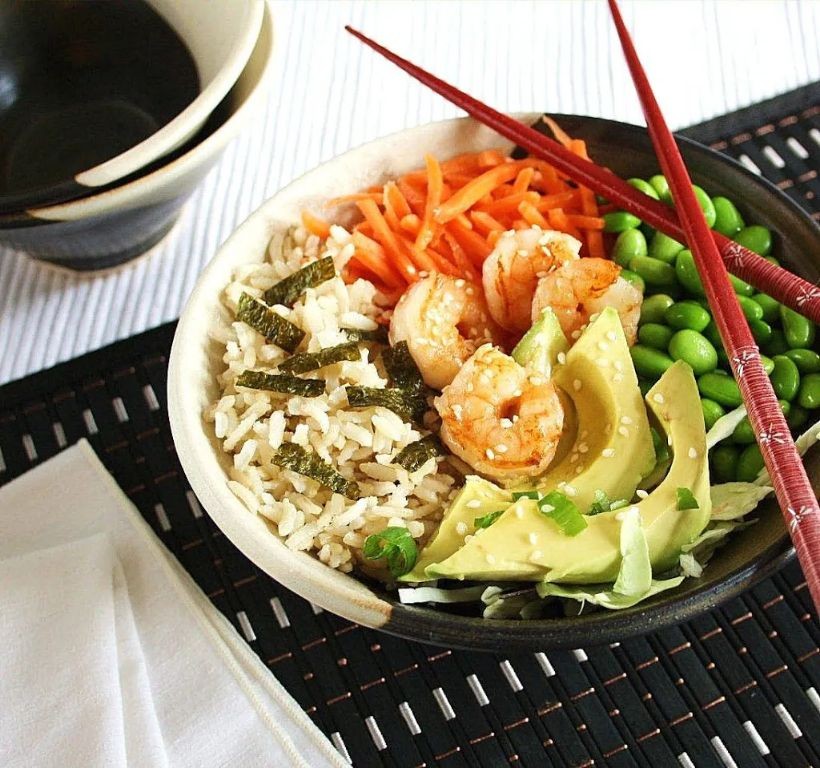
Perfectly arranged yet delightfully casual, chirashi sushi offers the elegant flavors of traditional sushi in an approachable bowl format. Picture jewel-like slices of fresh fish artfully scattered over seasoned rice, creating a vibrant mosaic that celebrates both simplicity and sophistication. This deconstructed sushi experience brings restaurant-quality presentation to your home kitchen with surprising ease.
Ingredients
– 2 cups sushi rice
– 2 1/4 cups water
– 1/4 cup rice vinegar
– 2 tablespoons sugar
– 1 teaspoon salt
– 8 ounces fresh salmon fillet
– 8 ounces fresh tuna steak
– 1 medium cucumber
– 1 avocado
– 2 sheets nori
– 2 tablespoons toasted sesame seeds
– 1 tablespoon soy sauce
– 1 teaspoon wasabi paste
Instructions
1. Rinse 2 cups sushi rice under cold running water until the water runs clear, about 3 minutes of gentle agitation.
2. Combine the rinsed rice with 2 1/4 cups water in a heavy-bottomed saucepan and bring to a boil over high heat.
3. Reduce heat to low, cover tightly, and simmer for 18 minutes until all water is absorbed.
4. Remove rice from heat and let stand covered for 10 minutes to complete the steaming process.
5. While rice rests, combine 1/4 cup rice vinegar, 2 tablespoons sugar, and 1 teaspoon salt in a small saucepan.
6. Heat the vinegar mixture over medium heat for 2 minutes, stirring constantly until sugar and salt completely dissolve.
7. Transfer cooked rice to a large wooden or glass bowl and gently fold in the warm vinegar mixture using a cutting motion.
8. Cool the seasoned rice to room temperature by fanning it while occasionally turning, which creates the perfect glossy texture.
9. Cut 8 ounces salmon fillet and 8 ounces tuna steak against the grain into 1/4-inch thick slices.
10. Thinly slice 1 medium cucumber and 1 avocado into matchstick-sized pieces.
11. Toast 2 sheets nori over a gas flame for 10 seconds per side until crisp and fragrant.
12. Crumble the toasted nori into small pieces using your hands.
13. Divide the seasoned rice evenly among four serving bowls, creating a slight mound in the center.
14. Arrange the salmon and tuna slices decoratively over the rice, leaving some rice visible.
15. Scatter the cucumber and avocado around the fish, creating colorful accents.
16. Sprinkle 2 tablespoons toasted sesame seeds and the crumbled nori over the entire composition.
17. Serve immediately with small dishes of 1 tablespoon soy sauce and 1 teaspoon wasabi paste for dipping.
Knowing how the cool, firm fish contrasts with the tender, vinegared rice creates a symphony of textures in every bite. The subtle sweetness of the rice beautifully balances the rich umami of the fresh seafood, while the crisp vegetables provide refreshing counterpoints. For an elegant presentation, consider serving individual bowls garnished with edible flowers or microgreens to elevate this already stunning dish.
Omurice (Japanese Omelette Rice)
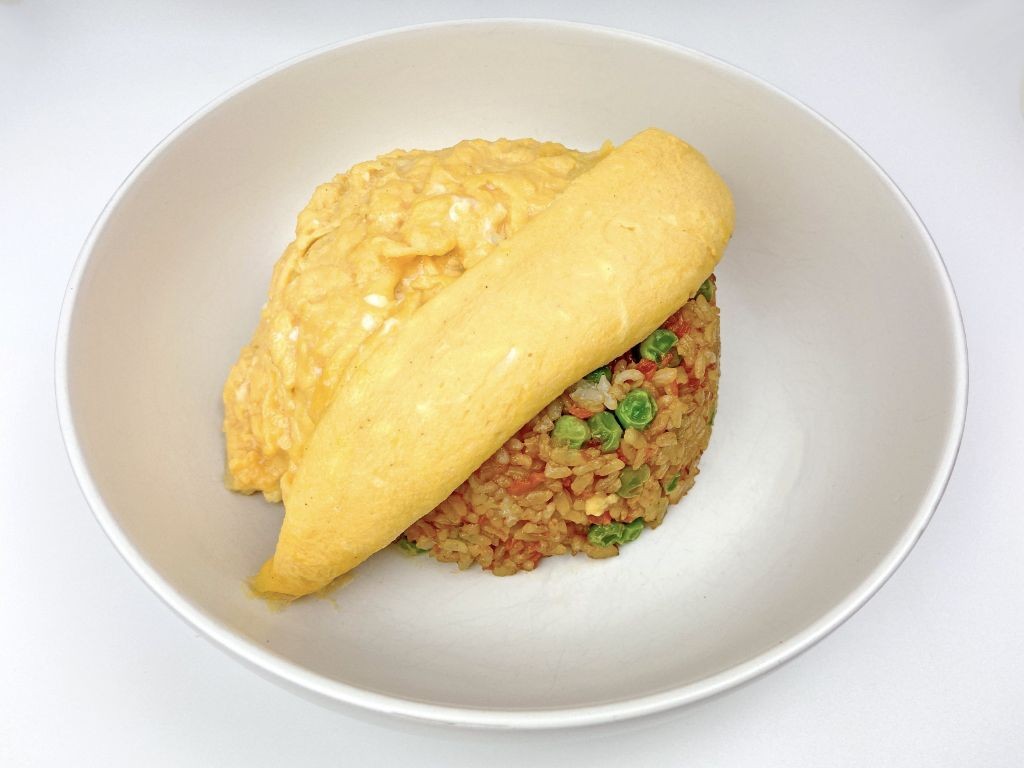
Perfectly bridging Western comfort and Japanese precision, omurice presents a delightful fusion where fluffy scrambled eggs embrace savory fried rice in an elegant package. This beloved yōshoku dish transforms humble ingredients into a visually stunning creation that satisfies both the palate and the eye. With its golden exterior giving way to a flavorful interior, it offers a comforting yet sophisticated meal suitable for any time of day.
Ingredients
- 2 cups cooked white rice
- 3 large eggs
- 1/2 cup diced yellow onion
- 1/4 cup diced ham
- 2 tablespoons ketchup
- 1 tablespoon unsalted butter
- 1 tablespoon vegetable oil
- 1/2 teaspoon salt
- 1/4 teaspoon black pepper
Instructions
- Heat 1 tablespoon vegetable oil in a 10-inch non-stick skillet over medium heat until shimmering, about 2 minutes.
- Add 1/2 cup diced yellow onion and cook until translucent, approximately 3-4 minutes.
- Stir in 1/4 cup diced ham and cook for 1 minute until lightly browned.
- Add 2 cups cooked white rice, breaking up any clumps with a spatula.
- Mix in 2 tablespoons ketchup, 1/2 teaspoon salt, and 1/4 teaspoon black pepper until evenly distributed.
- Transfer the fried rice to a bowl and wipe the skillet clean with a paper towel.
- Crack 3 large eggs into a separate bowl and whisk vigorously until fully combined and slightly frothy.
- Melt 1 tablespoon unsalted butter in the same skillet over medium-low heat until bubbling subsides.
- Pour the beaten eggs into the skillet and swirl to coat the entire surface evenly.
- Cook the eggs for 1 minute without stirring until the edges begin to set.
- Using a spatula, gently push cooked edges toward the center while tilting the skillet to allow uncooked egg to flow outward.
- Continue this push-and-tilt motion for 2-3 minutes until the eggs are 80% set but still slightly wet on top.
- Place the fried rice in a neat mound across the center third of the omelette.
- Carefully fold both sides of the omelette over the rice using the spatula.
- Slide the omurice onto a plate with the seam side down.
Omurice delights with its contrasting textures—the silky, barely-set egg wrapping yielding to the savory, ketchup-infused rice within. For an elegant presentation, drizzle additional ketchup in a zigzag pattern across the golden omelette surface before serving. The delicate egg envelope creates a beautiful reveal when sliced open, making each bite a perfect harmony of creamy and savory elements.
Yakimeshi (Japanese Fried Rice with Shrimp)
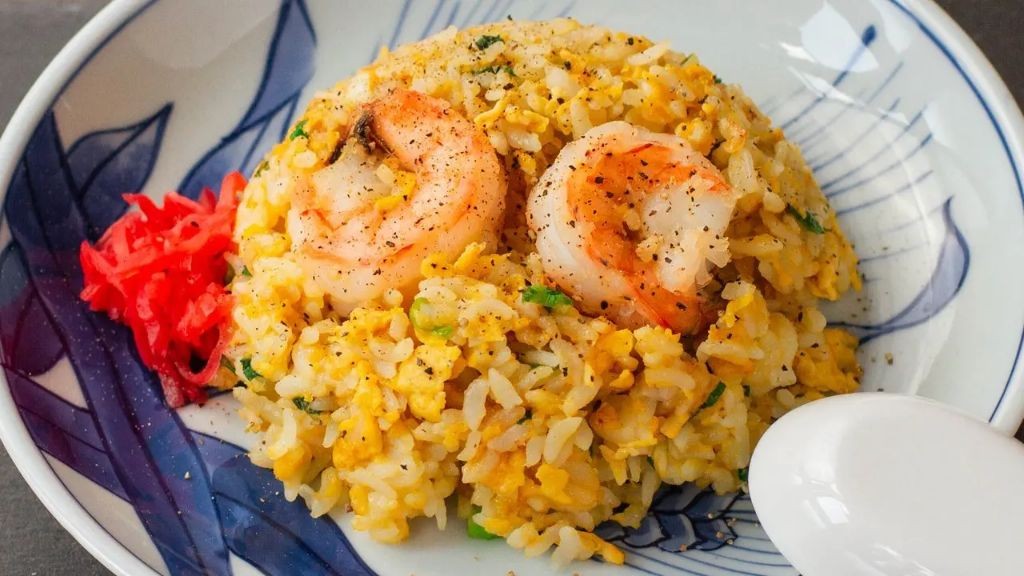
Hailing from the vibrant streets of Japanese cuisine, yakimeshi offers a symphony of textures and flavors that transforms humble ingredients into an extraordinary meal. This shrimp-studded fried rice balances delicate seafood sweetness with the satisfying chew of perfectly cooked grains, creating a dish that feels both comforting and sophisticated. With its golden-brown grains and colorful vegetable confetti, it’s a visual feast that promises culinary delight in every bite.
Ingredients
– 2 cups cooked Japanese short-grain rice
– 8 oz raw shrimp, peeled and deveined
– 2 tbsp vegetable oil
– 2 large eggs, beaten
– 1/2 cup frozen peas
– 1/4 cup finely diced carrot
– 2 tbsp soy sauce
– 1 tsp sesame oil
– 2 green onions, thinly sliced
– 1/4 tsp white pepper
Instructions
1. Spread cooked Japanese short-grain rice in a thin layer on a baking sheet and refrigerate for 30 minutes to dry the surface.
2. Pat raw shrimp completely dry with paper towels to ensure proper searing.
3. Heat 1 tablespoon vegetable oil in a large wok or skillet over high heat until shimmering.
4. Add shrimp in a single layer and cook for 90 seconds per side until pink and opaque.
5. Transfer cooked shrimp to a clean plate using tongs.
6. Pour beaten eggs into the hot wok and scramble for 45 seconds until softly set.
7. Remove scrambled eggs and place with the cooked shrimp.
8. Add remaining 1 tablespoon vegetable oil to the wok and heat for 30 seconds.
9. Add frozen peas and diced carrot, stir-frying for 2 minutes until carrots soften slightly.
10. Incorporate chilled rice, breaking up any clumps with a spatula.
11. Stir-fry rice mixture for 3 minutes until grains separate and develop a light golden color.
12. Return shrimp and eggs to the wok, gently folding to distribute evenly.
13. Drizzle soy sauce around the edges of the wok for maximum caramelization.
14. Add sesame oil and white pepper, tossing continuously for 1 minute.
15. Remove from heat and fold in sliced green onions.
Serving this yakimeshi immediately preserves the delightful contrast between the crispy rice crust and tender shrimp. The subtle nuttiness from toasted sesame oil complements the briny soy sauce, while the peas provide bursts of sweetness against the savory backdrop. For an elegant presentation, pack the fried rice into small bowls and invert onto plates to create perfect domes, garnished with extra green onion slivers.
Onigiri (Stuffed Rice Balls with Various Fillings)
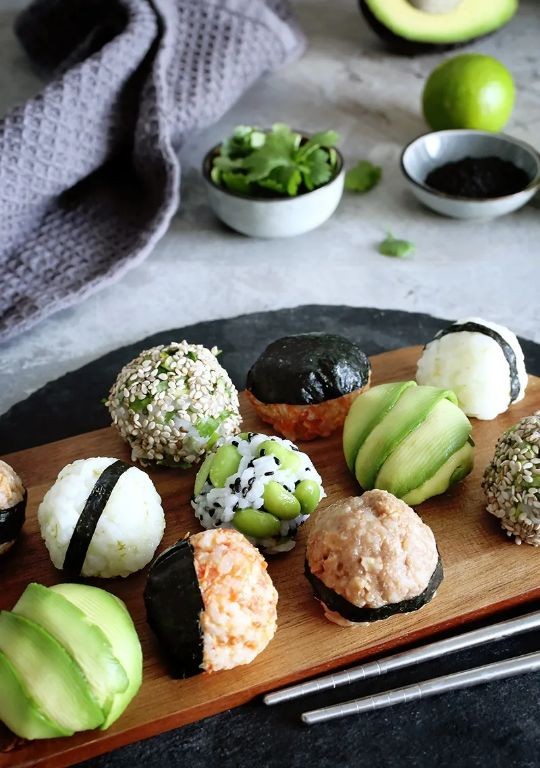
Onigiri, those delightful Japanese rice balls, offer a perfect canvas for creative fillings wrapped in perfectly seasoned rice. Our version features three classic fillings—savory salmon, umami-rich pickled plum, and sweet kombu—each encased in tender short-grain rice with a subtle salty finish from the nori wrap. Once you master the technique, you’ll find these portable treats become a regular in your lunch rotation.
Ingredients
– 2 cups short-grain white rice
– 2 1/4 cups water
– 1/4 cup rice vinegar
– 1 tablespoon granulated sugar
– 1 teaspoon salt
– 4 ounces cooked salmon, flaked
– 2 umeboshi (pickled plums), pitted
– 1/4 cup sweet kombu, chopped
– 4 sheets nori, cut into 2-inch wide strips
– 1/4 cup sesame seeds
– Water for wetting hands
Instructions
1. Rinse 2 cups short-grain white rice under cold running water until the water runs clear, about 3-4 changes of water.
2. Combine the rinsed rice and 2 1/4 cups water in a rice cooker and cook according to manufacturer’s instructions.
3. While rice cooks, mix 1/4 cup rice vinegar, 1 tablespoon granulated sugar, and 1 teaspoon salt in a small bowl until dissolved.
4. Transfer the cooked rice to a large wooden or glass bowl and gently fold in the vinegar mixture using a cutting motion with a rice paddle.
5. Cool the seasoned rice to room temperature, about 15-20 minutes, while fanning it occasionally to create glossy grains.
6. Fill a small bowl with water for wetting hands to prevent rice from sticking.
7. Wet your hands and sprinkle 1/4 cup sesame seeds over your palms.
8. Take about 1/3 cup of rice and form a small indentation in the center with your thumb.
9. Place 1 tablespoon of flaked salmon, 1/2 pitted umeboshi, or 2 teaspoons chopped sweet kombu into the indentation.
10. Carefully mold the rice around the filling, forming a tight triangle shape with firm but gentle pressure.
11. Wrap each rice ball with a 2-inch wide nori strip, positioning it along the bottom edge of the triangle.
12. Repeat the process with remaining ingredients, rewetting hands and adding sesame seeds as needed.
Just moments after shaping, you’ll appreciate the delightful contrast between the warm, slightly sticky rice and the vibrant fillings bursting through. The nori adds a satisfying crispness that softens beautifully if left to rest, while the sesame seeds provide subtle nuttiness and visual appeal. For an elegant presentation, arrange them on a wooden board with small dishes of soy sauce for dipping, creating an interactive appetizer that delights both visually and gastronomically.
Japanese Mushroom Rice with Truffle Oil
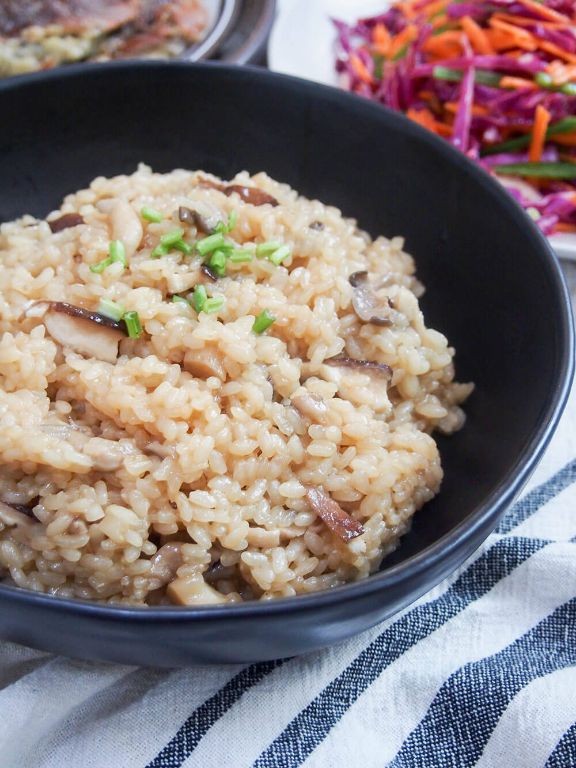
Dazzling in its simplicity yet profound in flavor, this Japanese Mushroom Rice with Truffle Oil transforms humble ingredients into an extraordinary meal. The earthy mushrooms and aromatic truffle oil create a symphony of umami that comforts and elevates simultaneously. Perfect for both weeknight dinners and special occasions, this dish showcases how minimal effort can yield maximum culinary impact.
Ingredients
– 1 ½ cups short-grain white rice
– 2 cups water
– 8 oz mixed mushrooms (shiitake, cremini, oyster)
– 2 tbsp unsalted butter
– 1 tbsp truffle oil
– 2 cloves garlic
– 1 tbsp soy sauce
– ½ tsp salt
– ¼ tsp black pepper
– 2 tbsp chopped fresh parsley
Instructions
1. Rinse 1 ½ cups short-grain white rice under cold running water until the water runs clear, which removes excess starch for fluffier grains.
2. Combine the rinsed rice and 2 cups water in a medium saucepan and bring to a boil over high heat.
3. Reduce heat to low, cover the saucepan, and simmer for 15 minutes until all water is absorbed.
4. While rice cooks, slice 8 oz mixed mushrooms into ¼-inch thick pieces for even cooking.
5. Mince 2 cloves garlic finely to distribute flavor evenly throughout the dish.
6. Heat 2 tbsp unsalted butter in a large skillet over medium heat until foaming subsides.
7. Add sliced mushrooms to the skillet and cook for 8-10 minutes, stirring occasionally, until golden brown and moisture has evaporated.
8. Add minced garlic to the skillet and cook for 1 minute until fragrant but not browned.
9. Stir in 1 tbsp soy sauce, ½ tsp salt, and ¼ tsp black pepper until mushrooms are evenly coated.
10. Remove the skillet from heat and gently fold the mushroom mixture into the cooked rice.
11. Drizzle 1 tbsp truffle oil over the rice mixture and fold gently to incorporate without overmixing.
12. Garnish with 2 tbsp chopped fresh parsley before serving. Keep the dish covered for 5 minutes after mixing to allow flavors to meld.
Keenly textured with separate, glossy grains that yield to tender mushrooms, this rice delivers deep earthy notes punctuated by truffle oil’s luxurious aroma. The subtle saltiness from soy sauce balances the mushrooms’ natural richness, creating layers of flavor in every bite. For an elegant presentation, serve in individual bowls topped with a soft-poached egg or alongside seared scallops to complement the umami profile.
Sekihan (Red Bean Rice for Celebrations)
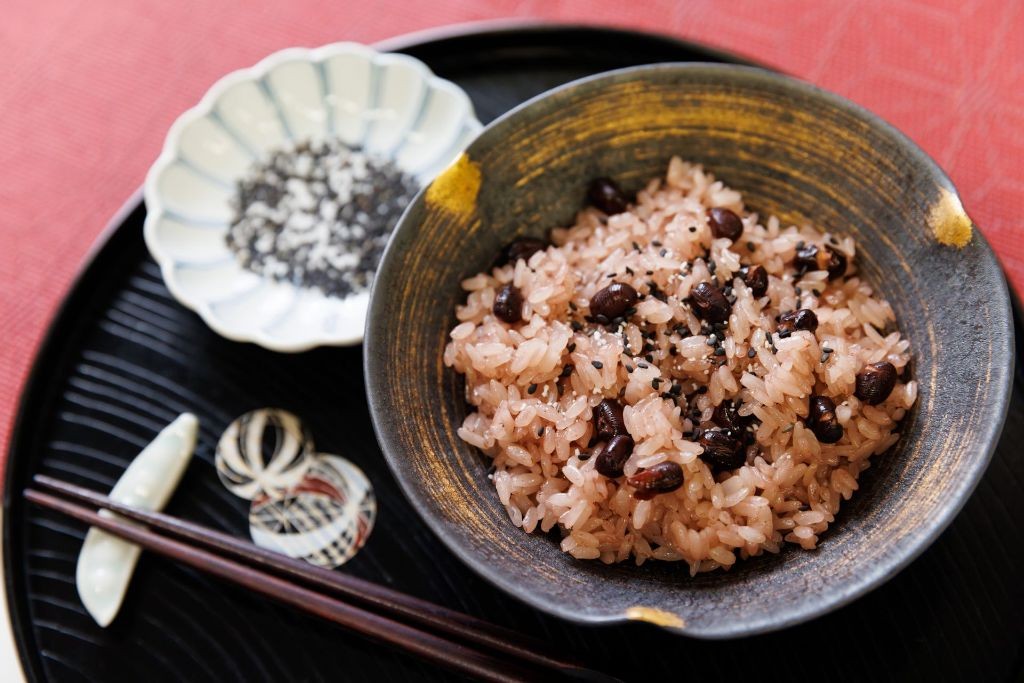
Vividly hued and steeped in Japanese tradition, Sekihan transforms humble ingredients into a celebratory feast. This stunning red bean rice, with its jewel-like appearance and subtle sweetness, has graced special occasions for generations, marking milestones with its distinctive color and comforting texture. The careful preparation yields grains that are tender yet distinct, infused with the earthy essence of adzuki beans.
Ingredients
– 1 cup sweet rice
– ¼ cup dried adzuki beans
– 1 ¼ cups water
– ½ tsp salt
– 1 tbsp black sesame seeds
Instructions
1. Rinse 1 cup sweet rice under cold running water until the water runs clear, then drain completely.
2. Soak the rinsed rice in fresh cold water for 30 minutes to ensure even cooking and proper texture.
3. Rinse ¼ cup dried adzuki beans and place them in a small saucepan with 2 cups water.
4. Bring the beans to a boil over high heat, then reduce heat to medium and simmer for 10 minutes.
5. Drain the beans through a fine-mesh strainer, reserving the vibrant red cooking liquid.
6. Measure 1 ¼ cups of the reserved red bean liquid, adding water if necessary to reach the exact amount.
7. Combine the soaked rice, cooked beans, measured red liquid, and ½ tsp salt in a heavy-bottomed pot.
8. Bring the mixture to a boil over high heat, then immediately reduce to the lowest possible simmer.
9. Cover the pot tightly with a lid and cook for 15 minutes without peeking to build proper steam.
10. Remove the pot from heat and let it rest, covered, for 10 minutes to complete the steaming process.
11. Gently fluff the rice with a rice paddle or fork to distribute the beans evenly without mashing.
12. Transfer the Sekihan to a serving bowl and sprinkle with 1 tbsp black sesame seeds for contrast.
Notably glossy and jewel-toned, the finished Sekihan offers a delightful contrast between the sticky, slightly sweet rice and the tender beans. The subtle nuttiness from the sesame seeds complements the earthy sweetness, creating layers of flavor in every bite. For an elegant presentation, consider molding individual portions in small bowls or serving alongside lightly pickled vegetables to balance the richness.
Chahan (Japanese-Style Chinese Fried Rice)
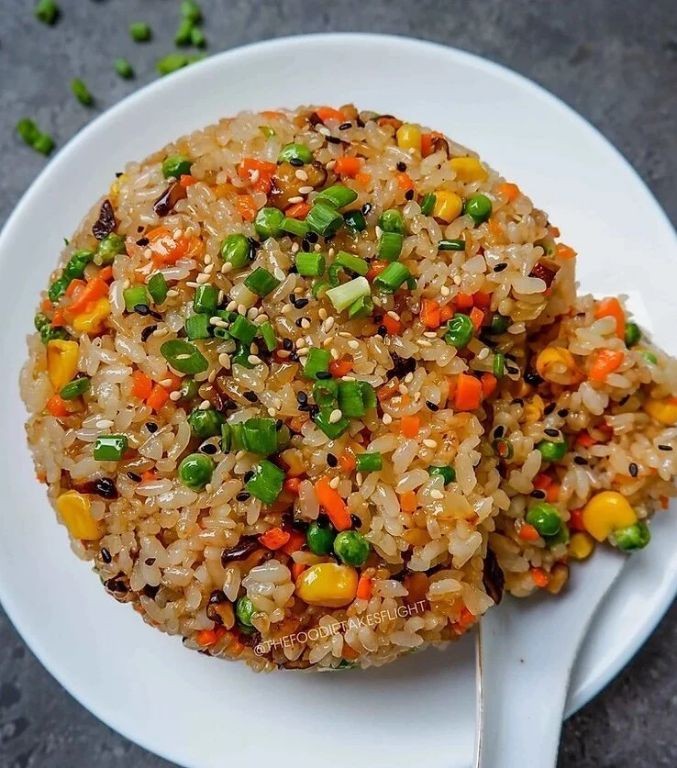
Luminous with golden-brown grains and studded with colorful vegetables, Chahan brings the comforting essence of Japanese-Chinese fusion to your table with remarkable simplicity. This fried rice variation masterfully balances savory depth with delicate textures, transforming humble ingredients into an elegant one-pan meal. Perfect for weeknight dinners or creative leftovers, it delivers restaurant-quality satisfaction with home kitchen ease.
Ingredients
– 3 cups cooked Japanese short-grain rice
– 2 large eggs
– 1/2 cup diced yellow onion
– 1/2 cup diced carrots
– 1/2 cup frozen peas
– 4 ounces diced ham
– 3 tablespoons vegetable oil
– 2 tablespoons soy sauce
– 1 teaspoon sesame oil
– 2 sliced scallions
Instructions
1. Spread 3 cups cooked Japanese short-grain rice on a baking sheet and refrigerate uncovered for 30 minutes to dry the surface.
2. Heat a large wok or skillet over high heat until a drop of water sizzles and evaporates immediately.
3. Add 1 tablespoon vegetable oil and swirl to coat the cooking surface evenly.
4. Pour 2 beaten large eggs into the hot wok and scramble for 45 seconds until softly set but still moist.
5. Transfer scrambled eggs to a clean plate immediately to prevent overcooking.
6. Add remaining 2 tablespoons vegetable oil to the empty wok and heat until shimmering.
7. Sauté 1/2 cup diced yellow onion and 1/2 cup diced carrots for 2 minutes until onions turn translucent.
8. Add 4 ounces diced ham and cook for 1 minute until lightly browned around the edges.
9. Incorporate 1/2 cup frozen peas and stir-fry for 30 seconds until thawed and heated through.
10. Add chilled rice to the wok, breaking up any clumps with a spatula against the hot surface.
11. Stir-fry the rice mixture for 3 minutes, pressing grains against the wok to develop slight crispness.
12. Drizzle 2 tablespoons soy sauce around the edges of the wok where it will sizzle and caramelize.
13. Return scrambled eggs to the wok and toss gently to distribute evenly throughout the rice.
14. Remove wok from heat and stir in 1 teaspoon sesame oil for aromatic finish.
15. Fold in 2 sliced scallions just before serving to maintain their fresh crunch.
Chewy grains with caramelized edges contrast beautifully with tender vegetables and savory ham, while the sesame oil adds a nutty fragrance that elevates the entire dish. Consider serving it in a heated stone bowl to maintain temperature, or top with a perfectly fried egg for extra richness that creates a luxurious sauce when broken over the rice.
Salmon Ikura Don (Salmon and Salmon Roe Rice Bowl)
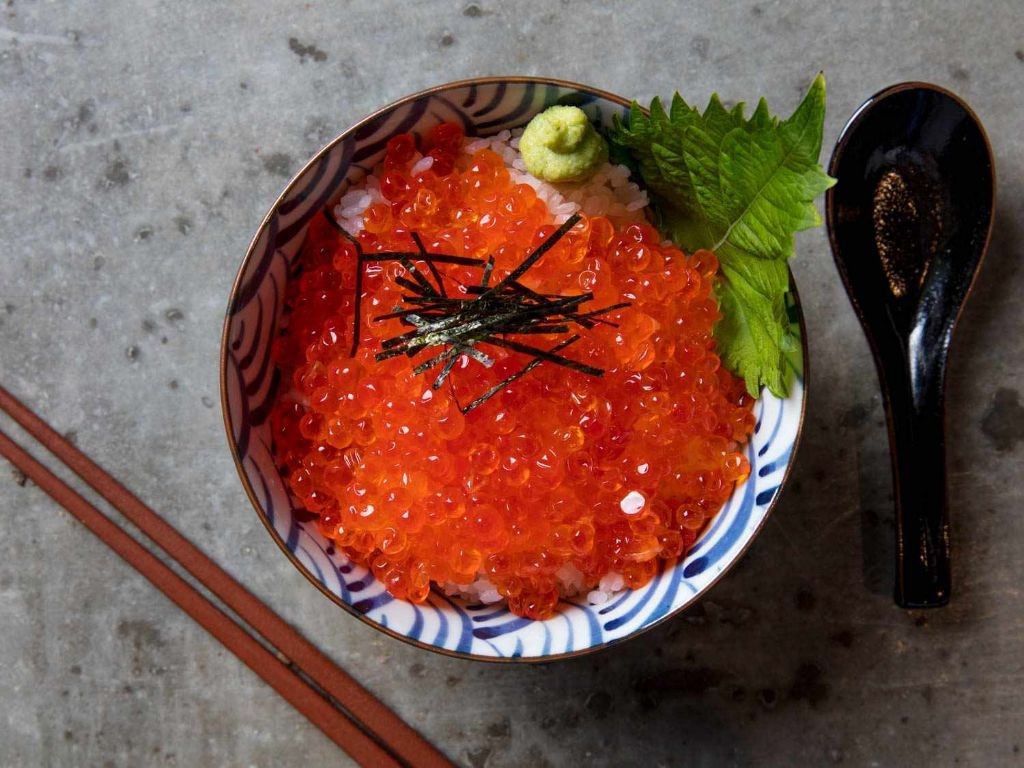
Marrying the ocean’s finest treasures, this elegant bowl combines silky salmon with jewel-like ikura atop perfectly seasoned rice. Each component celebrates simplicity while delivering profound umami depth that transforms an ordinary meal into a luxurious experience. The harmony of textures and flavors creates a dish that feels both comforting and sophisticated.
Ingredients
– 1 cup sushi rice
– 1 ¼ cups water
– 2 tbsp rice vinegar
– 1 tbsp sugar
– 1 tsp salt
– 8 oz fresh salmon fillet
– 4 oz salmon roe (ikura)
– 1 tbsp soy sauce
– 1 tsp mirin
– 2 green onions
– 1 sheet nori
– 1 tsp toasted sesame seeds
Instructions
1. Rinse 1 cup sushi rice under cold running water until the water runs clear, gently swirling with your fingers to remove excess starch.
2. Combine the rinsed rice with 1 ¼ cups water in a medium saucepan and let soak for 30 minutes to ensure even cooking and proper texture.
3. Bring the rice to a boil over high heat, then immediately reduce to the lowest setting and cover with a tight-fitting lid.
4. Cook the rice for exactly 15 minutes without removing the lid, then remove from heat and let steam for 10 additional minutes.
5. While rice cooks, combine 2 tbsp rice vinegar, 1 tbsp sugar, and 1 tsp salt in a small bowl, stirring until completely dissolved.
6. Transfer the cooked rice to a large wooden or glass bowl and gently fold in the vinegar mixture using a cutting motion with a rice paddle.
7. Cut 8 oz fresh salmon fillet against the grain into ¼-inch thick slices, ensuring your knife is sharp to preserve the delicate texture.
8. Thinly slice 2 green onions on a sharp diagonal to maximize surface area and visual appeal.
9. Cut 1 sheet nori into thin strips using kitchen scissors for easier handling and cleaner edges.
10. Combine 1 tbsp soy sauce and 1 tsp mirin in a small dish for the salmon marinade.
11. Gently toss the salmon slices in the soy-mirin mixture and let marinate for exactly 5 minutes to lightly season without overwhelming the natural flavor.
12. Divide the seasoned rice between two bowls, creating a slight mound in the center for visual presentation.
13. Arrange the marinated salmon slices over the rice in a single layer, slightly overlapping for coverage.
14. Spoon 4 oz salmon roe over the salmon, distributing the pearls evenly to ensure each bite contains both textures.
15. Garnish with the sliced green onions, nori strips, and 1 tsp toasted sesame seeds.
The glistening ikura bursts with briny intensity against the buttery salmon, while the seasoned rice provides a subtle acidic counterpoint. For an extra dimension, serve with a side of pickled ginger to cleanse the palate between luxurious bites, or top with a quail egg yolk for added richness that coats each grain of rice.
Japanese Garlic Butter Rice with Scallops
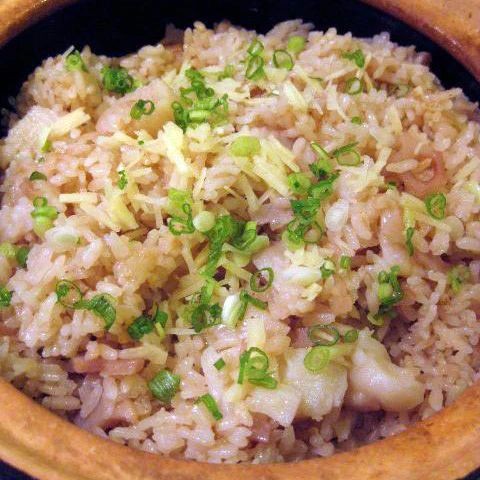
A sophisticated yet approachable dish that marries Japanese culinary precision with rich Western flavors, this garlic butter rice with seared scallops transforms simple ingredients into an elegant weeknight dinner. The combination of tender scallops resting atop fragrant, buttery rice creates a harmonious balance of textures and tastes that feels both comforting and refined.
Ingredients
– 1 lb fresh scallops
– 1 ½ cups Japanese short-grain rice
– 2 cups water
– 4 tbsp unsalted butter
– 4 cloves garlic
– 2 tbsp soy sauce
– 1 tbsp mirin
– 2 tbsp chopped scallions
– ½ tsp salt
– ¼ tsp black pepper
– 1 tbsp vegetable oil
Instructions
1. Rinse 1 ½ cups Japanese short-grain rice under cold running water until the water runs clear, which removes excess starch for fluffier grains.
2. Combine the rinsed rice with 2 cups water in a medium saucepan and bring to a boil over high heat.
3. Reduce heat to low, cover the saucepan, and simmer for 15 minutes exactly to cook the rice through.
4. Remove the saucepan from heat and let the rice rest, covered, for 10 minutes to allow steam to finish cooking the grains evenly.
5. Pat 1 lb fresh scallops completely dry with paper towels to ensure a proper sear.
6. Season both sides of the scallops evenly with ½ tsp salt and ¼ tsp black pepper.
7. Heat 1 tbsp vegetable oil in a large skillet over medium-high heat until shimmering but not smoking.
8. Place scallops in the hot skillet, making sure they don’t touch, and sear for 2 minutes without moving them.
9. Flip scallops and cook for exactly 1 minute more until they develop a golden-brown crust but remain slightly translucent in the center.
10. Transfer scallops to a plate and reduce skillet heat to medium.
11. Add 4 tbsp unsalted butter to the same skillet and let it melt completely.
12. Mince 4 cloves garlic and add to the melted butter, cooking for 30 seconds until fragrant but not browned.
13. Fluff the rested rice with a fork and add it to the garlic butter mixture in the skillet.
14. Pour 2 tbsp soy sauce and 1 tbsp mirin over the rice and stir gently to combine all ingredients evenly.
15. Cook the rice mixture for 2 minutes, stirring constantly, until heated through and well-coated with the garlic butter sauce.
16. Remove the skillet from heat and stir in 2 tbsp chopped scallions.
17. Divide the garlic butter rice among serving plates and top with the seared scallops.
Flawlessly seared scallops crown this dish with their delicate sweetness, while the garlic-infused rice provides a rich, savory foundation that absorbs every drop of the buttery sauce. For an elegant presentation, serve in shallow bowls garnished with additional scallion greens, or pair with crisp white wine to complement the dish’s luxurious yet balanced flavors.
Zosui (Japanese Rice Soup with Chicken and Egg)
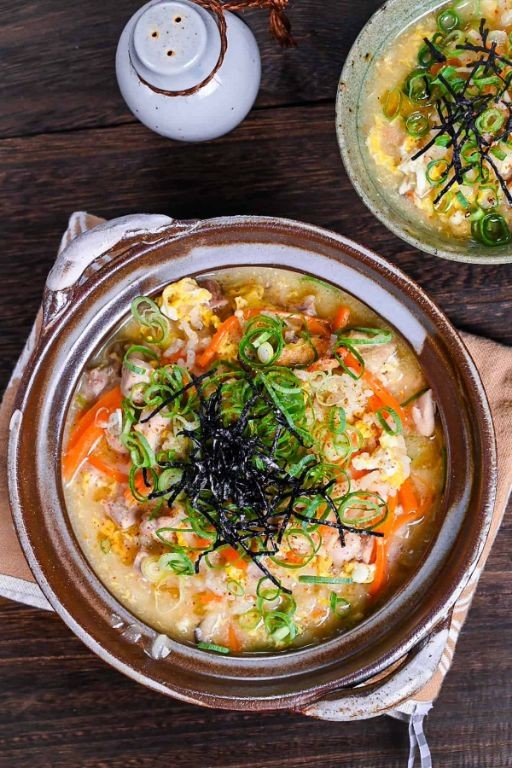
Radiant with comfort and delicate flavors, zosui transforms humble ingredients into an elegant Japanese rice soup that soothes both body and soul. This nourishing one-pot wonder combines tender chicken, silky eggs, and fluffy rice in a delicate dashi broth that whispers of umami sophistication. Perfect for chilly evenings or when seeking culinary solace, it elevates simple components into something truly extraordinary.
Ingredients
– 1 tbsp vegetable oil
– 1/2 lb boneless chicken thighs
– 1 small yellow onion
– 4 cups dashi stock
– 2 tbsp soy sauce
– 1 tbsp mirin
– 2 cups cooked short-grain rice
– 2 large eggs
– 2 green onions
Instructions
1. Heat 1 tablespoon vegetable oil in a large pot over medium heat until shimmering.
2. Cut 1/2 pound boneless chicken thighs into 1-inch pieces and add to the pot.
3. Cook chicken for 4-5 minutes, turning occasionally, until lightly browned on all sides.
4. Thinly slice 1 small yellow onion and add to the pot with the chicken.
5. Sauté onion for 3-4 minutes until translucent and fragrant.
6. Pour 4 cups dashi stock into the pot, scraping any browned bits from the bottom.
7. Add 2 tablespoons soy sauce and 1 tablespoon mirin, then bring to a gentle simmer.
8. Reduce heat to low and simmer uncovered for 8 minutes to develop flavors.
9. Add 2 cups cooked short-grain rice, breaking up any clumps with a wooden spoon.
10. Simmer for 5 minutes until rice has absorbed some broth and softened.
11. Whisk 2 large eggs in a small bowl until uniform in color.
12. Slowly drizzle beaten eggs into the simmering soup in a circular motion.
13. Let eggs set for 30 seconds without stirring to create silky ribbons.
14. Thinly slice 2 green onions and sprinkle over the soup.
15. Remove from heat and let rest for 2 minutes before serving.
Upon serving, the zosui reveals its magical texture—the rice grains remain distinct yet tender, suspended in a delicate broth that carries the essence of chicken and dashi. The silky egg ribbons melt on the tongue while the fresh green onions provide a crisp, clean finish. For an elegant presentation, garnish with toasted sesame seeds and serve in deep ceramic bowls to showcase the beautiful layers of ingredients.
Kinoko Gohan (Mushroom Rice with Soy Sauce)
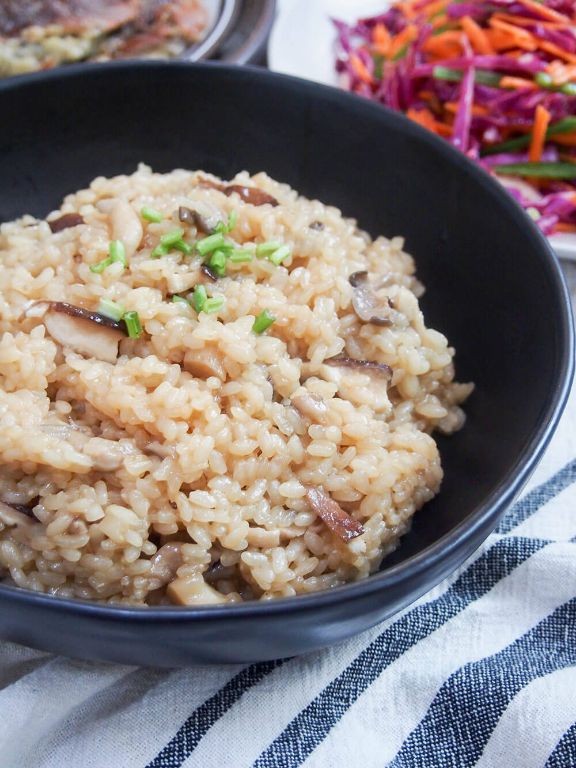
Aromatic and earthy, this Japanese-inspired mushroom rice transforms humble ingredients into an elegant one-pot meal that fills your kitchen with the comforting scent of toasted grains and umami-rich fungi. As the soy sauce glazes each grain with its deep amber hue, this dish achieves a perfect balance between simplicity and sophistication, making it ideal for both weeknight dinners and special occasions.
Ingredients
– 1 ½ cups short-grain white rice
– 2 cups water
– 8 oz mixed mushrooms (shiitake, cremini, oyster)
– 2 tbsp unsalted butter
– 2 tbsp soy sauce
– 1 tbsp mirin
– ½ tsp kosher salt
– 2 green onions
Instructions
1. Rinse 1 ½ cups short-grain white rice under cold running water in a fine-mesh strainer until the water runs clear, gently agitating the grains with your fingers to remove excess starch. 2. Thinly slice 8 oz mixed mushrooms, discarding tough shiitake stems but keeping the flavorful caps intact for maximum earthiness. 3. Melt 2 tbsp unsalted butter in a medium saucepan over medium heat until foaming subsides, about 2 minutes. 4. Add sliced mushrooms and cook for 6-8 minutes, stirring occasionally, until they release their liquid and develop golden-brown edges. 5. Add rinsed rice to the saucepan and toast for 2 minutes, stirring constantly, until grains become slightly translucent at the edges. 6. Pour in 2 cups water, 2 tbsp soy sauce, 1 tbsp mirin, and ½ tsp kosher salt, scraping any browned bits from the bottom of the pan. 7. Bring the mixture to a boil over high heat, then immediately reduce to the lowest setting and cover with a tight-fitting lid. 8. Simmer for 18 minutes without lifting the lid to ensure proper steam buildup for fluffy rice. 9. Remove the pan from heat and let it stand covered for 10 minutes to allow the rice to finish absorbing residual moisture. 10. While the rice rests, thinly slice 2 green onions on a sharp diagonal for an attractive garnish. 11. Fluff the finished rice with a fork, gently folding in the green onions to preserve the delicate grain structure. Revel in the contrasting textures of fluffy rice and meaty mushrooms, where each bite delivers a savory depth from the soy-mirin glaze that clings perfectly to the grains. For a stunning presentation, serve it in individual bowls topped with a soft-poached egg, whose runny yolk creates a luxurious sauce that complements the dish’s earthy notes.
Summary
Perfect for any home cook, this collection brings authentic Japanese flavors right to your kitchen. From comforting classics to exciting new dishes, these rice-based recipes offer something delicious for every occasion. We’d love to hear which recipes become your favorites—leave a comment below and share your culinary adventures by pinning this article on Pinterest!