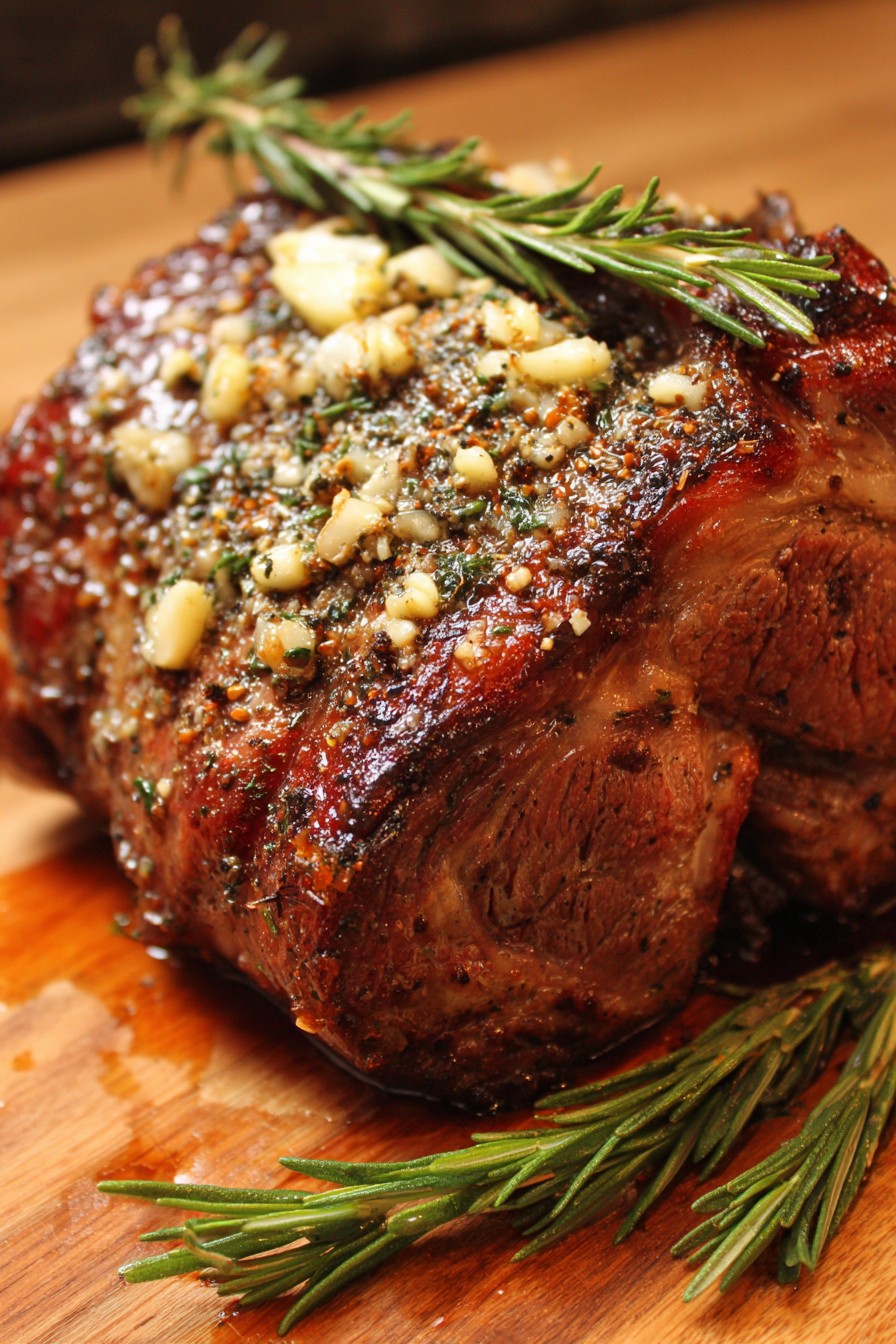
Zeroing in on the art of roasting beef, this recipe transforms a simple cut into an exquisite meal, worthy of being the centerpiece of any dinner table. With precision techniques and professional guidance, experienced cooks will find joy in mastering this succulent dish that promises deep, rich flavors and an irresistibly tender texture.
Why This Recipe Works
- Optimal Searing: Achieving a crisp outer layer while maintaining a juicy interior.
- Controlled Cooking Temperature: Guarantees even doneness throughout the roast.
- Aromatics Use: Enhances meat flavors without overwhelming.
- Resting Period: Essential for juice redistribution, avoiding excessive loss when slicing.
Ingredients
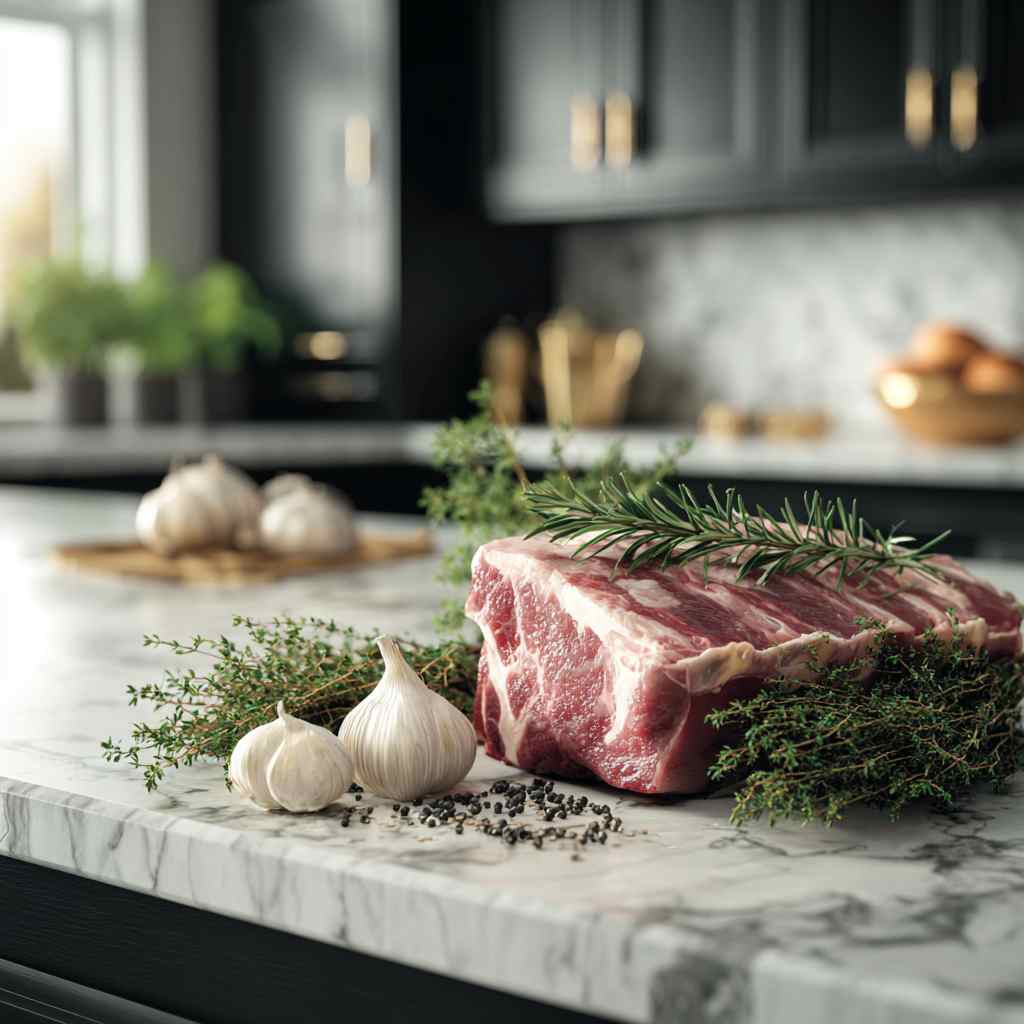
- 4 lbs beef rib roast, bone-in, room temperature
- 2 tablespoons kosher salt
- 1 tablespoon freshly ground black pepper
- 2 tablespoons olive oil
- 4 cloves garlic, minced
- 2 sprigs fresh rosemary
- 2 sprigs fresh thyme
- 1 cup beef stock
- 1 tablespoon unsalted butter, softened
Equipment Needed
- Large roasting pan with rack
- Meat thermometer
- Sharp carving knife
- Cutting board
Instructions
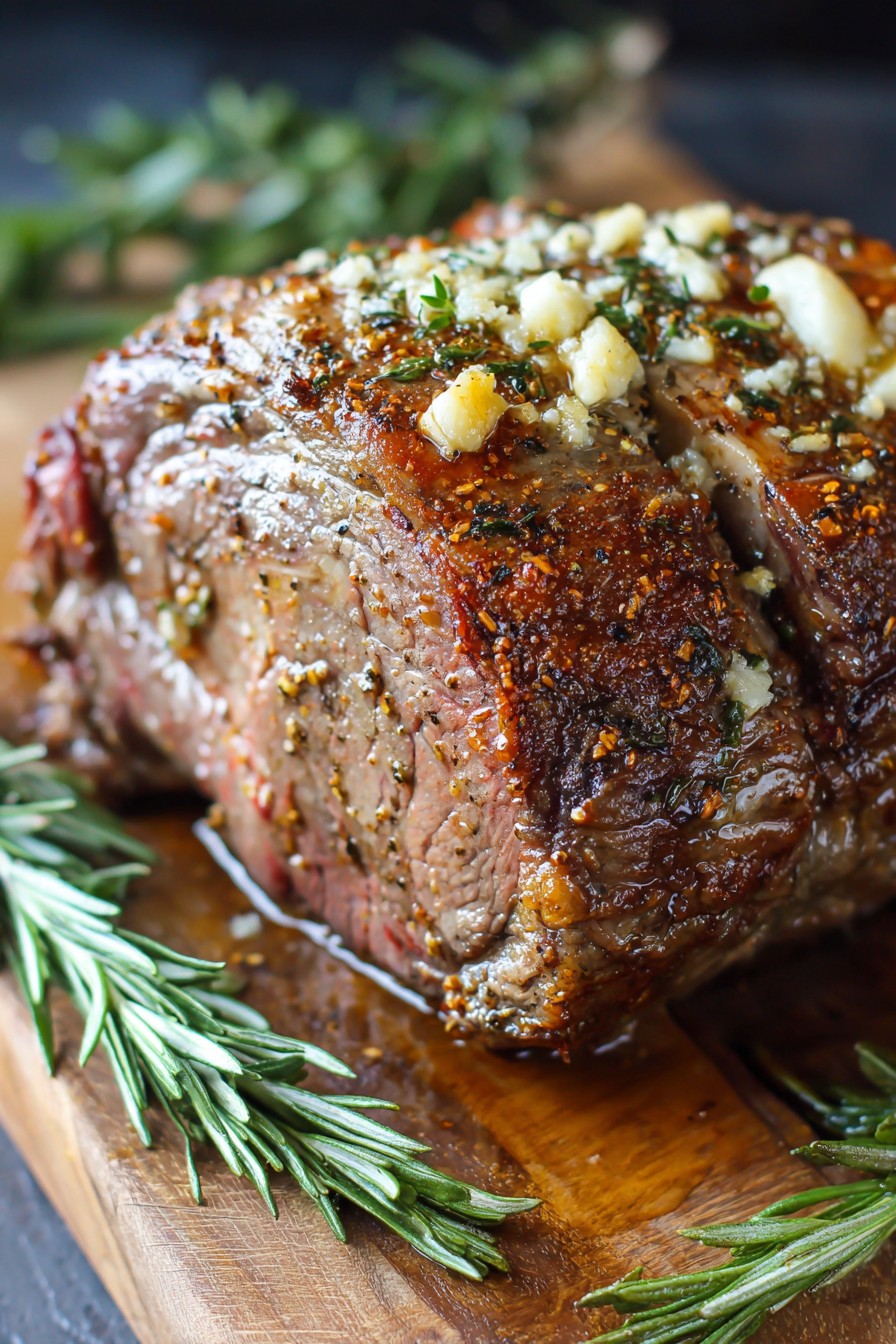
Step 1: Prepare the Beef
Commence by patting the beef rib roast dry to ensure optimal browning. Season generously with kosher salt and freshly ground black pepper on all sides. Allow the meat to rest at room temperature for at least one hour. This encourages even cooking and enhances seasoning absorption. Pro-tip: Pre-prepping aids in a robust flavor foundation, seamlessly integrating with the roast’s natural taste profile.
Step 2: Preheat and Sear
Preheat your oven to 450°F (232°C). Meanwhile, heat olive oil in a large pan over medium-high heat. Sear the beef on all sides until a golden-brown crust forms, approximately 3 to 4 minutes per side. This step locks in the juices and develops deep flavors. Avoid overcrowding during this process. Transfer the seared beef to your roasting pan, rib side down.
Step 3: Aromatics and Preparation
Evenly spread minced garlic over the top of the beef. Place rosemary and thyme sprigs beneath the rack in the roasting pan, allowing the herbs’ aromatic oils to infuse the roast. Pour 1 cup beef stock into the base of the pan; this liquid will help maintain a moist oven environment without steaming the beef, resulting in a subtly flavored jus.
Step 4: Roast
Insert a meat thermometer into the thickest part of the roast. Place the pan in the oven, roasting at 450°F for the first 20 minutes. Then, reduce the temperature to 325°F (163°C) and continue roasting for approximately 1.5 hours or until the thermometer reads 130°F (55°C) for medium-rare. Adjust times according to your preferred doneness by monitoring internal temperatures accurately.
Step 5: Rest and Serve
Upon reaching desired doneness, remove the roast from the oven and transfer it onto a cutting board. Let it rest for at least 20 minutes; this is essential for juice redistribution. Slice the roast against the grain using a sharp carving knife; aim for uniform, thin slices. Finish by spreading softened butter over the top to enhance richness and presentation.
Tips and Tricks
Utilize a high-quality meat thermometer to ensure precise doneness. Resting the roast is non-negotiable despite hunger pangs, as it affects juiciness and texture positively. For extra flavor, consider marinating the beef in the refrigerator overnight with olive oil, garlic, and herbs before following the standard instructions.
Recipe Variations
- Add a rub of mustard and smoked paprika for a more seasoned crust.
- Include vegetables like carrots and onions beneath the rack for a complete meal.
- Experiment with different herbs such as sage or bay leaves based on flavor preference.
- Substitute with grass-fed beef for a more robust and earthy taste profile.
Frequently Asked Questions
Why does the beef need to be at room temperature? A: Allowing the beef to reach room temperature ensures even cooking throughout the roast, resulting in optimal texture and flavor.
Can I use a boneless cut instead? A: Yes, but adjust cooking times as boneless cuts may cook faster. Bone-in cuts provide more flavor due to marrow infusion.
How do I store leftovers? A: Wrap sliced roast tightly in foil and refrigerate for up to three days. Consider slicing in thinner portions for reheating efficiency.
Should I baste the roast during cooking? A: It’s unnecessary due to initial oil searing; however, basting can deepen flavors if preferred.
What wine pairs well with roast beef? A: A robust red such as Cabernet Sauvignon complements the meat’s savory notes wonderfully.
Summary
This Perfect Roast Beef Recipe masterfully guides experienced cooks in crafting a sumptuous roast featuring a crisp crust and juicy interior adorned with delicate herb-infused flavors.