You’re about to discover the vibrant, fiery soul of Trinidadian cuisine! From pepper-packed curries to scotch bonnet-infused street food, these authentic recipes bring Caribbean heat right to your kitchen. Whether you’re a spice novice or a heat-seeker, get ready to turn up the temperature with these 20 unforgettable dishes that capture Trinidad’s bold flavors. Let’s dive into this culinary adventure that will ignite your taste buds!
Trinidad Callaloo with Crab
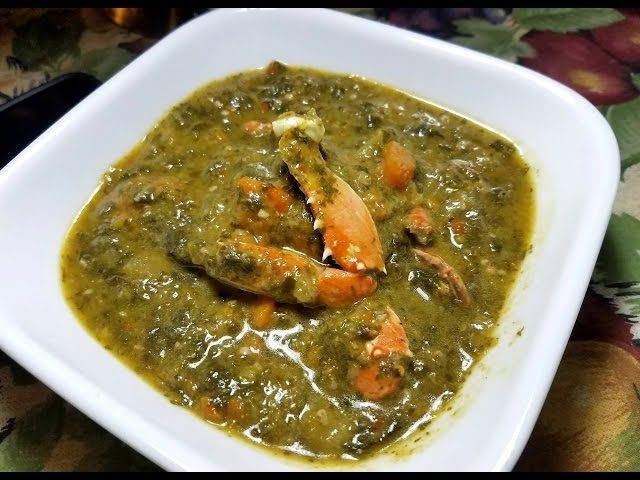
Delving into Caribbean comfort food reveals this vibrant Trinidadian classic, where tender greens and sweet crab create a harmonious stew that’s both nourishing and deeply flavorful. During the cooler months, this one-pot wonder brings warmth to the table with its rich, coconut-infused broth and layers of aromatic spices.
Ingredients
– 1 pound fresh callaloo leaves, thoroughly washed and stems removed
– 8 ounces fresh blue crab claws, cleaned
– 1 cup full-fat coconut milk
– 1 medium yellow onion, finely diced
– 3 garlic cloves, minced
– 1 scotch bonnet pepper, whole
– 2 tablespoons clarified butter
– 1 teaspoon ground turmeric
– ½ teaspoon freshly grated nutmeg
– 4 cups vegetable stock
– 2 tablespoons fresh lime juice
– 1 teaspoon fine sea salt
Instructions
1. Heat clarified butter in a large Dutch oven over medium heat until shimmering.
2. Add finely diced yellow onion and sauté for 5 minutes until translucent and fragrant.
3. Stir in minced garlic and cook for 1 minute until aromatic but not browned.
4. Add callaloo leaves in batches, wilting each addition before adding more, about 3 minutes total.
5. Pour in vegetable stock and bring to a gentle simmer.
6. Add whole scotch bonnet pepper, ground turmeric, and freshly grated nutmeg.
7. Gently place cleaned blue crab claws into the simmering liquid.
8. Reduce heat to low, cover, and simmer for 25 minutes until crab is cooked through and callaloo is tender.
9. Carefully remove the scotch bonnet pepper using tongs to maintain controlled heat level.
10. Stir in full-fat coconut milk and simmer uncovered for 5 minutes to allow flavors to meld.
11. Season with fine sea salt and fresh lime juice, stirring gently to combine.
12. Ladle into deep bowls, ensuring each serving includes both broth and crab claws.
Meticulously simmered callaloo develops a silky, almost creamy texture that contrasts beautifully with the firm, sweet crab meat. The coconut milk lends subtle richness while allowing the peppery greens and aromatic spices to shine through. For an elegant presentation, serve alongside coconut rice or with fried plantains to balance the stew’s complex flavors.
Trinidad Bake and Shark with Garlic Sauce

Venturing into Caribbean street food brings us to Trinidad’s iconic beachside delicacy that transforms humble shark into a crispy, flavor-packed sandwich experience. This methodical preparation guides you through creating the perfect fried shark fillets accompanied by an aromatic garlic sauce that elevates every bite. We’ll build this dish step by step, ensuring even novice cooks achieve authentic results with professional techniques.
Ingredients
– 1 lb shark fillets, cut into 4 equal portions
– 2 cups all-purpose flour
– 1 tbsp Trinidad-style green seasoning
– 1 tsp smoked paprika
– ½ tsp cayenne pepper
– 1 cup whole milk
– 4 cups vegetable oil for frying
– 4 soft brioche buns
– 6 garlic cloves, minced
– ½ cup mayonnaise
– 2 tbsp fresh lime juice
– 1 tsp Worcestershire sauce
– ¼ cup shredded cabbage
– 2 slices ripe tomato
Instructions
1. Combine minced garlic, mayonnaise, lime juice, and Worcestershire sauce in a small bowl.
2. Whisk the garlic sauce mixture vigorously until fully emulsified and smooth.
3. Refrigerate the garlic sauce for 30 minutes to allow flavors to meld.
4. Pat shark fillets completely dry with paper towels.
5. Mix flour, green seasoning, smoked paprika, and cayenne pepper in a shallow dish.
6. Pour whole milk into a separate shallow bowl.
7. Dredge each shark fillet first in the seasoned flour mixture, coating evenly.
8. Dip the floured fillets into the whole milk, ensuring complete coverage.
9. Dredge the milk-coated fillets again in the seasoned flour mixture for a double crust.
10. Heat vegetable oil in a heavy-bottomed pot to 375°F using a deep-fry thermometer.
11. Carefully lower two shark fillets into the hot oil using tongs.
12. Fry for 4-5 minutes until golden brown and internal temperature reaches 145°F.
13. Remove fried fillets and drain on a wire rack set over a baking sheet.
14. Repeat frying process with remaining two fillets.
15. Lightly toast brioche buns in a dry skillet over medium heat for 1 minute per side.
16. Spread 2 tablespoons of garlic sauce on the bottom half of each bun.
17. Place one fried shark fillet on each sauced bun bottom.
18. Top each fillet with 1 tablespoon shredded cabbage and half a tomato slice.
19. Cover with bun tops and serve immediately.
What emerges is a textural masterpiece where the crackling-crisp crust gives way to tender, flaky shark, while the pungent garlic sauce cuts through the richness with bright acidity. The contrast between the warm, fried fish and cool, crunchy vegetables creates a symphony of temperatures and textures in every bite. For an authentic Trinidadian experience, serve wrapped in parchment paper with extra garlic sauce for dipping and a cold Carib beer alongside.
Trinidad Curry Goat with Roti
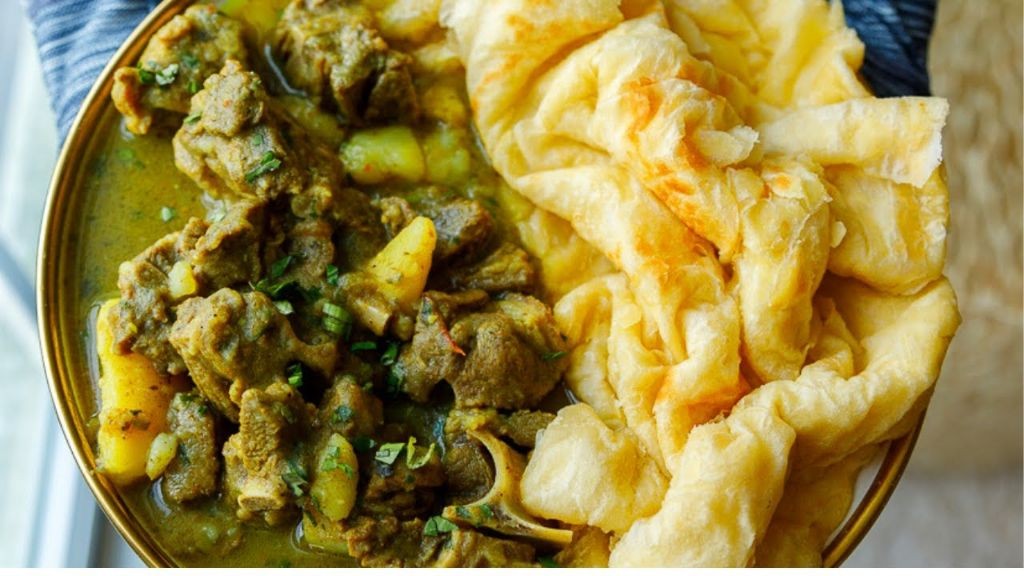
Many home cooks find Caribbean cuisine intimidating, but this Trinidad Curry Goat with Roti breaks down the process into manageable steps that yield incredibly flavorful results. Mastering this dish requires patience and attention to technique, but the reward is a deeply satisfying meal that transports you straight to the islands. Let’s build this complex flavor profile one careful step at a time.
Ingredients
- 2 lbs bone-in goat shoulder, cut into 1-inch cubes
- 3 tbsp Trinidad-style curry powder
- 2 tbsp grapeseed oil
- 1 large yellow onion, finely diced
- 4 garlic cloves, minced
- 1-inch piece fresh ginger, grated
- 1 scotch bonnet pepper, whole
- 2 cups homemade chicken stock
- 2 large Yukon Gold potatoes, peeled and quartered
- 2 cups all-purpose flour
- 1 tsp baking powder
- 1/2 tsp fine sea salt
- 3/4 cup warm water (110°F)
- 2 tbsp clarified butter, melted
Instructions
- Pat the goat cubes completely dry with paper towels and toss with 2 tablespoons of curry powder until evenly coated.
- Heat grapeseed oil in a heavy Dutch oven over medium-high heat until shimmering but not smoking.
- Sear the goat in a single layer, working in batches to avoid overcrowding, until deeply browned on all sides, about 3-4 minutes per side.
- Transfer the seared goat to a clean plate, leaving the fond in the pot.
- Reduce heat to medium and add the diced onion, cooking until translucent and lightly golden, about 5 minutes.
- Add the minced garlic and grated ginger, stirring constantly until fragrant, about 45 seconds.
- Sprinkle the remaining tablespoon of curry powder over the aromatics and toast for 30 seconds to release its essential oils.
- Return the seared goat and any accumulated juices to the pot along with the whole scotch bonnet pepper.
- Pour in the homemade chicken stock, scraping the bottom to deglaze all the browned bits.
- Bring the liquid to a gentle simmer, then reduce heat to low, cover, and cook for 2 hours until the goat is fork-tender.
- Add the quartered potatoes to the pot, submerging them in the cooking liquid, and continue simmering uncovered for 25 minutes until potatoes are cooked through.
- While the curry finishes, combine the all-purpose flour, baking powder, and fine sea salt in a large mixing bowl.
- Gradually incorporate the warm water, mixing with your hands until a shaggy dough forms.
- Knead the dough on a lightly floured surface for 5 minutes until smooth and elastic.
- Divide the dough into 4 equal portions and roll each into a thin 8-inch circle.
- Brush each roti with melted clarified butter and cook on a dry cast-iron skillet over medium heat for 2 minutes per side until puffed and lightly blistered.
You’ll notice the goat becomes incredibly tender while maintaining its structural integrity, and the potatoes absorb the complex curry flavors beautifully. Yellow potatoes work particularly well here as they hold their shape better than russets during the extended cooking time. Serve the curry wrapped in warm roti for the traditional Trinidadian experience, or over steamed rice if you prefer.
Trinidad Black Cake with Rum Soaked Fruits
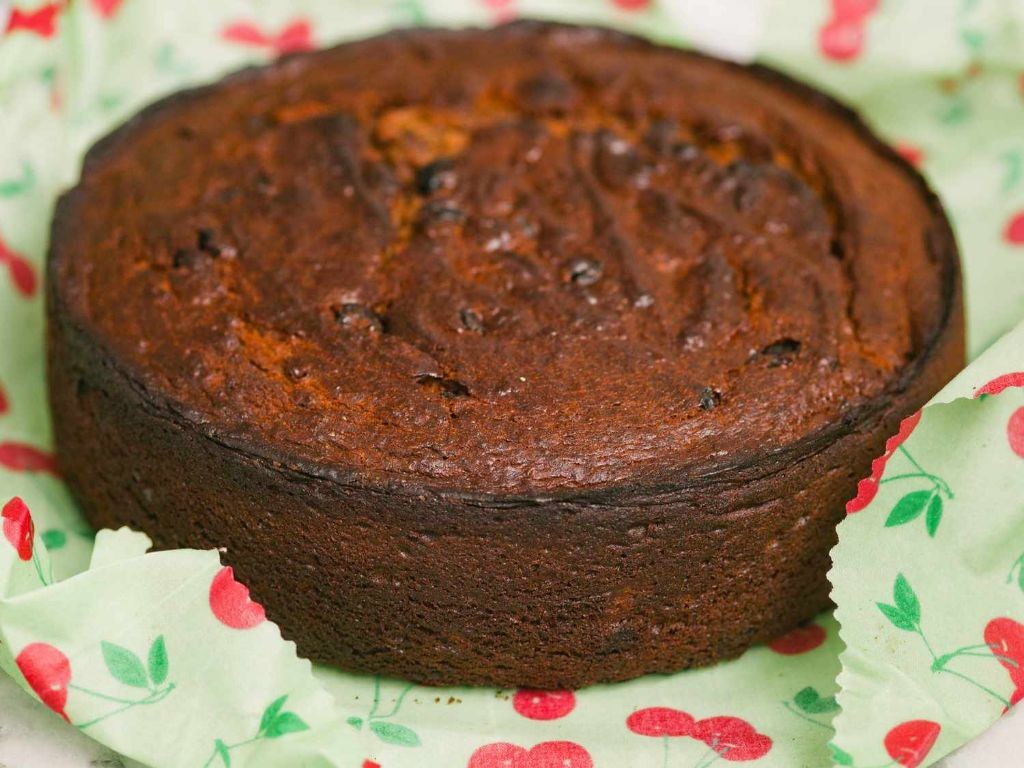
Getting this traditional Caribbean dessert right requires patience and precision, but the reward is a deeply flavored, moist cake that’s perfect for celebrations. Grounding the process in careful preparation ensures the complex spice notes and rum-infused fruits shine through in every bite, creating a dessert that improves with time like a fine wine.
Ingredients
- 2 cups mixed dried fruits (currants, raisins, prunes), finely chopped
- 1 cup dark rum, divided
- 1 cup granulated sugar
- ½ cup clarified butter
- 3 pasture-raised eggs, lightly beaten
- 1 cup all-purpose flour
- 1 teaspoon baking powder
- ½ teaspoon freshly grated nutmeg
- ¼ teaspoon ground cloves
- ¼ cup burnt sugar syrup (browning)
- ½ teaspoon pure vanilla extract
Instructions
- Combine the finely chopped dried fruits with ¾ cup dark rum in an airtight glass container.
- Seal the container and macerate the fruit mixture at room temperature for 24 hours, shaking vigorously every 6 hours to distribute the rum evenly.
- Preheat your oven to 300°F and position the rack in the center of the oven.
- Generously grease a 9-inch round cake pan with clarified butter and line the bottom with parchment paper.
- Cream the remaining clarified butter with granulated sugar in a stand mixer fitted with the paddle attachment on medium-high speed for exactly 4 minutes until pale and fluffy.
- Gradually incorporate the lightly beaten pasture-raised eggs into the butter-sugar mixture, adding one tablespoon at a time to prevent curdling.
- Whisk together the all-purpose flour, baking powder, freshly grated nutmeg, and ground cloves in a separate bowl until thoroughly combined.
- Fold the dry ingredients into the wet mixture using a rubber spatula, working in a figure-eight motion until just combined.
- Stir in the rum-soaked fruit mixture, burnt sugar syrup, and pure vanilla extract until evenly distributed throughout the batter.
- Transfer the batter to the prepared cake pan and smooth the surface with an offset spatula.
- Bake for 75-80 minutes until a cake tester inserted into the center comes out completely clean with no crumbs attached.
- Remove the cake from the oven and immediately brush the remaining ¼ cup dark rum over the entire surface while still hot.
- Cool the cake in the pan on a wire rack for 30 minutes before transferring directly to the rack to cool completely.
- Wrap the cooled cake tightly in cheesecloth soaked in additional rum and store in an airtight container for at least 48 hours before serving.
Rich with complex spice notes and deep molasses undertones from the burnt sugar, this cake develops an incredibly moist, dense crumb that melts on the tongue. Really allowing the flavors to mature creates a dessert where the rum-soaked fruits release their essence throughout every slice. Resting a slice briefly at room temperature before serving enhances the aromatic bouquet, making it perfect alongside strong coffee or as the centerpiece of a holiday dessert table.
Trinidad Corn Soup with Dumplings

On brisk autumn evenings, nothing satisfies quite like a steaming bowl of Trinidad Corn Soup with Dumplings. Our methodical approach will guide you through creating this Caribbean comfort classic, where sweet corn and tender dumplings swim in a richly spiced broth. Let’s build this soup layer by layer, ensuring perfect texture and depth in every spoonful.
Ingredients
- 2 tablespoons cold-pressed coconut oil
- 1 large yellow onion, finely diced
- 4 garlic cloves, minced
- 1 tablespoon freshly grated ginger root
- 1 Scotch bonnet pepper, whole
- 6 cups homemade chicken stock
- 4 ears fresh sweet corn, kernels removed
- 1 cup all-purpose flour
- 1/4 cup fine cornmeal
- 1/2 teaspoon kosher salt
- 1/3 cup cold water
- 1/4 cup chopped fresh cilantro
- 1 lime, cut into wedges
Instructions
- Heat cold-pressed coconut oil in a large Dutch oven over medium heat until shimmering, about 2 minutes.
- Sauté finely diced yellow onion until translucent and edges begin to caramelize, 6-8 minutes.
- Add minced garlic and freshly grated ginger root, cooking until fragrant, 45-60 seconds.
- Pour in homemade chicken stock and add whole Scotch bonnet pepper, bringing to a gentle boil.
- Reduce heat to maintain a steady simmer, partially covering with lid for 15 minutes to develop flavors.
- While broth simmers, combine all-purpose flour, fine cornmeal, and kosher salt in a medium bowl.
- Gradually incorporate cold water, mixing until a soft dough forms that cleans the bowl.
- Pinch off teaspoon-sized portions of dough, rolling between palms to form smooth dumplings.
- Add fresh sweet corn kernels to the simmering broth, cooking for 5 minutes until slightly tender.
- Carefully drop dumplings into the broth one by one, ensuring they don’t stick together.
- Simmer uncovered for 12-15 minutes until dumplings float to the surface and expand slightly.
- Remove Scotch bonnet pepper using tongs to control spice level.
- Stir in chopped fresh cilantro just before serving.
- Ladle soup into warm bowls and garnish with lime wedges for squeezing.
Mastering this soup yields a beautiful contrast between the toothsome dumplings and sweet corn kernels suspended in aromatic broth. The Scotch bonnet provides subtle warmth without overwhelming heat, while fresh lime brightens each spoonful. For an authentic Trinidadian experience, serve with crusty bread for dipping and extra lime wedges on the side.
Trinidad Macaroni Pie with Cheese Crust
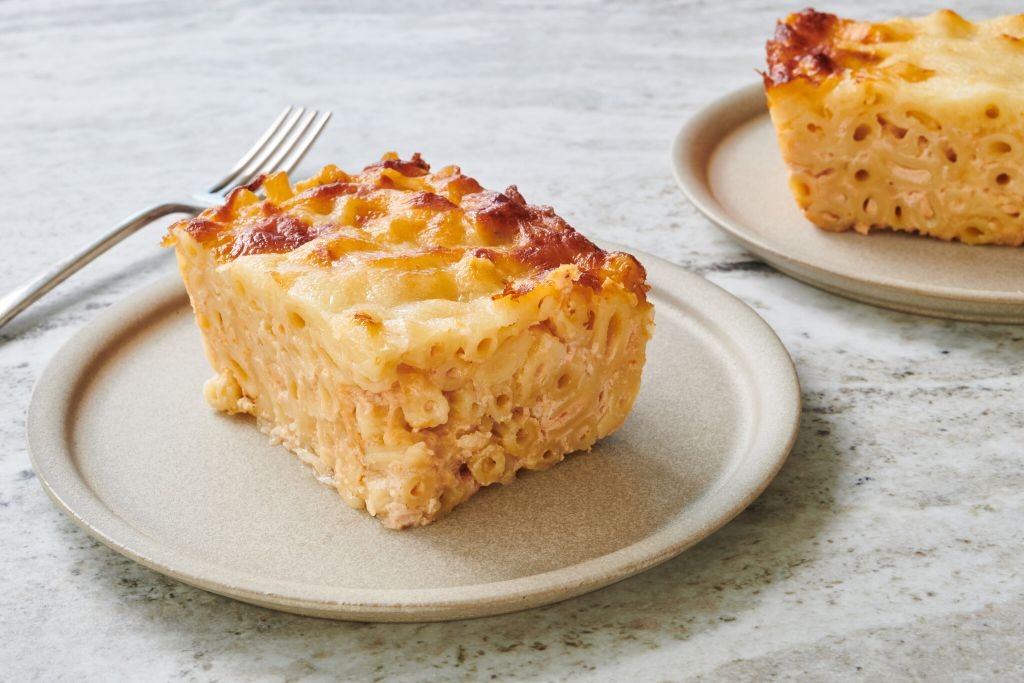
Unbelievably comforting and deeply satisfying, Trinidad Macaroni Pie with Cheese Crust combines Caribbean soul food traditions with American comfort food sensibilities. Understanding the perfect balance between creamy interior and crispy topping transforms this humble dish into a showstopping centerpiece that will have your guests requesting seconds before they’ve finished firsts.
Ingredients
- 1 pound elbow macaroni
- 4 tablespoons clarified butter
- 1 large yellow onion, finely diced
- 4 garlic cloves, minced
- 2 tablespoons all-purpose flour
- 2 cups whole milk, warmed to 110°F
- 1 cup heavy cream
- 2 teaspoons Dijon mustard
- 1 teaspoon freshly grated nutmeg
- 1 teaspoon smoked paprika
- 3 pasture-raised eggs, lightly beaten
- 8 ounces sharp cheddar cheese, grated
- 4 ounces Gruyère cheese, grated
- 1 cup panko breadcrumbs
- 2 tablespoons fresh parsley, finely chopped
Instructions
- Bring 4 quarts of heavily salted water to a rolling boil in a large stockpot.
- Add elbow macaroni to boiling water and cook for exactly 7 minutes until al dente.
- Drain macaroni immediately and rinse with cold water to stop the cooking process.
- Heat clarified butter in a heavy-bottomed Dutch oven over medium heat until shimmering.
- Sauté finely diced yellow onion for 5 minutes until translucent but not browned.
- Add minced garlic cloves and cook for 1 minute until fragrant.
- Sprinkle all-purpose flour over onion mixture and cook for 2 minutes while stirring constantly to create a blonde roux.
- Gradually whisk in warmed whole milk and heavy cream until the mixture is completely smooth.
- Simmer the sauce for 5 minutes until it thickens enough to coat the back of a spoon.
- Remove from heat and stir in Dijon mustard, freshly grated nutmeg, and smoked paprika.
- Temper the lightly beaten pasture-raised eggs by slowly whisking in 1 cup of the warm sauce.
- Combine the tempered egg mixture with the remaining sauce in the Dutch oven.
- Fold in grated sharp cheddar and Gruyère cheeses until fully melted and incorporated.
- Gently mix the cheese sauce with the cooked elbow macaroni until every piece is coated.
- Transfer the macaroni mixture to a greased 9×13-inch baking dish and spread evenly.
- Combine panko breadcrumbs with finely chopped fresh parsley and sprinkle over the surface.
- Bake at 375°F for 25 minutes until the topping is golden brown and the edges are bubbling.
- Let rest for 15 minutes before serving to allow the structure to set properly.
The resulting pie boasts a creamy, custard-like interior that holds its shape when sliced, contrasted by a shatteringly crisp cheese crust that crackles with each bite. Serve warm squares alongside grilled jerk chicken or as the star of your next potluck, where the subtle heat from smoked paprika and aromatic nutmeg will have everyone guessing your secret ingredients.
Trinidad Souse with Pickled Pig Trotters
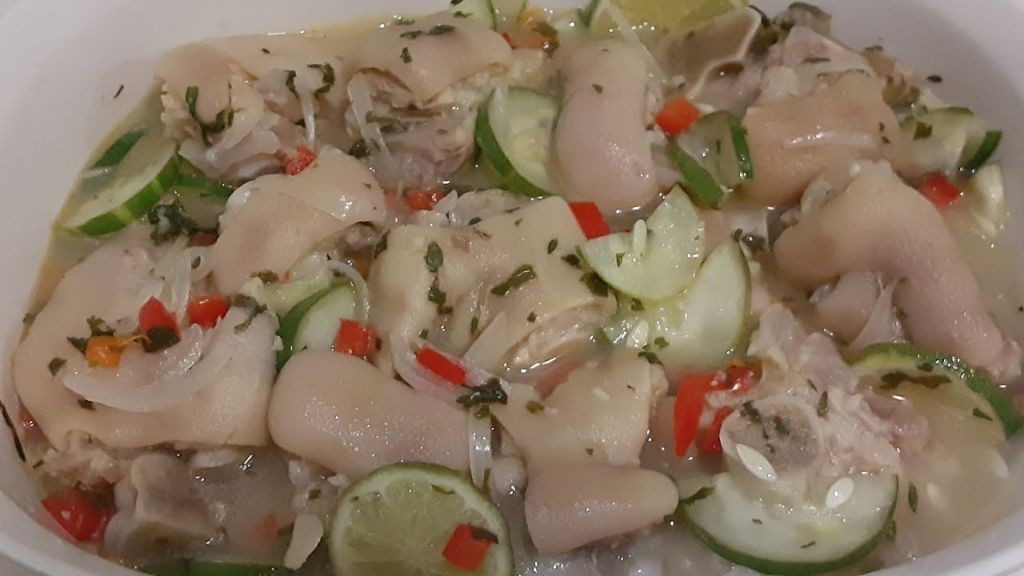
While many Caribbean dishes burst with immediate spice, Trinidad Sose offers a more nuanced journey through briny, tangy, and savory flavors, making it a perfect project for a weekend cook. We’ll be creating a traditional version using pickled pig trotters, which requires patience but rewards with incredible depth. This methodical guide will walk you through each stage, ensuring your souse turns out perfectly balanced and refreshingly sharp.
Ingredients
- 2 lbs pickled pig trotters, thoroughly rinsed
- 1 large yellow onion, thinly sliced into half-moons
- 4 Persian cucumbers, sliced into 1/4-inch rounds
- 1/2 cup fresh lime juice, freshly squeezed
- 2 Scotch bonnet peppers, seeds removed and minced
- 4 cloves garlic, finely grated on a microplane
- 1 tbsp fresh thyme leaves, stripped from stems
- 1 tsp freshly cracked black pepper
- 1 tsp fine sea salt
- 6 cups cold filtered water
- Ice bath prepared in a large bowl
Instructions
- Place the rinsed pickled pig trotters into a large stockpot.
- Pour 6 cups of cold filtered water over the trotters, ensuring they are fully submerged.
- Bring the pot to a rolling boil over high heat, which should take approximately 8-10 minutes.
- Reduce the heat to maintain a gentle simmer, with small bubbles breaking the surface.
- Simmer the trotters uncovered for 90 minutes, or until the meat is tender and easily pulls away from the bone.
- While the trotters simmer, combine the thinly sliced yellow onion, Persian cucumber rounds, freshly squeezed lime juice, minced Scotch bonnet peppers, grated garlic, fresh thyme leaves, cracked black pepper, and fine sea salt in a large non-reactive glass bowl.
- Toss the vegetable mixture thoroughly to ensure all ingredients are evenly coated in the lime juice and seasonings.
- Once the trotters are tender, immediately transfer them using tongs to the prepared ice bath to stop the cooking process.
- Let the trotters chill in the ice bath for 15 minutes, or until completely cool to the touch.
- Remove the cooled trotters from the ice bath and pat them dry with paper towels.
- Using your hands, shred the meat from the trotters, discarding the bones and any tough cartilage.
- Add the shredded trotter meat to the marinating vegetable mixture in the glass bowl.
- Fold the meat into the vegetables gently until everything is well combined.
- Cover the bowl tightly with plastic wrap and refrigerate for at least 4 hours, or preferably overnight, to allow the flavors to fully develop.
Lasting up to five days when properly refrigerated, this souse develops a more complex flavor profile with each passing day. The finished dish presents a delightful textural contrast between the firm, gelatin-rich trotter meat and the crisp, quick-pickled vegetables. Serve it chilled as a bold appetizer with crusty bread for soaking up the bright, peppery marinade, or as a main course alongside coconut rice and fried plantains for a complete Trinidadian experience.
Trinidad Coconut Bake with Butter
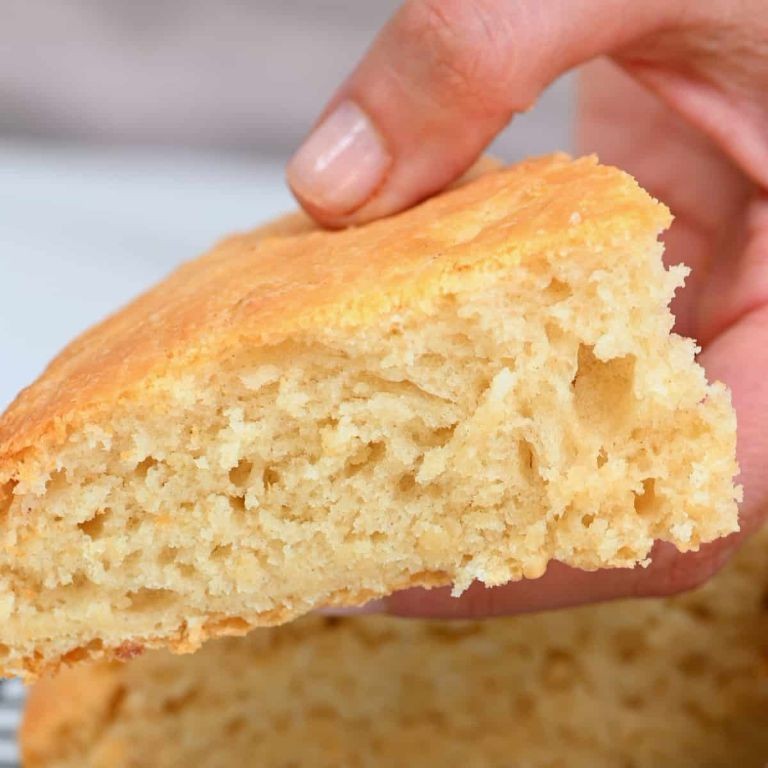
Many home bakers overlook the magic of Caribbean breads, but Trinidad Coconut Bake offers a perfect introduction with its tender crumb and subtle sweetness. Mastering this recipe requires precise measurements and patience with the dough, yielding a versatile bread that pairs beautifully with both sweet and savory accompaniments. My methodical approach ensures even novice bakers can achieve professional results with this traditional island staple.
Ingredients
– 3 cups all-purpose flour, sifted
– 1 teaspoon fine sea salt
– 2 teaspoons baking powder, aluminum-free
– ½ cup granulated sugar
– 1 cup unsweetened shredded coconut
– ¾ cup full-fat coconut milk
– ¼ cup cold European-style butter, cubed
– 2 tablespoons clarified butter for brushing
Instructions
1. Preheat your oven to 375°F and line a baking sheet with parchment paper.
2. Whisk together the sifted all-purpose flour, fine sea salt, and aluminum-free baking powder in a large mixing bowl.
3. Incorporate the granulated sugar and unsweetened shredded coconut using a folding motion.
4. Add the cold European-style butter cubes and work into the dry ingredients until the mixture resembles coarse crumbs.
5. Gradually pour in the full-fat coconut milk while stirring with a wooden spoon until a shaggy dough forms.
6. Turn the dough onto a lightly floured surface and knead for exactly 2 minutes until smooth and elastic.
7. Shape the dough into a 7-inch round disk approximately 1-inch thick.
8. Transfer the shaped dough to the prepared baking sheet and score the top with a sharp knife in a crosshatch pattern.
9. Bake at 375°F for 25-30 minutes until golden brown and the internal temperature reaches 190°F.
10. Remove from oven and immediately brush the surface with clarified butter using a pastry brush.
11. Cool on a wire rack for 15 minutes before slicing.
The finished bake should have a crisp, buttery crust that gives way to a moist, coconut-flecked interior with subtle sweetness. Serve warm slices alongside savory stews or toast them lightly for breakfast with fruit preserves. For an elegant presentation, slice into wedges and arrange on a wooden board with compound butters and tropical fruit chutneys.
Trinidad Stewed Chicken with Green Seasoning
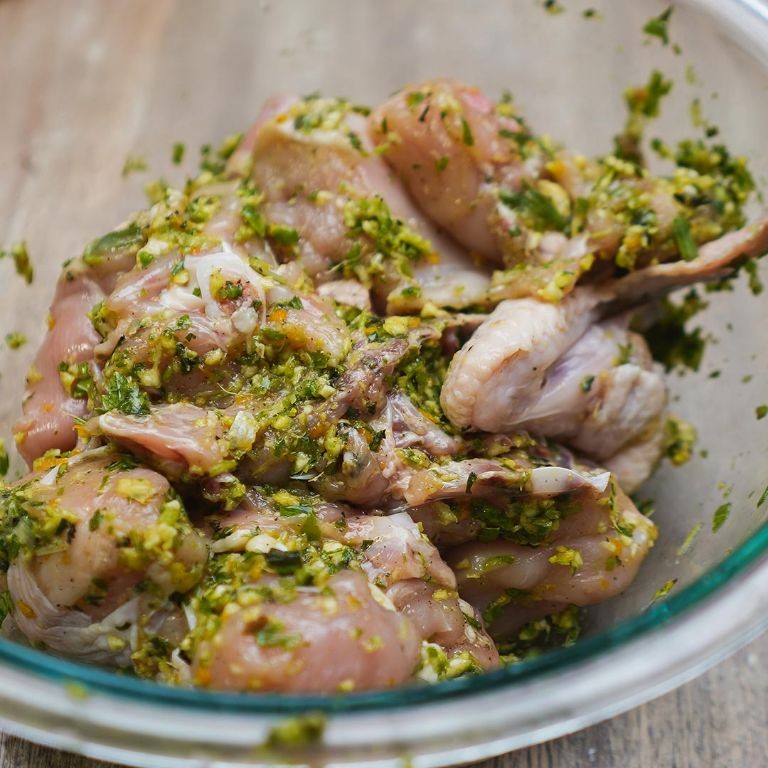
Ready to master a dish that balances bold Caribbean flavors with comforting home-cooked appeal? This Trinidad Stewed Chicken with Green Seasoning transforms simple ingredients into a deeply aromatic, tender meal through a methodical braising process that builds layers of flavor.
Ingredients
- 3 pounds bone-in, skin-on chicken thighs, patted dry
- 2 tablespoons avocado oil
- 1 large yellow onion, finely julienned
- 4 garlic cloves, microplaned
- 1 scotch bonnet pepper, seeded and minced
- 1 cup homemade green seasoning (blended cilantro, culantro, scallions, thyme)
- 2 tablespoons dark brown sugar
- 1 tablespoon tomato paste
- 2 cups unsalted chicken stock, warmed
- 2 tablespoons unsalted butter, chilled and cubed
- Kosher salt, to season
- Freshly cracked black pepper, to season
Instructions
- Season chicken thighs generously with kosher salt and freshly cracked black pepper on all surfaces.
- Heat avocado oil in a heavy-bottomed Dutch oven over medium-high heat until shimmering, about 2 minutes.
- Place chicken thighs skin-side down and sear undisturbed for 6-8 minutes until golden brown crust forms.
- Flip chicken and cook for 4 additional minutes until reverse side develops light coloration.
- Transfer chicken to a clean plate, reserving rendered fat in the pot.
- Add julienned onion to the hot fat and sauté for 5 minutes until translucent and lightly caramelized.
- Stir in microplaned garlic and minced scotch bonnet pepper, cooking for 60 seconds until fragrant.
- Sprinkle dark brown sugar over the aromatics and cook for 2 minutes until caramelized and bubbling.
- Add tomato paste and cook for 90 seconds, stirring constantly until it deepens to brick-red color.
- Pour in homemade green seasoning and scrape bottom of pot to incorporate all browned bits.
- Return chicken thighs to the pot, nestling them into the seasoning base.
- Pour warmed chicken stock over the chicken until liquid reaches halfway up the thighs.
- Bring liquid to a gentle simmer, then reduce heat to low and cover with tight-fitting lid.
- Stew for 45 minutes, maintaining a steady low simmer with occasional bubbles breaking the surface.
- Uncover and cook for 15 additional minutes to slightly reduce the sauce.
- Remove from heat and swirl in chilled butter cubes until emulsified into a glossy sauce.
Caramelized edges give way to fall-off-the-bone tenderness, while the green seasoning infuses every layer with herbaceous brightness. Consider serving over coconut rice to complement the spicy-sweet sauce, or shred the meat for flavorful tacos topped with pickled red onions.
Trinidad Aloo Pie with Tamarind Sauce

Just imagine biting into a golden, flaky pastry filled with perfectly spiced potatoes – that’s the magic of Trinidad aloo pie. Join me as we create this Caribbean street food classic with its signature tangy tamarind dipping sauce, transforming simple ingredients into something extraordinary.
Ingredients
- 2 cups all-purpose flour
- 1 teaspoon kosher salt
- 1/2 cup warm water (110°F)
- 2 tablespoons clarified butter
- 3 medium Yukon Gold potatoes, peeled and diced
- 1 tablespoon ground cumin
- 1 teaspoon turmeric powder
- 1/2 teaspoon cayenne pepper
- 1/4 cup fresh cilantro, finely chopped
- 1/4 cup tamarind concentrate
- 2 tablespoons brown sugar
- 1 cup neutral oil for frying
Instructions
- Combine 2 cups all-purpose flour and 1 teaspoon kosher salt in a large mixing bowl.
- Gradually incorporate 1/2 cup warm water (110°F) while mixing with your dominant hand until a shaggy dough forms.
- Knead the dough on a lightly floured surface for exactly 5 minutes until smooth and elastic.
- Brush the dough ball with 2 tablespoons clarified butter, cover with a damp cloth, and rest for 30 minutes at room temperature.
- Meanwhile, place 3 diced Yukon Gold potatoes in a saucepan and cover with cold water by 1 inch.
- Bring potatoes to a boil over high heat, then reduce to a simmer and cook for 12-15 minutes until fork-tender.
- Drain potatoes thoroughly and transfer to a mixing bowl.
- Mash potatoes with 1 tablespoon ground cumin, 1 teaspoon turmeric powder, and 1/2 teaspoon cayenne pepper until well combined but still slightly textured.
- Fold in 1/4 cup finely chopped fresh cilantro until evenly distributed.
- Divide the rested dough into 8 equal portions and roll each into a 6-inch circle on a floured surface.
- Place 2 tablespoons of potato filling in the center of each dough circle.
- Fold the dough over the filling and crimp the edges firmly with a fork to seal completely.
- Heat 1 cup neutral oil in a deep skillet to 350°F, verified with a digital thermometer.
- Fry 2-3 pies at a time for 3-4 minutes per side until golden brown and puffed.
- Transfer fried pies to a wire rack set over a baking sheet to drain excess oil.
- Whisk together 1/4 cup tamarind concentrate and 2 tablespoons brown sugar in a small bowl until smooth.
- Keep the tamarind sauce at room temperature while the pies cool slightly. Knowing you’ve achieved the perfect aloo pie when you hear that satisfying crunch followed by the soft, warmly spiced potato interior makes every step worthwhile. The contrast between the flaky pastry and the tangy-sweet tamarind sauce creates a symphony of textures and flavors that’s perfect for dipping or serving alongside a crisp salad for a complete meal.
Trinidad Pholourie with Mango Chutney

Whether you’re craving a taste of Trinidadian street food or simply want to expand your appetizer repertoire, these golden pholourie balls served with vibrant mango chutney offer a perfect introduction to Caribbean flavors. With their crispy exterior and fluffy interior, they’re surprisingly simple to make at home using common pantry staples. Let’s walk through each step methodically to ensure your pholourie turns out perfectly every time.
Ingredients
- 1 cup split pea flour
- ½ cup all-purpose flour
- 1 teaspoon baking powder
- 1 teaspoon ground turmeric
- ½ teaspoon ground cumin
- ¼ teaspoon asafoetida powder
- ¾ cup lukewarm water
- 2 tablespoons finely chopped fresh cilantro
- 1 tablespoon minced scotch bonnet pepper
- 2 cups vegetable oil for frying
- 1 cup ripe mango, finely diced
- ¼ cup finely chopped red onion
- 2 tablespoons freshly squeezed lime juice
- 1 tablespoon raw honey
- 1 teaspoon finely grated fresh ginger
Instructions
- Combine split pea flour, all-purpose flour, baking powder, turmeric, cumin, and asafoetida powder in a large mixing bowl.
- Gradually incorporate lukewarm water into the dry ingredients while whisking continuously to prevent lumps from forming.
- Fold in finely chopped fresh cilantro and minced scotch bonnet pepper until evenly distributed throughout the batter.
- Cover the bowl with plastic wrap and let the batter rest at room temperature for exactly 30 minutes to allow the flours to hydrate fully.
- While the batter rests, prepare the mango chutney by combining finely diced ripe mango, finely chopped red onion, freshly squeezed lime juice, raw honey, and finely grated fresh ginger in a small bowl.
- Stir the chutney ingredients thoroughly until the honey completely dissolves into the mixture.
- Heat 2 cups of vegetable oil in a heavy-bottomed Dutch oven over medium heat until it reaches 350°F on a deep-fry thermometer.
- Test the oil temperature by dropping a small amount of batter into the oil; it should sizzle immediately and rise to the surface.
- Using two tablespoons, carefully scoop approximately 1-tablespoon portions of batter and gently drop them into the hot oil.
- Fry the pholourie in batches of 6-8 pieces for 3-4 minutes, turning them occasionally with a spider strainer until they achieve a uniform golden-brown color.
- Transfer the fried pholourie to a wire rack set over a baking sheet to drain excess oil, rather than paper towels, which can make them soggy.
- Serve the hot pholourie immediately alongside the prepared mango chutney for dipping.
Unlike many fried foods that become heavy, these pholourie maintain an incredibly light, airy texture inside their crisp shells. The complex flavor profile—earthy from the split pea flour, aromatic from the spices, and bright from the fresh herbs—creates a delightful contrast with the sweet-tart mango chutney. For an elegant presentation, serve them in a warm bowl lined with banana leaves or arrange them on a platter with the chutney in a small dipping bowl at the center.
Trinidad Curried Shrimp with Dhal Puri
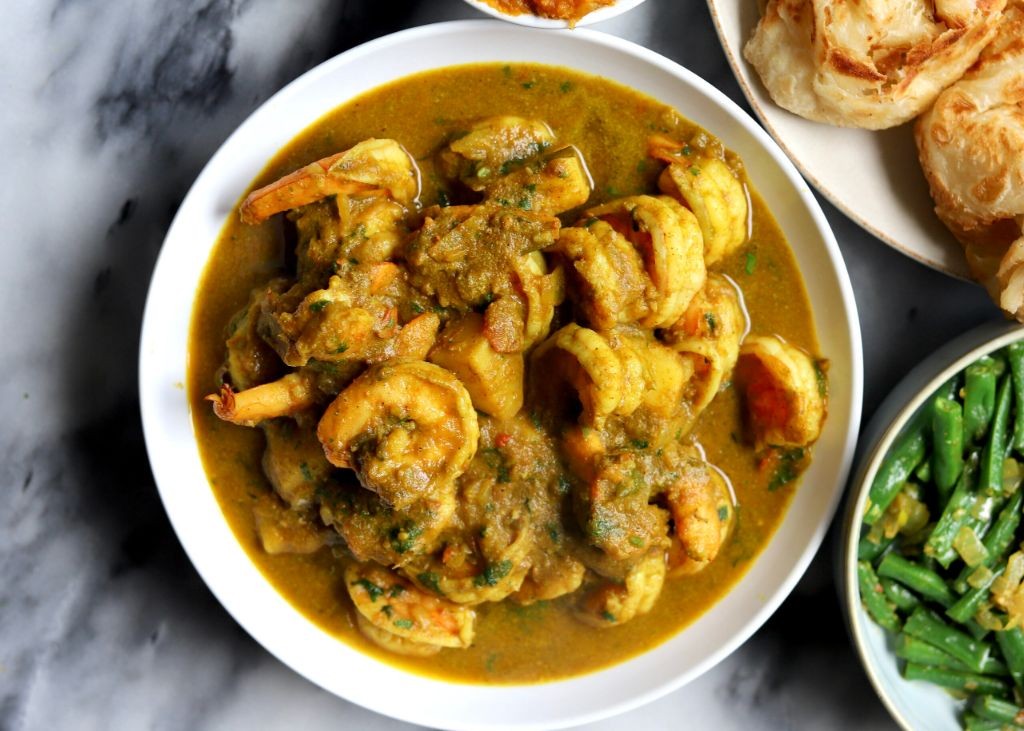
Growing up in a multicultural neighborhood, I discovered the magic of Trinidadian cuisine through this vibrant dish that perfectly balances fragrant curry with delicate flatbread. Getting the technique right for dhal puri requires patience, but the reward is absolutely worth the effort for this authentic Caribbean experience.
Ingredients
– 1 lb wild-caught large shrimp, peeled and deveined
– 2 tbsp clarified butter
– 1 medium yellow onion, finely diced
– 3 garlic cloves, minced
– 1 tbsp freshly grated ginger
– 2 tbsp Trinidad-style curry powder
– 1 cup unsweetened coconut milk
– 1 cup split peas, soaked overnight
– 2 cups all-purpose flour
– 1 tsp ground turmeric
– 1 tsp cumin seeds
– 2 cups warm water (110°F)
– 2 tbsp grapeseed oil
– 1 Scotch bonnet pepper, whole
– 1 cup fresh cilantro, chopped
– 1 lime, juiced
Instructions
1. Combine soaked split peas, cumin seeds, and turmeric in a saucepan with 3 cups water and simmer for 45 minutes until completely tender.
2. Drain the cooked peas and mash into a smooth paste using a potato masher, ensuring no whole peas remain.
3. Mix all-purpose flour with warm water in a large bowl until a shaggy dough forms, then knead for 8 minutes until smooth and elastic.
4. Cover the dough with a damp kitchen towel and rest at room temperature for 1 hour to develop gluten structure.
5. Divide the rested dough into 8 equal portions and roll each into smooth balls.
6. Flatten one dough ball into a 4-inch disc and place 1 tablespoon of pea mixture in the center.
7. Gather the edges of the dough around the filling and pinch securely to enclose completely.
8. Gently roll the stuffed dough into a 6-inch circle on a lightly floured surface, applying even pressure.
9. Heat a cast-iron skillet over medium-high heat until water droplets sizzle immediately upon contact.
10. Cook each dhal puri for 90 seconds per side until golden brown spots appear and the bread puffs slightly.
11. Heat clarified butter in a heavy-bottomed pot over medium heat until shimmering but not smoking.
12. Sauté diced yellow onion for 6 minutes until translucent and lightly caramelized at the edges.
13. Add minced garlic and grated ginger, cooking for 1 minute until fragrant but not browned.
14. Bloom Trinidad-style curry powder in the aromatics for 30 seconds to release essential oils.
15. Pour in unsweetened coconut milk and add whole Scotch bonnet pepper, then simmer for 8 minutes until slightly thickened.
16. Add peeled shrimp to the curry sauce and cook for exactly 3 minutes until opaque and firm.
17. Remove from heat and stir in fresh cilantro and lime juice just before serving.
18. Serve the curried shrimp alongside warm dhal puri, tearing the bread to scoop up the fragrant sauce. Remarkably tender shrimp swim in a complex curry that’s both creamy and brightly acidic, while the dhal puri offers satisfying texture with its flaky exterior and spiced pea interior. For an authentic Trinidadian presentation, arrange the shrimp curry in the center of a platter surrounded by the warm flatbreads, allowing guests to build their own perfect bites.
Trinidad Sweet Bread with Raisins and Cherries
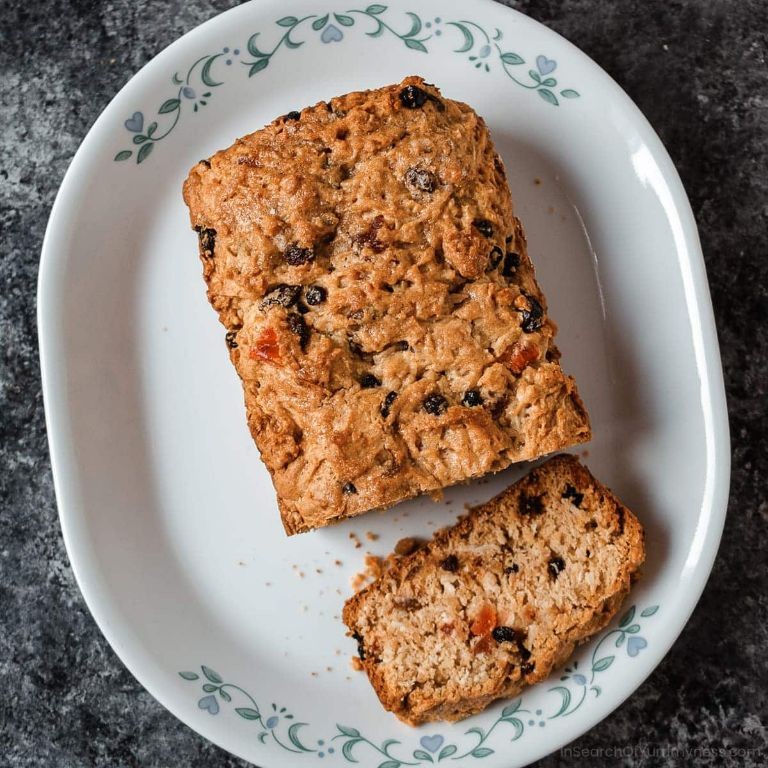
Knowing how to transform simple ingredients into a beautifully textured sweet bread can elevate your home baking repertoire significantly. This Trinidad-inspired version with dried fruits creates a tender, aromatic loaf that fills your kitchen with the most comforting spice-scented warmth while baking. Let’s methodically walk through each precise step to ensure your first attempt yields professional-quality results.
Ingredients
- 4 cups unbleached bread flour
- 1 cup granulated sugar
- 1 tablespoon active dry yeast
- 1 teaspoon fine sea salt
- 1 teaspoon freshly grated nutmeg
- ½ teaspoon ground cinnamon
- 1 cup warm whole milk (110°F)
- 2 pasture-raised eggs, lightly beaten
- ½ cup European-style unsalted butter, softened
- ¾ cup mixed dried fruits (raisins and glacé cherries)
- 1 egg yolk mixed with 1 tablespoon heavy cream (for egg wash)
Instructions
- Combine 4 cups unbleached bread flour, 1 cup granulated sugar, 1 tablespoon active dry yeast, 1 teaspoon fine sea salt, 1 teaspoon freshly grated nutmeg, and ½ teaspoon ground cinnamon in the bowl of a stand mixer fitted with a dough hook.
- Pour 1 cup warm whole milk (110°F) into the dry ingredients.
- Add 2 lightly beaten pasture-raised eggs and ½ cup softened European-style unsalted butter to the mixture.
- Mix on low speed for 2 minutes until ingredients are incorporated, then increase to medium speed and knead for 8 minutes until the dough becomes smooth and elastic.
- Incorporate ¾ cup mixed dried fruits (raisins and glacé cherries) by hand, ensuring even distribution throughout the dough.
- Transfer the dough to a lightly oiled bowl, cover with a damp kitchen towel, and let rise in a warm place for 1 hour 30 minutes until doubled in size.
- Punch down the risen dough to release air bubbles and shape it into a round loaf.
- Place the shaped loaf on a parchment-lined baking sheet, cover again with the damp towel, and proof for 45 minutes until puffy.
- Preheat your oven to 350°F during the last 15 minutes of proofing.
- Brush the loaf generously with the egg yolk and heavy cream mixture using a pastry brush.
- Bake at 350°F for 35-40 minutes until the internal temperature reaches 190°F and the crust is deep golden brown.
- Transfer the baked loaf to a wire rack and cool completely for 2 hours before slicing.
Notably, this bread develops an exceptionally tender, fine crumb that practically melts in your mouth, with the plump dried fruits creating pockets of concentrated sweetness against the subtle spice backdrop. The glossy, golden crust provides a satisfying textural contrast to the soft interior. For a delightful breakfast presentation, toast thick slices and serve with cultured butter and a drizzle of wildflower honey to complement the existing spice notes.
Trinidad Pumpkin Soup with Coconut Milk

Just imagine coming home to the warm, aromatic embrace of this Caribbean classic—Trinidad Pumpkin Soup with Coconut Milk offers both comfort and vibrant flavor in every spoonful. This methodical approach will guide you through creating a perfectly balanced, creamy soup that celebrates the natural sweetness of squash with rich coconut undertones.
Ingredients
– 2 tablespoons extra-virgin coconut oil
– 1 medium yellow onion, finely diced
– 3 garlic cloves, minced
– 1 tablespoon freshly grated ginger root
– 1 medium Caribbean pumpkin (calabaza), peeled and cubed into 1-inch pieces (approximately 4 cups)
– 1 large sweet potato, peeled and cubed into 1-inch pieces
– 4 cups vegetable stock
– 1 (13.5-ounce) can full-fat coconut milk
– 1 teaspoon ground turmeric
– ½ teaspoon freshly grated nutmeg
– 1 Scotch bonnet pepper, whole
– 2 tablespoons freshly squeezed lime juice
– 1 teaspoon fine sea salt
– ¼ cup freshly chopped cilantro leaves
Instructions
1. Heat the extra-virgin coconut oil in a large Dutch oven over medium heat until shimmering.
2. Add the finely diced yellow onion and sauté for 5–7 minutes until translucent and fragrant.
3. Stir in the minced garlic and freshly grated ginger root, cooking for 1 minute until aromatic but not browned.
4. Add the cubed Caribbean pumpkin and sweet potato, stirring to coat with the aromatics.
5. Pour in the vegetable stock, ensuring it covers the vegetables by about 1 inch.
6. Bring the mixture to a gentle boil over high heat, then reduce to a simmer.
7. Stir in the ground turmeric, freshly grated nutmeg, and whole Scotch bonnet pepper.
8. Cover and simmer for 25–30 minutes until the vegetables are fork-tender.
9. Carefully remove the Scotch bonnet pepper using tongs to maintain controlled heat.
10. Working in batches, transfer the soup to a high-speed blender and purée until completely smooth.
11. Return the puréed soup to the Dutch oven over low heat.
12. Whisk in the full-fat coconut milk until fully incorporated.
13. Stir in the freshly squeezed lime juice and fine sea salt.
14. Heat the soup for 3–5 minutes until warmed through but not boiling.
15. Ladle the soup into bowls and garnish with freshly chopped cilantro leaves.
Meticulously puréed vegetables create an exceptionally velvety texture that carries the earthy sweetness of pumpkin and sweet potato. The coconut milk adds luxurious richness while the Scotch bonnet provides subtle warmth without overwhelming heat. For an elegant presentation, drizzle with reserved coconut milk and serve with crispy plantain chips for contrasting texture.
Trinidad Mango Chow with Pepper and Lime
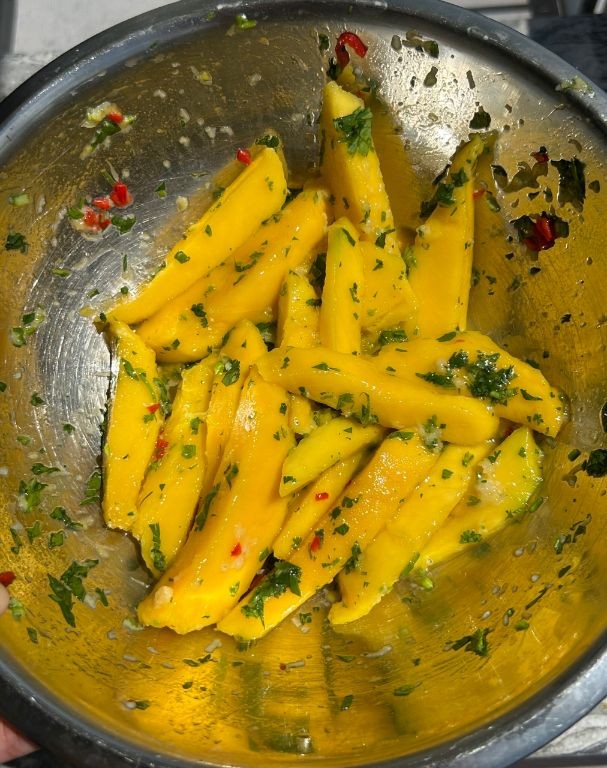
Now, let’s explore the vibrant flavors of Trinidad with this refreshing mango chow that perfectly balances sweet, spicy, and tangy notes. This traditional street food showcases how simple ingredients can create extraordinary taste experiences when combined thoughtfully. We’ll walk through each preparation step methodically to ensure your first attempt yields authentic results.
Ingredients
- 2 large ripe but firm mangoes, peeled and cut into ½-inch cubes
- 3 tablespoons freshly squeezed lime juice
- 1 small red onion, finely julienned
- 2 scotch bonnet peppers, seeded and minced
- ¼ cup chopped fresh cilantro leaves
- 1 teaspoon coarse sea salt
- ½ teaspoon freshly cracked black pepper
Instructions
- Select mangoes that yield slightly to gentle pressure but maintain structural integrity when cubed.
- Peel the mangoes completely using a Y-shaped vegetable peeler, removing all skin.
- Cut the peeled mangoes into uniform ½-inch cubes, discarding the flat central pit.
- Place the mango cubes in a medium glass or ceramic mixing bowl.
- Slice the red onion lengthwise into thin julienne strips approximately ⅛-inch wide.
- Add the julienned red onion to the bowl with the mango cubes.
- Wear disposable gloves while handling scotch bonnet peppers to prevent skin irritation.
- Slice the scotch bonnet peppers lengthwise and remove all seeds and white membranes using a paring knife.
- Finely mince the deseeded peppers into pieces no larger than ⅛-inch.
- Add the minced peppers to the mango and onion mixture.
- Roll limes firmly on the countertop under your palm to release maximum juice before cutting.
- Squeeze 3 tablespoons of fresh lime juice directly over the ingredients in the bowl.
- Chop fresh cilantro leaves until you have ¼ cup, avoiding the tougher stems.
- Sprinkle the chopped cilantro over the mixture in the bowl.
- Measure 1 teaspoon of coarse sea salt and distribute evenly over the ingredients.
- Add ½ teaspoon of freshly cracked black pepper to the bowl.
- Using a silicone spatula, gently fold all ingredients together until evenly distributed, taking care not to crush the mango cubes.
- Cover the bowl tightly with plastic wrap and refrigerate for exactly 30 minutes to allow flavors to meld.
After chilling, the mango maintains its firm texture while absorbing the spicy, citrusy marinade. The crisp onion provides contrasting crunch against the tender fruit, creating a dynamic mouthfeel that’s both refreshing and invigorating. Serve this chow alongside grilled fish tacos or as a bright condiment for rich, slow-cooked meats to cut through their richness.
Trinidad Cassava Pone with Coconut and Spices
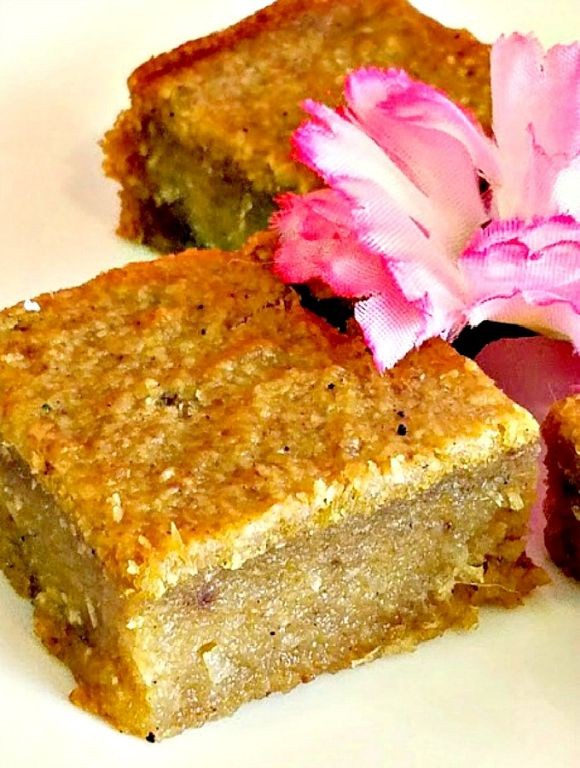
Just imagine biting into a dessert that perfectly balances earthy roots with tropical sweetness and warm spices. Today we’re exploring Trinidad Cassava Pone, a traditional Caribbean treat that transforms humble ingredients into something extraordinary through slow, careful baking. This methodical approach ensures every layer of flavor develops fully while achieving that signature dense, satisfying texture.
Ingredients
– 2 cups freshly grated cassava root, firmly packed
– 1 cup freshly grated coconut meat
– 1 cup organic granulated cane sugar
– 1/4 cup clarified butter, melted
– 2 pasture-raised eggs, lightly beaten
– 1 teaspoon pure vanilla extract
– 1/2 teaspoon freshly grated nutmeg
– 1/4 teaspoon ground cinnamon
– 1/8 teaspoon fine sea salt
– 1/4 cup whole milk
Instructions
1. Preheat your conventional oven to 350°F and position the rack in the center.
2. Lightly grease an 8×8-inch baking dish with clarified butter using a pastry brush.
3. Combine freshly grated cassava root and freshly grated coconut meat in a large mixing bowl.
4. Add organic granulated cane sugar and mix thoroughly until evenly distributed.
5. Pour melted clarified butter over the dry ingredients and incorporate completely.
6. In a separate bowl, whisk pasture-raised eggs until pale yellow and slightly frothy.
7. Stir pure vanilla extract into the beaten eggs until fully blended.
8. Gradually pour the egg mixture into the cassava mixture while continuously stirring.
9. Sprinkle freshly grated nutmeg, ground cinnamon, and fine sea salt over the batter.
10. Add whole milk and mix until the batter achieves a thick, cohesive consistency.
11. Transfer the batter to the prepared baking dish and spread evenly with a spatula.
12. Bake at 350°F for 55-60 minutes until the top forms a deep golden-brown crust.
13. Insert a toothpick into the center; it should emerge clean with minimal crumbs.
14. Remove from oven and cool completely in the pan on a wire rack for 2 hours.
15. Cut into 2-inch squares using a sharp knife wiped clean between cuts.
A perfectly baked Cassava Pone offers a delightfully dense, slightly chewy texture that contrasts beautifully with its crisp top crust. The earthy cassava notes mingle harmoniously with tropical coconut and warm spice undertones, creating complex layers of flavor. For an elegant presentation, serve warm squares with a drizzle of coconut cream and fresh mango slices to highlight its Caribbean origins.
Trinidad Sorrel Drink with Ginger and Cloves

Let’s explore the vibrant flavors of Trinidad with this traditional sorrel drink, which combines tart hibiscus flowers with warming spices for a beverage that’s both refreshing and complex. Learning to prepare this Caribbean classic will introduce you to balancing bold flavors while creating a stunning crimson-hued drink perfect for celebrations. We’ll methodically build layers of flavor through careful steeping and sweetening techniques.
Ingredients
- 2 cups dried sorrel petals (hibiscus flowers)
- 8 cups filtered water
- 1 cup granulated cane sugar
- 4-inch piece fresh ginger root, peeled and thinly sliced
- 12 whole cloves
- 1 cinnamon stick
- 1 teaspoon freshly grated orange zest
- Ice cubes for serving
Instructions
- Rinse 2 cups dried sorrel petals under cool running water to remove any dust or debris.
- Combine the rinsed sorrel petals, 8 cups filtered water, 4-inch sliced ginger root, 12 whole cloves, and 1 cinnamon stick in a large stainless steel pot.
- Bring the mixture to a rolling boil over high heat, then immediately reduce to a gentle simmer.
- Cover the pot and simmer for exactly 25 minutes to fully extract the floral notes and spice essences.
- Remove the pot from heat and stir in 1 cup granulated cane sugar until completely dissolved.
- Add 1 teaspoon freshly grated orange zest to the warm liquid, stirring gently to incorporate.
- Cover the pot again and let the mixture steep for 6-8 hours at room temperature to develop complex flavors.
- Strain the liquid through a fine-mesh sieve into a clean pitcher, pressing gently on the solids to extract maximum flavor.
- Discard the spent sorrel petals and spices, then refrigerate the strained liquid for at least 4 hours until thoroughly chilled.
- Fill glasses with ice cubes and pour the chilled sorrel drink over the ice for serving.
During the steeping process, the sorrel petals release their brilliant ruby color while the spices infuse the liquid with warming notes. The finished drink presents a beautiful balance of tart hibiscus, spicy ginger, and aromatic cloves that dance across the palate. For an elegant presentation, consider garnishing with fresh mint sprigs or serving in chilled coupe glasses as a sophisticated non-alcoholic cocktail alternative.
Summary
Kick your cooking up a notch with these vibrant Trinidadian flavors! These 20 authentic recipes bring Caribbean warmth right to your kitchen. We’d love to hear which dishes become your favorites—drop a comment below and share your spicy creations on Pinterest. Happy cooking!